
Dubai International Airport DXB Braces for 3.7 Million Passenger Post-Summer Surge in 2026
Dubai International Airport (DXB) prepares for a massive inbound wave of 3.7 million passengers as residents and tourists return after the summer break, highlighting the hub's record-breaking 2026 growth.

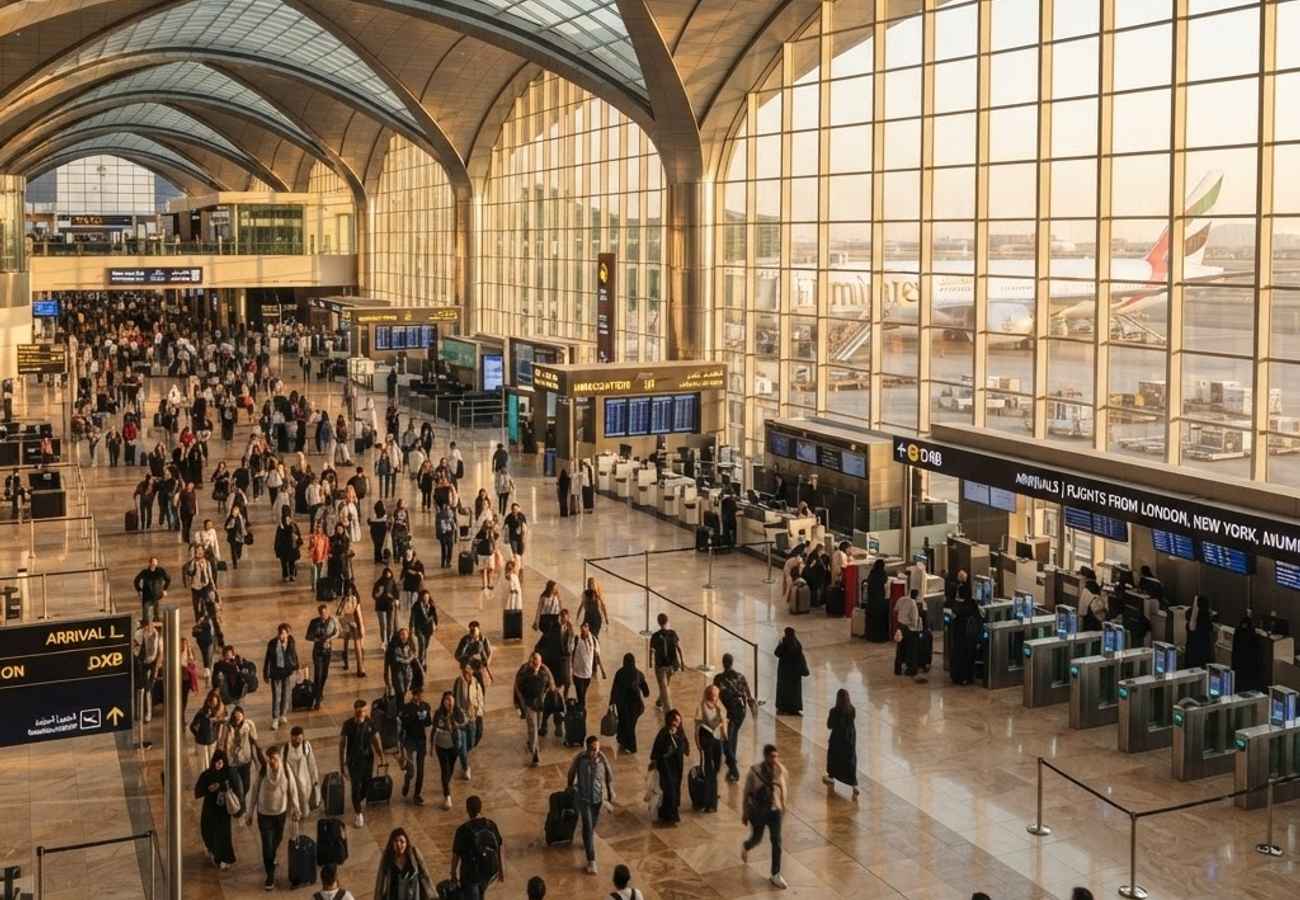
Image generated by AI
Dubai International Airport (DXB) is preparing for a concentrated inbound surge of 3.7 million passengers as the summer holiday window closes. This influx marks a critical transition from outbound summer travel to a high-density arrival phase for residents and international visitors.
The world’s busiest international hub is seeing a repeat of the volatile traffic patterns that defined its record-setting 2024 performance. Following a summer where outbound flights dominated, the balance has shifted toward arrivals from Europe, the Indian subcontinent, and key Middle Eastern markets.
This surge is not an isolated event but part of a broader growth trajectory. In 2024, DXB processed more than 90 million passengers, surpassing pre-pandemic levels and establishing a new baseline for global aviation gateways.
Critical Traffic Metrics and Patterns
The scale of this post-summer wave reflects a growing trend of "clustered peaks" at DXB. Market data indicates that passenger volumes are increasingly concentrated into narrow windows tied to school calendars and regional holidays.
- Current Forecast: Approximately 3.7 million passengers are expected during the late August to early September return window.
- Historical Benchmark (2024): Between August 21 and September 2, 2024, DXB handled 3.43 million passengers.
- Daily Intensity: During previous peaks, daily averages exceeded 260,000 travelers, with some 48-hour windows seeing over one million people.
- Processing Efficiency: Official reports indicate that 98 percent of passengers cleared passport control in under 10 minutes during peak 2024 periods.
Operational Infrastructure and Capacity Management
Because Dubai relies on DXB as its primary commercial gateway, the operational stakes during these multi-million passenger windows are exceptionally high. To prevent systemic bottlenecks, the airport has implemented several high-tech interventions:
- Digital Immigration: Heavy reliance on smart gates to reduce manual passport control queues.
- Self-Service Integration: Expansion of kiosks and automated bag-drop facilities to decouple check-in from counter staffing.
- Passenger Flow Guidance: Aggressive promotion of early airport arrival and online check-in to flatten the arrival curve.
Passenger Volume Comparison: Peak Windows
| Period | Estimated Passenger Volume | Primary Traffic Direction | Key Driver |
|---|---|---|---|
| June 2024 | 3.7 Million | Outbound | Eid Al Adha / School Holidays |
| Aug 21 – Sept 2, 2024 | 3.43 Million | Inbound | Back-to-School / Resident Return |
| Late Aug – Early Sept 2026 | 3.7 Million | Inbound | Post-Summer Resident Return |
Why This Matters: Industry Analysis
From a logistical perspective, the 3.7 million passenger surge is a stress test for Dubai's "single-hub" dependency. Unlike other global megacities that distribute traffic across multiple airports, DXB absorbs the vast majority of the city's commercial flow.
Our analysis of the route map suggests that the reliance on Emirates and flydubai creates a high-concentration risk; any disruption to these primary carriers during a peak window can cause immediate, city-wide logistical gridlock. However, the fact that DXB is handling these volumes while maintaining a 98% rapid-clearance rate proves that their investment in "Smart Airport" infrastructure is working.
For the broader economy, this surge is a leading indicator. A robust return of 3.7 million people in September typically triggers an immediate spike in hotel occupancy and corporate travel demand, setting the stage for the high-revenue winter season and the city's trade fair calendar.
Forward Outlook
The recurring pressure of handling 3 to 4 million passengers in two-week windows underscores the urgency of the Dubai World Central (Al Maktoum International Airport) expansion.
While DXB continues to break records, the long-term strategy involves shifting a significant portion of this volume to the new hub, which is designed to handle hundreds of millions of passengers annually. Until that transition is complete, travelers should expect these extreme seasonal peaks to become the standard operational rhythm for Dubai aviation.
The transition from a summer hub to a corporate gateway is now a high-precision logistical operation.
Related Travel Guides
Disclaimer
This article is for informational and educational purposes only. It does not constitute legal, financial, or professional advice. While we strive to provide accurate and up-to-date information, travel policies, regulations, and conditions change rapidly. Always verify information with official sources before making travel decisions. Nomad Lawyer makes no representations about the accuracy, reliability, completeness, or suitability of the information provided. Readers should consult qualified professionals for advice specific to their circumstances. The views expressed in this article are those of the author and do not necessarily reflect the views of Nomad Lawyer.
Kunal K Choudhary
Co-Founder & Contributor
A passionate traveller and tech enthusiast. Kunal contributes to the vision and growth of Nomad Lawyer, bringing fresh perspectives and driving the community forward.
Learn more about our team →