
Travel Chaos at Doha Airport: 85 Flight Delays and Cancellations Isolate Passengers on Qatar Airways and Regional Routes
Hamad International Airport in Doha suffers massive airport disruptions as severe flight delays cripple Qatar Airways and key Middle Eastern transit networks.

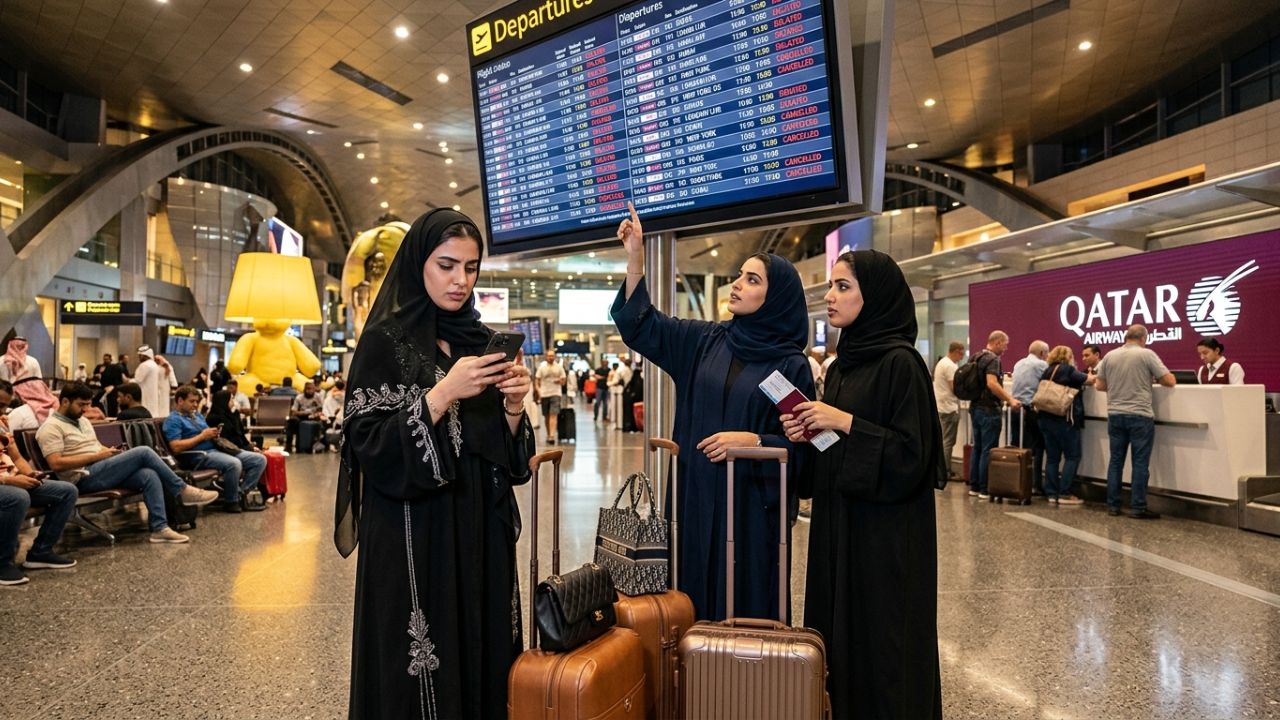
Image generated by AI
Travel Chaos at Doha Airport: 85 Flight Delays and Cancellations Isolate Passengers on Qatar Airways and Regional Routes
Severe operational bottlenecks at Hamad International Airport disrupt vital global transit corridors, heavily impacting connections to Europe, South Asia, and the broader Middle East.
A massive wave of sudden travel chaos has violently struck Hamad International Airport in Doha, leaving thousands of international transit passengers completely isolated inside the massive Middle Eastern aviation hub. Operational data confirms that the airport is currently buckling under the immense pressure of 85 flight delays and 2 flight cancellations. This intense operational strain is aggressively targeting both regional and global airlines, with dominant flag carrier Qatar Airways taking the absolute heaviest hits alongside Saudia, Kuwait Airways, Royal Jordanian, MEA (Middle East Airlines), and IndiGo.
For a high-capacity international travel hub specifically engineered for rapid global transit, this level of disruption is deeply problematic. The sprawling airport disruptions are actively destroying tightly packed itineraries across vital travel corridors connecting Dubai, Riyadh, Kuwait City, Amman, Beirut, and destinations far beyond. As stranded passengers violently clash with automated rebooking systems, this major airline news event clearly highlights how rapidly a centralized mega-hub can descend into gridlock when its core operations fail to maintain schedule integrity.
Aviation Updates: The Scale of Doha's Operational Strain
The rapidly deteriorating situation at Hamad International Airport serves as a brutal reminder of the inherent vulnerabilities within complex, wave-based scheduling structures. Recent operational data clearly shows severe delays affecting the vast majority of scheduled flights arriving at and departing from Doha.
While outright flight cancellations were less common, the massive volume of 85 delays is generating catastrophic downstream effects. Passengers are violently missing precisely timed onward flights to critical destinations spread throughout the Middle East, South Asia, and Europe. This massive delay cascade has quickly caused a dangerous backlog of frantic passengers inside the terminal, severely limiting available physical space for both departing and arriving crowds.
Section-Wise Breakdown: Hub Operations Compromised
An analysis of the disruption data highlights how deeply the delays have penetrated the diverse portfolio of carriers operating out of the Qatari capital.
Qatar Airways: The Core Network Anchored
The vast majority of the agonizing disruptions have been heavily concentrated within Qatar Airways. The dominant national carrier officially recorded a staggering 77 delayed flights, definitively making it the most heavily affected airline at Hamad International Airport. Given its massive operational monopoly at the hub, even moderate delays to its schedule instantly trigger amplified, highly destructive network effects across its entire global connection grid, spanning Europe, Asia, Africa, and North America.
Gulf and Levant Connectivity Fractured
Regional carriers operating vital short-haul routes also experienced brutal, irregular operations. The Gulf–Levant operational corridors are showing severe instability. Royal Jordanian registered 2 delayed services, while Saudia faced 2 highly disruptive cancellations. Furthermore, Kuwait Airways Corporation actively recorded 2 cancellations, plunging regional schedule adjustments into further chaos and isolating local business commuters.
South Asian Feeder Routes Disrupted
The travel chaos extended to critical international feeder routes. MEA (Middle East Airlines) officially reported 1 delayed flight, and the massive Indian low-cost carrier IndiGo recorded 1 delay. While numerically small, these specific disruptions indicate a highly notable impact on critical South Asian and Levantine connectivity flowing through the Doha interchange.
Flight Details and Operational Data
The disruption pattern clearly highlights how hub-centric airports like Hamad International aggressively amplify delays when core carrier operations are infected.
Confirmed Airline Disruption Matrix
| Airline Carrier | Verified Operational Disruption | Regional Impact Focus |
|---|---|---|
| Qatar Airways | 77 Delayed Flights | Massive Global Network Disruptions |
| Saudia | 2 Cancellations | Gulf Connectivity Failures |
| Kuwait Airways | 2 Cancellations | Gulf Connectivity Failures |
| Royal Jordanian | 2 Delayed Flights | Levant Operations Disrupted |
| MEA (Middle East Airlines) | 1 Delayed Flight | Levant Operations Disrupted |
| IndiGo | 1 Delayed Flight | South Asian Connectivity Strained |
Data definitively reflects the verified operational interruptions. While the primary dataset highlights 85 total delays and 2 total cancellations globally, the severe concentration of delays within Qatar Airways drove the overwhelming majority of the terminal chaos.
Passenger Impact: Missed Connections and Terminal Gridlock
For the traveling public actively navigating Hamad International Airport, the immediate consequences are incredibly stressful. The brutal combination of these delays and cancellations has directly impacted all travel categories, brutally trapping transit passengers, long-haul international travelers, and regional commuters alike.
At a hub exclusively designed for connecting itineraries, even minor delays mathematically guarantee missed onward flights. Passengers traveling with Qatar Airways have faced the highest exposure to schedule shifts, violently missing connections to massive global destinations. Transit tourism is absorbing the heaviest blow. Passengers attempting to use Doha as a rapid connecting hub for onward journeys to London, Paris, Bangkok, Mumbai, and New York are facing agonizing missed connections, forcing airline ground teams into massive rebooking operations and emergency overnight accommodation arrangements.
Industry Analysis: The Mechanics of Hub Congestion
Aviation analysts monitoring the Doha crisis point to the inherent fragility of high-capacity global transit hubs. Hamad International Airport handles incredibly complex wave-based scheduling structures. When sudden disruptions occur, even minuscule inefficiencies rapidly scale across multiple flight banks due to tightly coordinated arrival and departure timings.
While the exact operational trigger—whether weather, air traffic control, or mechanical—remains unspecified in the immediate dataset, patterns involving 85 delays strongly suggest a severe, temporary imbalance in aircraft movement cycles and airside scheduling. Downstream aircraft rotation delays and network congestion have violently choked the airport's ability to clear its tarmac, forcing inbound flights into holding patterns and severely delaying outbound departures.
Conclusion: A Resilient but Painful Recovery
The severe travel setback at Hamad International Airport clearly illustrates the terrifying domino effect of mega-hub operations. The facility is currently experiencing a highly unique disruption pattern: an immense delay volume paired with a surprisingly low cancellation ratio. Although the system as a whole remains technically functional, the immense concentration of delays around Qatar Airways and vital regional carriers like Saudia and Kuwait Airways is causing devastating short-term scheduling issues.
From a broader tourism viewpoint, inbound tourism to Qatar and outbound multi-leg holiday packages will experience painful schedule compression today. However, aviation systems at Hamad International remain structurally resilient. As the immediate scheduling imbalances ease, operations will painfully, but inevitably, return to normal efficiency, allowing the hub to absorb the shock without long-term damage to its global transit market.
Key Takeaways
- Massive Delays: Hamad International Airport suffered a massive operational hit with 85 flight delays and 2 cancellations.
- Qatar Airways Crippled: The dominant hub carrier absorbed the absolute brunt of the chaos, recording 77 delayed flights.
- Regional Cancellations: Saudia and Kuwait Airways both recorded critical flight cancellations, severely disrupting Gulf connectivity.
- Global Route Destruction: Delays violently severed vital connections to London, Paris, Bangkok, Mumbai, and New York.
- Terminal Gridlock: The massive volume of delayed passengers caused severe physical space constraints inside the Doha terminal.
- Passenger Crisis: Travelers face agonizing wait times, completely severed international connections, and forced overnight layovers.
Related Travel Guides
- Qantas Cuts 5% Domestic Capacity as Middle East Fuel Tensions Drive Australian Airfare Surge in 2026
- Breaking Airline News: Alaska Airlines and Korean Air Launch Massive Transpacific Codeshare to Aggressively Bypass Terrifying Asian Travel Chaos
- Rising Fuel Costs Force Airlines to Cut Flights and Hike Fares in 2026
Disclaimer
This article is for informational and educational purposes only. It does not constitute legal, financial, or professional advice. While we strive to provide accurate and up-to-date information, travel policies, regulations, and conditions change rapidly. Always verify information with official sources before making travel decisions. Nomad Lawyer makes no representations about the accuracy, reliability, completeness, or suitability of the information provided. Readers should consult qualified professionals for advice specific to their circumstances. The views expressed in this article are those of the author and do not necessarily reflect the views of Nomad Lawyer.
Preeti Gunjan
Contributor & Community Manager
A passionate traveller and community builder. Preeti helps grow the Nomad Lawyer community, fostering engagement and bringing the reader experience to life.
Learn more about our team →