
DFW Airport Travel Meltdown: 288 Flight Delays Hit American, Delta, United as Global Chaos Spreads to Europe, Asia, 2026
Dallas-Fort Worth Airport spiraled into travel chaos today with 288 delayed flights and 5 cancellations across American Airlines, Delta, United, and international carriers affecting routes to Europe, Asia, and beyond.

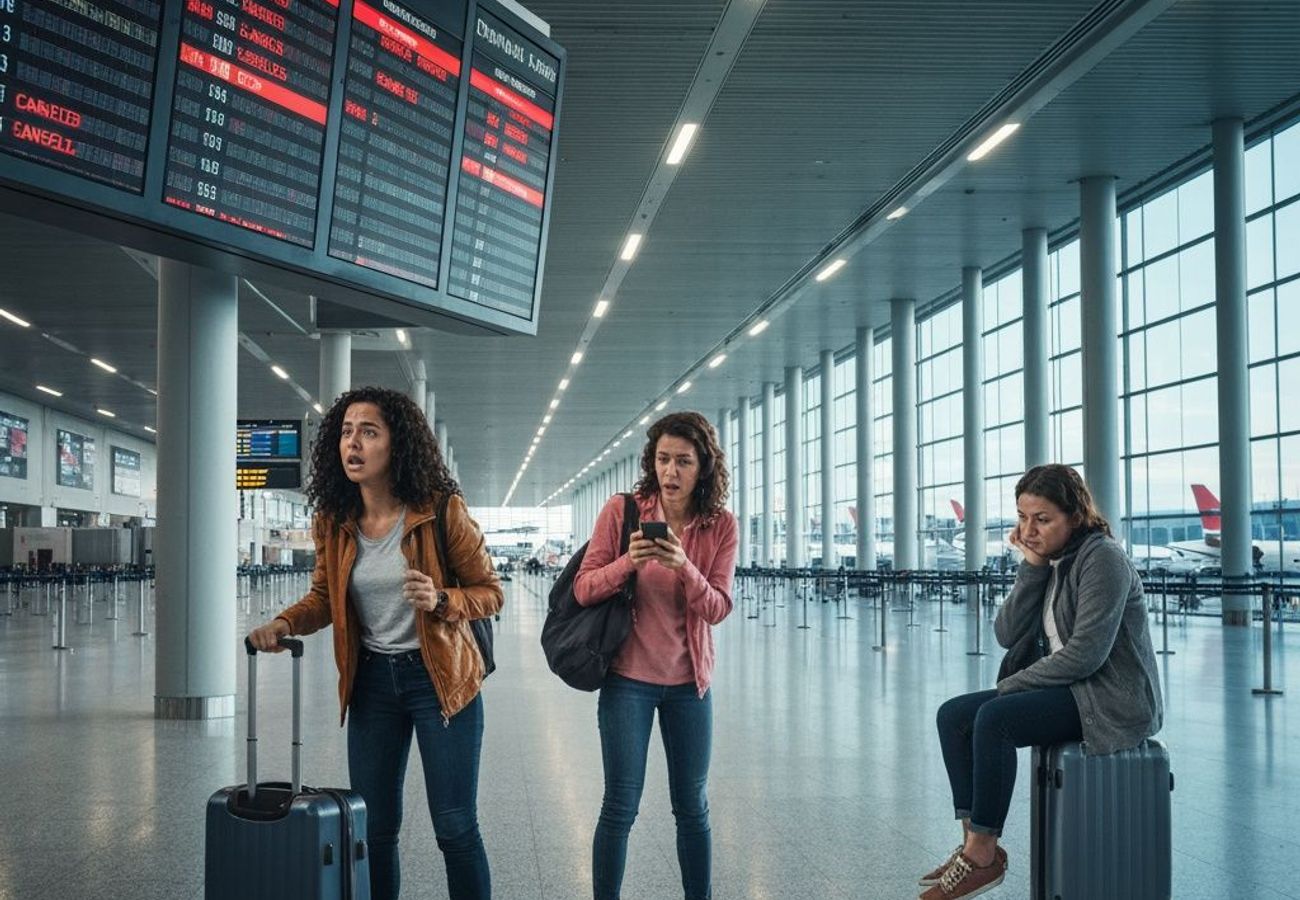
Image generated by AI
The Perfect Storm at Dallas-Fort Worth
Dallas-Fort Worth International Airport descended into operational chaos on June 10, 2026, leaving thousands of travelers stranded, rebooked, and furious. The numbers tell a brutal story: 288 delayed flights and 5 cancellations rippling across continents in a single day. This wasn't a minor hiccup—this was a cascading travel nightmare that exposed just how fragile our interconnected global aviation network truly is.
American Airlines bore the brunt of the impact, with 218 delayed flights (representing a 20% delay rate) and 4 cancellations. But they weren't alone. Delta Air Lines, United Airlines, PSA Airlines, British Airways, Air Canada, and a dozen other carriers found themselves caught in the same operational vortex.
Reddit: "I've been stuck at DFW for 8 hours. My flight to London was cancelled, and the rebooking desk has given up answering phones." — r/travel
How One Hub Broke Global Connectivity
The disruptions at DFW weren't confined to Texas. The airport's role as a critical international junction meant that delays cascaded across the entire planet within hours.
Domestic Chaos: America's Major Hubs Under Siege
Every significant American airport felt the ripple effects. Passengers heading toward Denver International, Miami International, Los Angeles International, San Francisco International, and Chicago O'Hare faced delays ranging from 16% to 53%.
Regional airports suffered even more severely. Nashville International, Albuquerque International Sunport, and OKC Will Rogers International reported delays between 25% to 66%, highlighting how small regional connections became bottlenecks in the larger system.
The International Fallout: Europe and Asia Caught in the Crossfire
The impact extended far beyond North American borders. European hubs reported severe congestion:
- London Heathrow, Amsterdam Schiphol, and Charles de Gaulle (Paris) each reported 50% to 100% delays or cancellations
- Rome Fiumicino, Barcelona International, and Adolfo Suárez Madrid-Barajas experienced significant operational strain
- Zurich (Kloten) and Dublin International saw cascading effects from transatlantic flight disruptions
Asian gateways weren't spared. Tokyo's Narita and Haneda Airports, along with Incheon International (Seoul), struggled with delayed arrivals and rescheduled departures as U.S.-bound flights were diverted or postponed. The delays touched South Korea, Japan, and beyond—turning what started as a Dallas-Fort Worth problem into a genuinely global aviation crisis.
Central and South American airports from Cancun to Bogotá to San José all reported delays ranging from 25% to 100%.
The Airline Breakdown: Who Suffered Most
The operational stress wasn't evenly distributed. While American Airlines shouldered the heaviest load, smaller carriers faced disproportionate impacts:
- Key Lime Air and British Airways reported 50% delay rates despite operating fewer flights
- SkyWest, United, and Delta each grappled with compounding scheduling pressures
- PSA Airlines struggled to manage regional connections while international partners dealt with transatlantic congestion
This disparity reveals a critical vulnerability: smaller carriers and niche routes lack the operational redundancy that major carriers can leverage during crises.
What Went Wrong: The Root Causes
The chaos stemmed from multiple converging operational failures. High traffic volumes at a major U.S. hub coincided with simultaneous international and domestic departures competing for gate availability. American Airlines, which dominates DFW operations, found itself squeezed between demand and infrastructure constraints.
Congested U.S. airspace amplified the problem. When one flight is delayed, it doesn't just affect one itinerary—it creates a domino effect across the entire network. Passengers missing connections. Crew members out of position. Aircraft unable to reach their next scheduled departure point.
For international carriers like British Airways and Air Canada, the disruptions compounded existing scheduling pressures from their own hubs. A delayed arrival from DFW meant cascading delays for onward connections in London, Toronto, and Montreal.
Passenger Advisory: How to Navigate the Chaos
If you're traveling through DFW or any affected airport, here's what you need to do immediately:
Check Flight Status: Use official airline apps, FlightAware, or airport boards before leaving for the terminal. Conditions are changing hourly.
Contact Your Airline Directly: Don't wait at the airport. Call American Airlines, Delta, United, British Airways, Air Canada, or your carrier's customer service line. Rebooking windows close quickly during crises, and phone representatives can access options the website can't.
Arrive Early: Security lines and check-in desks are overwhelmed. Add 90 minutes to your normal airport arrival time.
Consider Alternate Airports: If you're traveling from the Dallas area, Dallas Love Field offers limited but viable alternatives. For Houston-area travelers, Houston Bush Intercontinental provides routing options that bypass the DFW gridlock entirely.
Keep Essentials on Hand: Phone chargers, snacks, important documents, medications—airports during operational crises run out of basics quickly.
International Travelers: Pay Special Attention: If your itinerary connects through Europe, Asia, or Central America, delays are cascading backward to DFW. Your connecting airport is likely experiencing secondary disruptions. Contact your airline about alternate routings before arriving at the airport.
The Bigger Picture: Why This Matters
The DFW disruption on June 10 wasn't random chaos. It exposed a critical truth: modern aviation operates on razor-thin margins. When a major hub falters, the entire global network trembles.
For nomadic professionals, business travelers, and leisure passengers, incidents like this underscore the importance of understanding airline passenger rights during disruptions. In many jurisdictions, you're entitled to rebooking on the next available flight, hotel accommodations for overnight delays, and meal vouchers. Know your rights before you need them.
The interdependency of global aviation—where a gate closure in Dallas creates chaos in Amsterdam, Tokyo, and Cancun—demands smarter infrastructure investment, better redundancy planning, and more transparent communication from airlines and airports during crises.
For now, if you're traveling through DFW or its affected partner cities, stay alert, verify everything twice, and consider the possibility that your carefully planned itinerary may need immediate revision.
Travel plans are only as reliable as the weakest link in the chain—and Dallas-Fort Worth just showed us exactly where that link breaks.
Related Travel Guides
Disclaimer: This article reports on operational disruptions as of June 10, 2026. Flight statuses, delay percentages, and airline operations change rapidly during crises. Verify all information directly with airlines, airports, and FlightAware before making travel decisions. Nomad Lawyer does not assume liability for decisions made based on real-time operational data that may change without notice.
Kunal K Choudhary
Co-Founder & Contributor
A passionate traveller and tech enthusiast. Kunal contributes to the vision and growth of Nomad Lawyer, bringing fresh perspectives and driving the community forward.
Learn more about our team →