
DFW Airport Hit With 314 Flight Delays, 2 Cancellations Across American Airlines, Delta, United, and More in July 2026
Dallas-Fort Worth International Airport reported 314 delayed flights and 2 cancellations affecting major U.S. carriers. Here's what passengers need to know about navigating DFW disruptions.

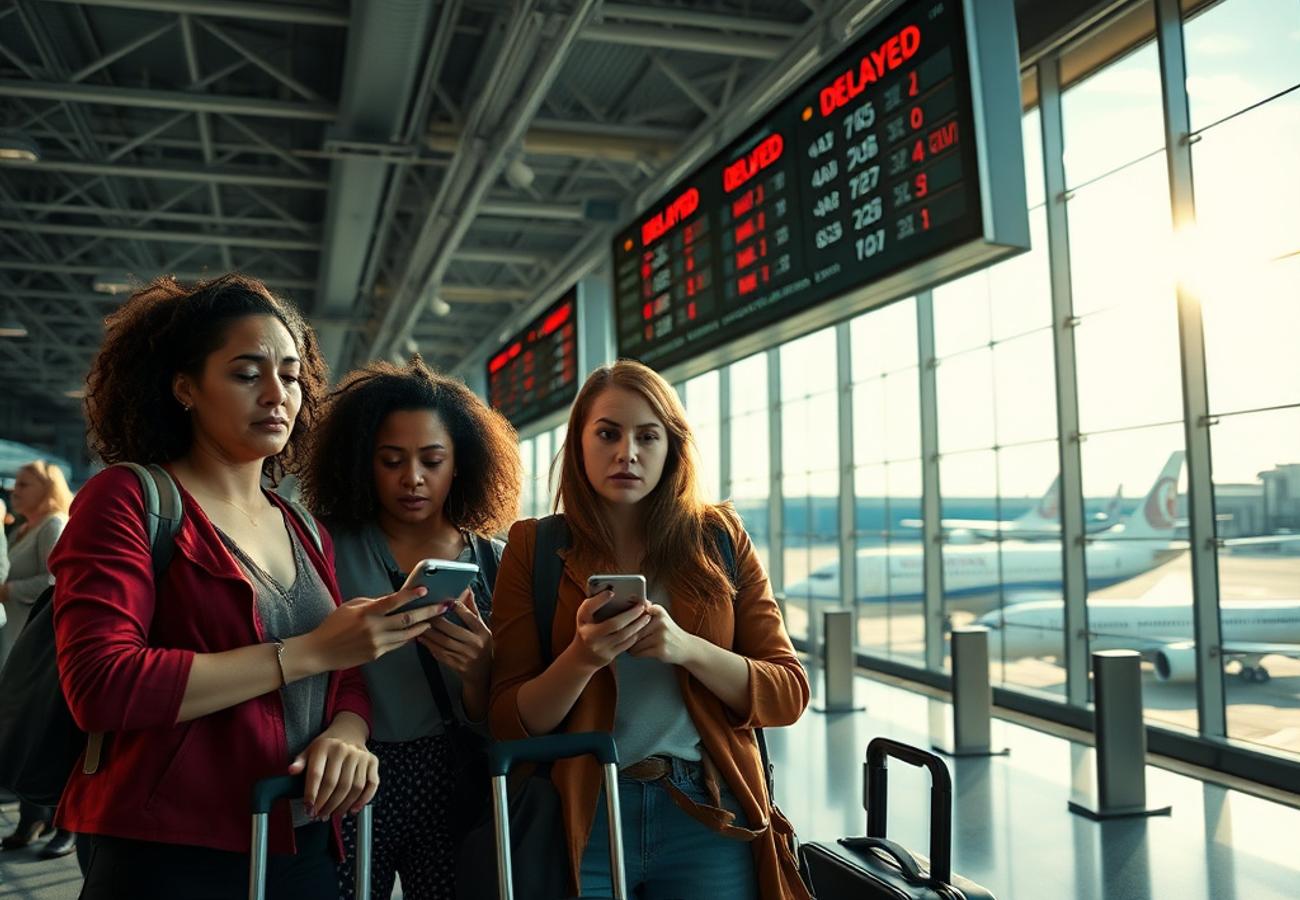
Image generated by AI
A Perfect Storm at One of America's Busiest Airports
Dallas-Fort Worth International Airport (DFW) became ground zero for travel chaos on July 1, 2026, when operational disruptions cascaded across the nation's fifth-busiest aviation hub. The numbers tell a stark story: 314 flights delayed, 2 flights canceled, and thousands of passengers scrambling to understand what went wrong.
What makes this particularly notable isn't just the sheer volume of delays—it's that DFW's central geographic position means these disruptions rippled far beyond Texas. When one of America's largest connecting hubs experiences operational friction, the consequences echo across domestic and international networks within hours.
The Anatomy of a Major Delay Event
On the surface, 314 delays with only 2 cancellations might seem manageable. Don't be fooled. For passengers, delays often prove more disruptive than outright cancellations.
A cancellation offers clarity: rebook or claim compensation under Department of Transportation regulations. Delays, by contrast, create uncertainty. Passengers sit in terminals watching minutes slip away, missing connections, blowing through hotel reservations, and watching business meetings evaporate into rescheduled video calls.
Reddit: "Delayed 4 hours at DFW yesterday. Missed my connection to Denver, missed my son's graduation. Airlines need to be held accountable for these cascades." — r/travel
Airlines operating at DFW—including American Airlines, Delta Air Lines, United Airlines, Spirit Airlines, and Frontier Airlines—all reported significant schedule compression. As a major hub for American Airlines, DFW's operational health directly influences that carrier's network across the entire country.
Why Weather Remains the Invisible Culprit
The Federal Aviation Administration (FAA) pinpoints severe weather as the primary trigger for temporary airspace restrictions at major U.S. airports, and DFW is no exception. Thunderstorms developing near arrival and departure corridors force air traffic controllers to reduce aircraft flow rates—a safety mechanism that's non-negotiable.
When controllers implement these restrictions, the domino effect accelerates: aircraft queue for longer runway access, crews hit federal duty time limitations, and downstream connections suffer. What begins as a single thunderstorm cell can consume an entire day's schedule.
The FAA emphasizes these slowdowns exist precisely to maintain separation standards and prevent dangerous compression of aircraft movements.
The Hub Effect: Delays Don't Stay Local
Here's the critical piece most travelers don't understand: DFW isn't just another airport. It's a major connecting hub that links the East Coast, West Coast, Canada, Latin America, Europe, and Asia.
An aircraft delayed arriving at DFW from New York carries not just frustrated passengers—it carries a crew that may now be time-restricted, maintenance issues that cascade into evening operations, and connecting passengers who'll miss their onward flights. That single aircraft might serve six or seven flights daily. One delay compounds exponentially.
This interconnected system means DFW disruptions influence flight schedules across the entire United States and international networks throughout the day. A 2-hour delay at DFW today becomes a 4-hour disruption in Charlotte tomorrow.
What Passengers Should Do Right Now
If you're traveling through or connecting at DFW, take immediate action:
Check flight status directly through your airline's app or website. Airport displays lag behind real-time airline data. Don't rely on general airport information—go straight to the source.
Arrive early. Peak travel periods amplify delays. If you're flying through DFW today, arriving an extra hour early isn't paranoia; it's smart planning.
Monitor gate assignments continuously. Gates change frequently during operational disruptions. Check 30 minutes before your departure window, not when you hear the final boarding call.
Allow buffer time for connections. If you're connecting through DFW, build in at least 90 minutes between arriving and departing flights. Standard connection times assume on-time operations—we're not there today.
Contact your airline immediately if a missed connection appears likely. Airlines can often rebook you on the next available flight before you even land. Don't wait until you're deplaning.
Understanding Your Rights During Flight Delays
U.S. passengers experiencing delays of 3 hours or more may qualify for compensation under DOT regulations for domestic flights. International flights have different rules depending on where the flight originated or landed.
Compensation typically ranges from $250 to $750 per passenger, depending on delay length and flight distance. Airlines are obligated to provide meals, hotel accommodations, and ground transportation if you're stranded overnight due to airline-controllable disruptions.
Weather delays, however, often fall outside carrier responsibility—a crucial distinction that frequently trips up passengers seeking compensation.
Infrastructure Solutions on the Horizon
DFW isn't standing still. The airport continues expanding with new gates, roadway improvements, and terminal modernization designed to accommodate growing passenger volumes. These projects aim to improve operational flexibility during peak periods and reduce congestion.
Meanwhile, the FAA is modernizing national air traffic management systems through technology designed to better predict congestion and optimize flight scheduling. Officials believe these initiatives will gradually reduce delays across the national aviation network—but these improvements take years, not months.
The Bigger Picture: Safety Over Convenience
Aviation experts consistently stress an often-unpopular truth: delays frequently signal that safety systems are functioning exactly as intended. Air traffic controllers continuously balance aircraft demand with available airspace capacity, runway availability, weather developments, and airport traffic volumes.
Temporary restrictions may feel inconvenient, but they prevent the catastrophic outcomes that emerge when airports become overloaded. The FAA's daily traffic management reports help airlines anticipate congestion and coordinate flight schedules more effectively—a preventive approach that prioritizes passenger safety over schedule perfection.
What Happens Next
For travelers stuck in this disruption, the next hours matter. Patience combined with proactive communication with your airline yields better outcomes than passive waiting. Follow official updates from your carrier and the FAA, not social media speculation.
The relatively low cancellation count at DFW—just 2 flights—suggests airline and airport teams kept most operations moving despite significant challenges. As Dallas-Fort Worth continues handling one of the nation's heaviest flight schedules, expect aviation authorities to keep balancing efficiency with safety.
Staying informed through official channels remains your best defense when schedules don't cooperate.
Welcome to modern air travel: where 314 delays teach 10,000 passengers the true meaning of patience.
Related Travel Guides
Disclaimer
This article is for informational and educational purposes only. It does not constitute legal, financial, or professional advice. While we strive to provide accurate and up-to-date information, travel policies, regulations, and conditions change rapidly. Always verify information with official sources before making travel decisions. Nomad Lawyer makes no representations about the accuracy, reliability, completeness, or suitability of the information provided. Readers should consult qualified professionals for advice specific to their circumstances. The views expressed in this article are those of the author and do not necessarily reflect the views of Nomad Lawyer.
Kunal K Choudhary
Co-Founder & Contributor
A passionate traveller and tech enthusiast. Kunal contributes to the vision and growth of Nomad Lawyer, bringing fresh perspectives and driving the community forward.
Learn more about our team →