
Denmark Joins Italy, UK, Belgium, France, Spain and Germany in a Shock Canada-Issued Travel Advisory Wave Fuelled by Rising Security Threat Perceptions Across Europe’s Most Visited Destinations: What travellers must Know before visiting
Canada issues Level 2 travel advisories for Denmark, France, Italy, Spain, Germany, Belgium, and UK due to security risk

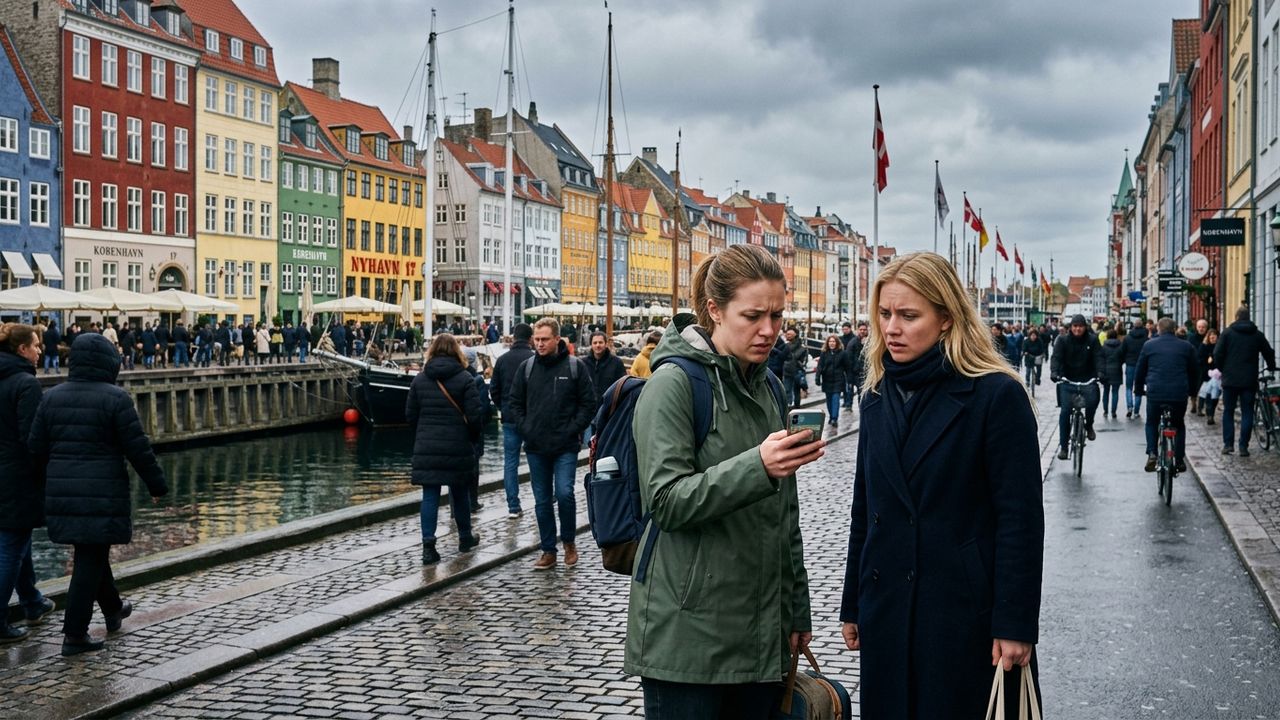
Image generated by AI
[Ottawa, June 25, 2026] — Canadian citizens planning trips to Europe are being urged to review updated safety guidance as the Government of Canada maintains heightened travel advisories for seven major destinations, including Denmark, France, Italy, Spain, Germany, Belgium, and the United Kingdom. These Level 2 warnings are driven by a persistent perception of security threats and terrorism risks across the continent's most frequented tourist hubs.
While international travel remains fully operational and tourism continues to thrive in these regions, official reports emphasize a precautionary approach. The advisories are designed to ensure visitors remain vigilant in high-traffic environments, such as major transport terminals, crowded public squares, and iconic cultural landmarks.
Decoding the Canadian Travel Risk Framework
To navigate international travel safely, it is critical for Canadians to understand the four-tier risk assessment system utilized by government officials. This framework allows travelers to gauge the stability and safety of a destination before departure.
A Level 1 designation indicates that only normal security precautions are required, suggesting a stable environment. A Level 2 advisory—which currently applies to the aforementioned European nations—signals that travelers should exercise a high degree of caution. This level is typically triggered by elevated crime rates or the potential for terrorism.
More severe warnings include Level 3, which advises against all non-essential travel, and Level 4, the most critical tier, which recommends avoiding all travel to the specified region. Industry observers note that while Level 2 does not prohibit travel, it serves as a formal reminder to maintain situational awareness in urban centers.
Security Dynamics in France and Italy
France continues to be a primary target for these advisories due to its status as a global tourism leader. According to official security reports, the Level 2 status is maintained due to ongoing terrorism risks. This has led to a visible increase in security personnel across Paris and other metropolitan areas, specifically around religious sites, shopping districts, and transit hubs. Beyond organized threats, officials warn visitors about the prevalence of petty crime and pickpocketing in densely populated tourist zones during peak seasons.
Similarly, Italy remains under a Level 2 advisory. Security concerns are centered on the potential for threats targeting crowded public spaces and religious landmarks. High-traffic cities such as Rome, Venice, Milan, and Florence are identified as areas where visitors should be particularly attentive. Security presence is heavily concentrated around historic monuments and major railway stations to mitigate risks.
Monitoring Risks in Belgium and the United Kingdom
Belgium, despite its smaller geographic footprint, remains under a high degree of caution. National alert systems are active to monitor potential security developments, with a specific focus on urban centers and public transport networks. Reports indicate that large-scale festivals and public gatherings are viewed as higher-risk environments, necessitating increased vigilance from international visitors.
The United Kingdom also maintains a Level 2 status, reflecting a broader European trend of elevated terrorism-related risks. Authorities in London, Edinburgh, and Manchester have implemented visible policing strategies in government districts and entertainment venues. Given the UK's role as a massive global transit hub, transport networks and sporting events are highlighted as sensitive zones where security operations are frequently scaled up.
Safety Landscapes in Germany, Denmark, and Spain
Germany’s advisory status is linked to the general security climate across Europe. Security forces remain active in major cities like Berlin, Munich, and Frankfurt. Industry data suggests that seasonal gatherings, particularly Christmas markets, attract the kind of crowds that require heightened awareness and a strong police presence to ensure visitor safety.
Denmark has recently been highlighted in this wave of advisories. While the country maintains a reputation for safety and high quality of life, official assessments indicate that terrorism risks cannot be entirely ruled out. This is particularly true for Copenhagen’s city center and its transport infrastructure. Additionally, seasonal tourism spikes have led to a marginal increase in opportunistic petty crime in crowded districts.
Spain, one of the most visited countries globally, mirrors these conditions. The Level 2 advisory is tied to the general European threat landscape. In cities like Madrid and Barcelona, authorities utilize active monitoring systems to protect historic districts and entertainment zones. Travelers are reminded that high-density tourist areas are often hotspots for theft and pickpocketing.
Summary of European Travel Advisory Levels
| Destination | Advisory Level | Primary Risk Factor | Recommended Action |
|---|---|---|---|
| France | Level 2 | Terrorism / Petty Crime | High degree of caution |
| Italy | Level 2 | Terrorism / Petty Crime | High degree of caution |
| United Kingdom | Level 2 | Terrorism | High degree of caution |
| Germany | Level 2 | Terrorism | High degree of caution |
| Spain | Level 2 | Terrorism / Petty Crime | High degree of caution |
| Belgium | Level 2 | Terrorism / Urban Crime | High degree of caution |
| Denmark | Level 2 | Terrorism / Petty Crime | High degree of caution |
Analysis of Impact on International Tourism
The issuance of these advisories is unlikely to significantly curtail the flow of Canadian tourists to Europe. Because the warnings stop at Level 2, they function more as "awareness guides" than "deterrents." The European tourism infrastructure remains robust, and the visible presence of security forces in these seven nations often provides a sense of reassurance to travelers rather than alarm.
However, the trend suggests that security perceptions in Europe remain volatile. The focus has shifted from specific, isolated threats to a broader, systemic vigilance. For the average traveler, this means that the "experience" of travel may involve more security screenings at museums, trains, and airports than in previous decades.
The economic impact on these destinations is expected to be minimal, as the demand for European cultural and coastal experiences continues to outweigh the caution advised by the Canadian government. The primary shift is in the behavior of the traveler—moving toward a model of "informed exploration" where situational awareness is prioritized.
The ongoing security posture across these nations indicates that while the threat of major disruptions is managed, the baseline for "normal" security has been permanently raised. Canadian visitors are encouraged to register their travel with official government channels and maintain flexible itineraries to adapt to any sudden changes in local security protocols.
Related Travel Guides
Disclaimer
This article is for informational and educational purposes only. It does not constitute legal, financial, or professional advice. While we strive to provide accurate and up-to-date information, travel policies, regulations, and conditions change rapidly. Always verify information with official sources before making travel decisions. Nomad Lawyer makes no representations about the accuracy, reliability, completeness, or suitability of the information provided. Readers should consult qualified professionals for advice specific to their circumstances. The views expressed in this article are those of the author and do not necessarily reflect the views of Nomad Lawyer.
Preeti Gunjan
Contributor & Community Manager
A passionate traveller and community builder. Preeti helps grow the Nomad Lawyer community, fostering engagement and bringing the reader experience to life.
Learn more about our team →