
Delta Air Lines to Restore Seattle to Tokyo Narita Nonstop Flights in 2027 After Seven-Year Gap
Delta Air Lines is set to relaunch nonstop service between Seattle and Tokyo Narita in 2027, signaling a strategic return to the Japanese hub to meet surging US transpacific demand.

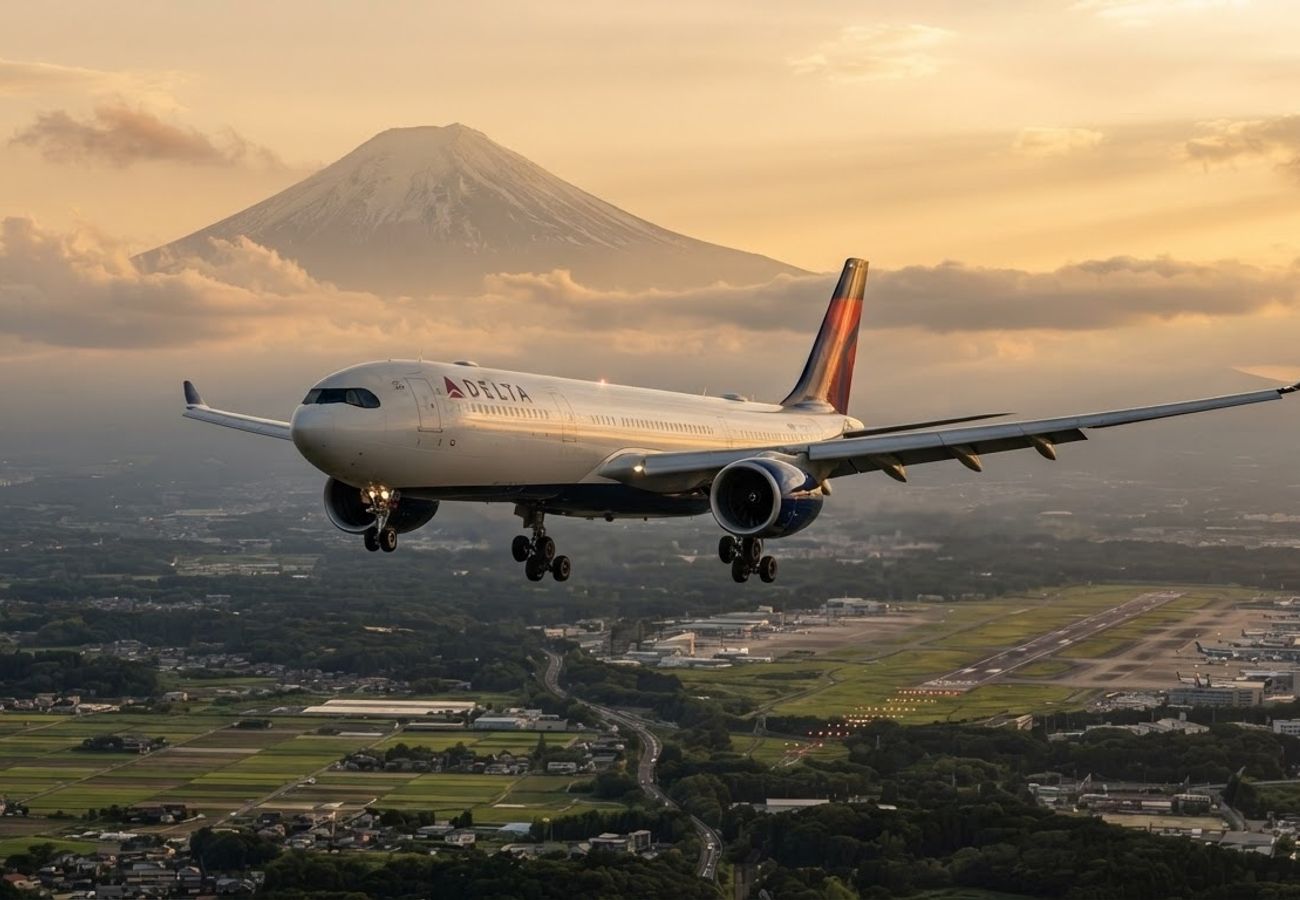
Image generated by AI
US-bound travelers from the Pacific Northwest will soon have a critical new long-haul option as Delta Air Lines prepares to reinstate nonstop service between Seattle and Tokyo Narita. This move ends a seven-year hiatus at the airport and underscores a massive recovery in transpacific passenger volumes.
The aviation industry is witnessing a significant shift in Pacific routing as Delta Air Lines readies the return of its direct link between Seattle-Tacoma International Airport (SEA) and Tokyo Narita International Airport (NRT). Scheduled for a 2027 relaunch, this decision marks a reversal of a long-term strategy where the carrier concentrated its Japanese operations at Tokyo Haneda or routed passengers through Seoul via its partnership with Korean Air.
The airline's departure from Narita was a gradual process that culminated around 2020. Delta had originally established a massive footprint at Narita following its merger with Northwest Airlines, using the facility as a primary gateway for the broader Asian market. However, the industry trend shifted toward Tokyo Haneda due to its proximity to the city center, which appealed more strongly to high-yield business travelers.
Seattle-Tacoma International Airport Reasserts Role as Asia Gateway
The decision to bring back the Seattle-Narita route highlights the growing importance of the Pacific Northwest as a launchpad for Asian travel. While Delta will maintain its existing nonstop connections from Seattle to Tokyo Haneda, the addition of Narita provides a dual-gateway strategy.
This restoration is not a complete return to the old hub-and-spoke model Delta once operated at Narita, but rather a calculated response to evolving demand. The seven-year gap in service reflects the volatility of the aviation sector during the early 2020s. Now, with international borders fully open and leisure travel from the US reaching new peaks, the carrier is tapping into Narita’s specific catchment area to capture a wider demographic of travelers.
Surge in US Demand Fuels Japan Tourism Recovery
The return of a major US carrier to Narita is expected to provide a substantial boost to Japan's tourism infrastructure. Since the lifting of pandemic-era restrictions, US citizens have become one of the fastest-growing segments of international arrivals in Japan. Increased capacity from Seattle is likely to benefit not only the capital but also regional prefectures.
Seattle's economy, driven by a massive technology sector and a growing population, has created a steady stream of premium and leisure travelers. By adding more nonstop seats, Delta is likely to drive down fares through increased competition, which historically stimulates higher volumes of leisure traffic.
Japanese tourism boards are currently pushing for "high-value" tourism—encouraging visitors to stay longer and venture beyond the "Golden Route" of Tokyo, Kyoto, and Osaka. For the traveler, arriving at Narita offers streamlined access to regional destinations such as:
- Tohoku: The northeastern region known for rugged landscapes.
- Hokuriku: Famous for its traditional crafts and hot springs.
- Hokkaido: The northernmost island, popular for skiing and nature.
Narita International Airport Competes with Haneda
While Tokyo Haneda is often preferred for its shorter commute to central Tokyo, Narita remains a vital long-haul hub. It is particularly essential for passengers who are using Tokyo as a connecting point to reach other Asian destinations.
Delta’s return restores a competitive balance at Narita, providing a SkyTeam alternative to the Star Alliance and oneworld carriers already operating there. This move supports Narita's broader objective to position itself as a versatile global gateway that caters to both full-service and low-cost carrier models.
Furthermore, diverting some long-haul traffic to Narita helps mitigate the extreme congestion at Haneda. This distribution of passenger flow benefits local businesses in the Chiba Prefecture and utilizes the extensive rail networks that connect Narita to the rest of the Kanto region.
Delta's Strategic Realignment of Pacific Operations
The Seattle-Narita relaunch is part of a comprehensive overhaul of Delta's Asia-Pacific network. This shift is happening alongside other aggressive expansions, including the restoration of flights to the Philippines from Los Angeles and the launch of Los Angeles to Hong Kong services.
Industry data suggests that Delta is leveraging a more fuel-efficient widebody fleet to make these routes economically viable. The newer aircraft models allow for better load factors and lower operating costs than the planes used during Delta's previous Narita hub era.
By diversifying its entry points into Asia—utilizing Haneda, Narita, and Seoul—Delta is insulating itself against regional disruptions and competing more effectively with Asian carriers that have expanded their US footprints.
Practical Implications for the Modern Traveler
For passengers, the restoration of this route means significantly more flexibility. Travelers from across the US connecting through Seattle can now choose between two different Tokyo airports based on their final destination and budget.
Those visiting the heart of Tokyo for a short business trip will likely continue to prefer Haneda. However, for those planning extensive tours of Japan or connecting to secondary cities, Narita is often the more practical choice due to its extensive domestic flight connections and specialized rail links.
Travel consultants indicate that this new capacity may also change how passengers from secondary US cities book their trips. Itineraries routed through Seattle to Narita may now offer more competitive pricing and timing than traditional routes through other West Coast hubs.
The return of this route signals a new era of confidence in the transpacific market, proving that Japan remains a primary investment target for US aviation giants.
Related Travel Guides
Disclaimer
This article is for informational and educational purposes only. It does not constitute legal, financial, or professional advice. While we strive to provide accurate and up-to-date information, travel policies, regulations, and conditions change rapidly. Always verify information with official sources before making travel decisions. Nomad Lawyer makes no representations about the accuracy, reliability, completeness, or suitability of the information provided. Readers should consult qualified professionals for advice specific to their circumstances. The views expressed in this article are those of the author and do not necessarily reflect the views of Nomad Lawyer.
Raushan Kumar
Founder & Lead Developer
Full-stack developer with 11+ years of experience and a passionate traveller. Raushan built Nomad Lawyer from the ground up with a vision to create the best travel and law experience on the web.
Learn more about our team →