
Delta Flight DL697 from Salt Lake City Diverted to Detroit
Delta Air Lines flight DL697, an Airbus A321neo from Salt Lake City to New York JFK, diverts safely to Detroit on July 28, 2026.

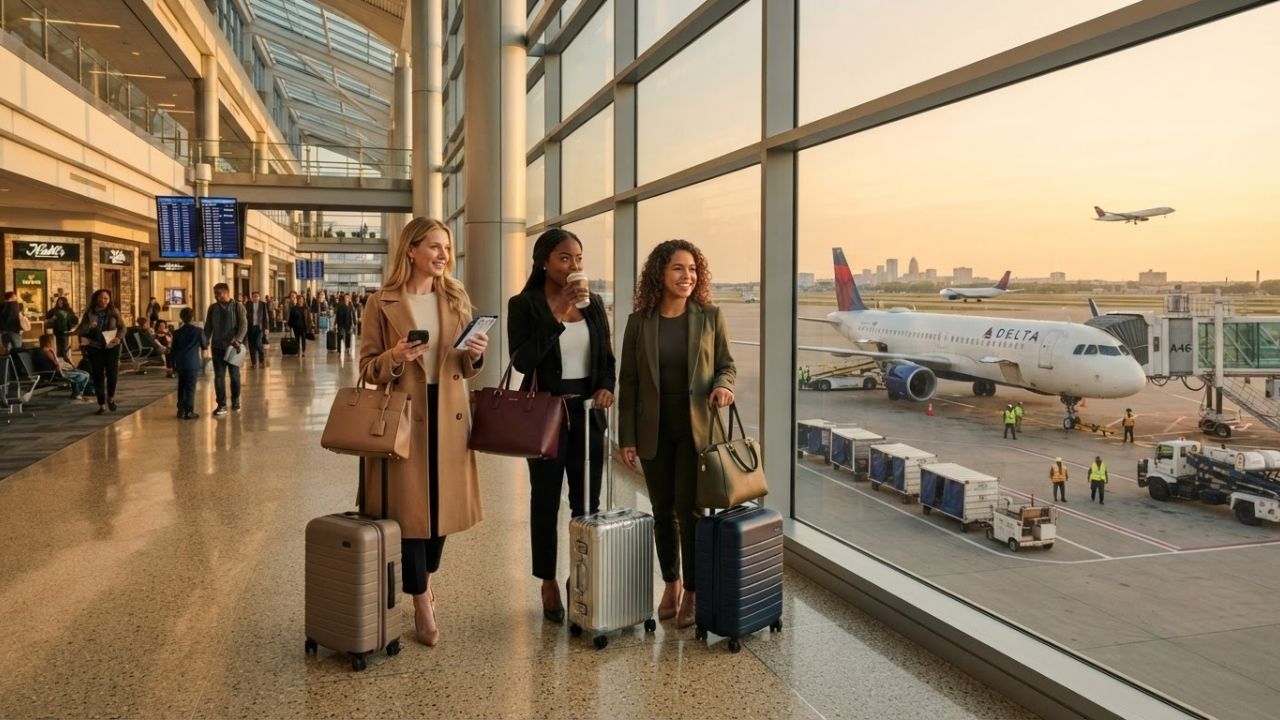
Image generated by AI
A transcontinental passenger service has recorded an unscheduled course change, with flight tracking logs confirming a Delta Air Lines flight DL697 route diversion to Detroit.
[Salt Lake City, July 30, 2026] — An unscheduled route change disrupted Delta Air Lines flight DL697 on Tuesday, July 28, 2026, when the flight crew diverted the aircraft to southeastern Michigan. The domestic flight, operated by an Airbus A321neo passenger jet, departed Salt Lake City International Airport (SLC) bound for New York John F. Kennedy International Airport (JFK). Rather than completing the flight directly to the New York metropolitan area, the aircraft diverted to Detroit Metropolitan Wayne County Airport (DTW), landing safely.
The twin-engine jet departed Salt Lake City from Gate A20 at 5:04 PM MDT and arrived at Detroit Metro Airport Gate A74 at 10:23 PM EDT. Because the diversion airport is located geographically west of the scheduled destination, the aircraft reached Detroit earlier than the original scheduled arrival time at JFK. Delta Air Lines has not released a formal statement confirming the technical or environmental cause of the route change.
Analysis of the Salt Lake City-to-New York Flight Path
The route between Salt Lake City and John F. Kennedy International Airport represents a significant transcontinental corridor connecting Delta's Western hub with its primary East Coast international gateway. On July 28, the service was operated by an Airbus A321neo, registered under tail number N606DN. The aircraft departed Salt Lake City and was proceeding along its planned flight path before air traffic control and the crew coordinated a turn toward Michigan.
Detroit Metropolitan Airport serves as one of Delta's largest operational hubs, making it a logical choice for a diversion. Because the airline maintains extensive ground staff, maintenance bases, and spare aircraft parts at DTW, the facility has the resources to handle unscheduled arrivals without causing major gridlock at terminal gates.
Possible Triggers for Domestic Route Diversions
While the airline did not specify the cause for flight DAL697, flight dispatch teams routinely coordinate diversions for a variety of reasons:
- Airspace Congestion: Severe summer weather near the destination airport can trigger FAA ground delay programs, forcing aircraft into holding patterns until fuel reserves run low.
- Technical Audits: If a minor sensor warning occurs in flight, the crew may elect to land at a major maintenance base like Detroit for a check rather than continuing over long distances.
- Crew Duty Limits: If air traffic control delays extend the crew's duty hours past FAA limits, a stop at a hub allows the airline to assign a replacement crew to complete the flight.
- Medical Incidents: A sudden passenger illness requires the crew to identify the nearest well-equipped airport with medical support.
Logistical Challenges for Delayed Passengers
The unscheduled stop in Detroit created a secondary delay of several hours for passengers on board N606DN. Once a flight is diverted, the airline's ground operations team must coordinate with local gate managers to find an open boarding bridge. After landing at Gate A74, ground crews must determine whether the aircraft can continue to New York or if passengers must be rebooked on alternative regional flights.
Passengers with onward international connections at JFK faced the most significant disruption, as missing their departures required re-routing through other European hubs or waiting for next-day flights.
The table below outlines the flight parameters and tracking logs:
Delta Flight DL697 Operations and Tracking Parameters (July 28, 2026)
| Flight Parameter | Reporting Value | Operational Detail | Primary Source |
|---|---|---|---|
| Flight Number | DL697 / DAL697 | Scheduled domestic commercial service | Flight tracking database |
| Aircraft Model | Airbus A321neo | Twin-engine narrow-body passenger jet | FAA registry |
| Registration (Tail) | N606DN | Active Delta Air Lines fleet inventory | FlightAware log |
| Departure Airport | Salt Lake City (SLC) | Departed Gate A20 at 5:04 PM MDT | Airport terminal log |
| Scheduled Destination | New York JFK (JFK) | Diverted during cruise phase | ATC flight plan |
| Diversion Airport | Detroit Metropolitan (DTW) | Arrived Gate A74 at 10:23 PM EDT | Airport ground operations |
| Flight Status | Safe landing | Precautionary operational diversion | Station log |
Why This Matters
From a legal and logistical standpoint, this creates a complex re-routing scenario for passengers ticketed on connecting itineraries. When a flight is diverted to a major hub like Detroit, the airline is obligated to rebook passengers on the next available flight to their ticketed destination at no additional cost. However, because New York airspace is heavily congested, finding empty seats on subsequent flights during peak summer travel periods can be difficult.
For the traveler, this means that tracking the official reason for the delay is necessary when requesting compensation for out-of-pocket expenses. Under the Department of Transportation's consumer rules, if a delay is within the airline's control (such as a mechanical issue), the carrier must provide meal vouchers and hotel accommodations during extended ground delays.
Industry Outlook
Our analysis indicates that airline dispatch centers will rely on large hub networks to absorb irregular operations during severe weather events. Rerouting aircraft to secondary airports that lack maintenance support can ground a plane for days, whereas landing at a major base like Detroit Metro allows Delta to inspect the aircraft, swap crews, and resume scheduled flights quickly.
Furthermore, market trends suggest that fleet managers are prioritizing modern narrow-body jets like the Airbus A321neo to manage fuel costs during diversions. The improved range and fuel efficiency of the A321neo give flight crews more flexibility when negotiating arrival delays with air traffic control, reducing the need for early diversions.
Related: JetBlue Expands Fort Lauderdale Network to Connect Caribbean and Latin America
Related: United Airlines Flight UA1505 from Denver Diverted to Chicago O'Hare
Related: Allegiant Travel Launches Free Drinks and Allegiant First Cabin Product
Disclaimer
This article is for informational and educational purposes only. It does not constitute legal, financial, or professional advice. While we strive to provide accurate and up-to-date information, travel policies, regulations, and conditions change rapidly. Always verify information with official sources before making travel decisions. Nomad Lawyer makes no representations about the accuracy, reliability, completeness, or suitability of the information provided. Readers should consult qualified professionals for advice specific to their circumstances. The views expressed in this article are those of the author and do not necessarily reflect the views of Nomad Lawyer.
Raushan Kumar
Founder & Lead Developer
Full-stack developer with 11+ years of experience and a passionate traveller. Raushan built Nomad Lawyer from the ground up with a vision to create the best travel and law experience on the web.
Learn more about our team →