
Delta Air Lines Surpasses United to Claim Top Spot in Transatlantic Market This Summer
Breaking airline news and aviation industry updates for 2026.

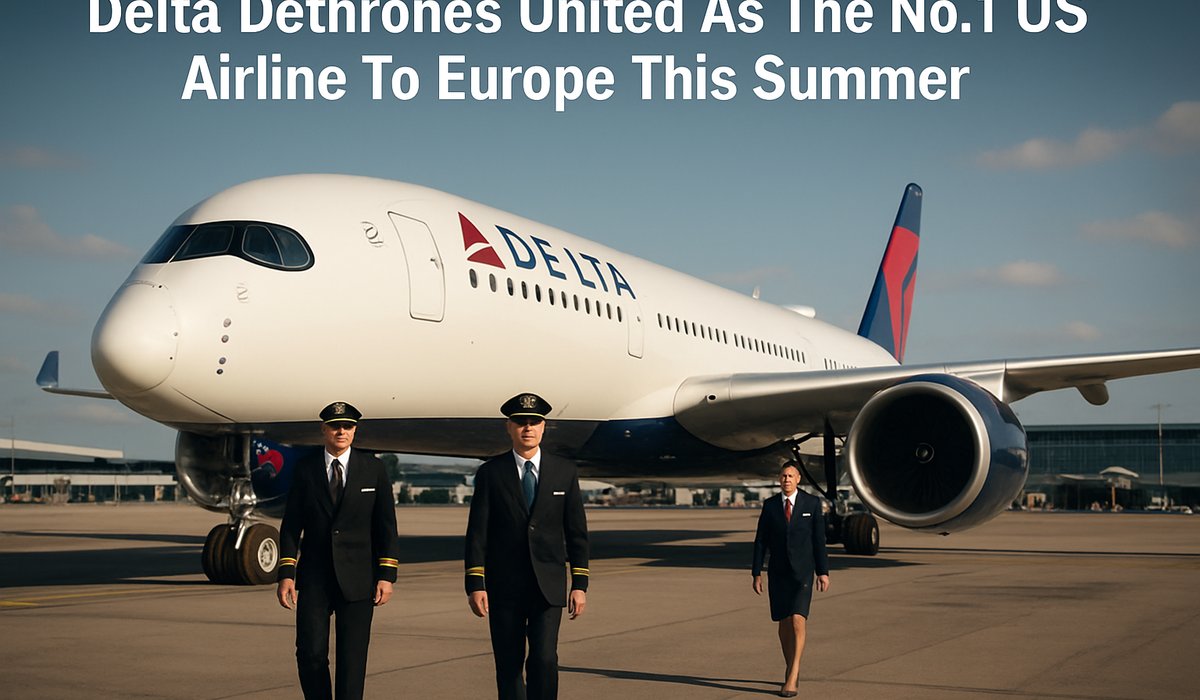
Image generated by AI
Delta Air Lines Surpasses United to Claim Top Spot in Transatlantic Market This Summer
Record seat capacity deployment signals intensifying competition and recovery in premium leisure travel routes
Market Leadership Shifts as Delta Expands European Operations
Delta Air Lines has unseated United Airlines as America's dominant carrier on transatlantic routes, marking a significant realignment in the competitive landscape of premium international aviation. The Atlanta-based carrier will operate substantially more seats to European destinations this summer than any rival, capping off years of strategic capacity expansion that reflects both recovering demand and heightened competition for lucrative transatlantic travelers.
The shift represents a watershed moment for Delta, which is deploying a record volume of aircraft to Europe as part of its most aggressive summer schedule on the route to date. United Airlines, which held the leading position for several consecutive years, now finds itself displaced by Delta's aggressive capacity additions—a reversal that underscores the rapidly evolving dynamics of post-pandemic aviation recovery.
Strategic Capacity Growth and Competitive Pressures
Delta's expansion reflects broader industry trends as major U.S. carriers compete fiercely for high-margin transatlantic traffic. Airline fees, including baggage charges and seat selection costs, remain critical revenue drivers on these long-haul routes, where premium cabin demand has shown particular resilience amid higher jet fuel prices and inflationary pressures.
The American airline industry has faced mounting cost pressures from volatile fuel markets, labor negotiations, and aircraft maintenance expenses. Despite these headwinds, Delta's investment in expanded European capacity signals confidence in sustained demand from business and leisure travelers willing to pay premium fares for improved schedules and routing options.
Implications for the Aviation Industry
This competitive reshuffle carries ripple effects across the travel industry. Increased capacity on transatlantic routes typically translates to more flight options for consumers, though competitive pressures may not necessarily translate to lower base fares. Airlines typically compensate through ancillary revenue streams—baggage fees, seat selection charges, and premium cabin offerings—which have become essential to profitability on international routes.
The capacity shift also reflects changing network strategies. Delta's European expansion prioritizes multiple gateway cities and frequency improvements, a strategy designed to capture both connecting and point-to-point traffic while leveraging its strong domestic network advantages.
Industry analysts attribute Delta's ascendancy partly to fleet modernization initiatives and improved operational efficiency, factors that enable more profitable deployment of wide-body aircraft on transatlantic services. The competitive pressure from Delta's expansion may force other carriers to reassess their own European strategies and capacity allocation decisions heading into next year's planning cycles.
FAQ: Understanding Transatlantic Aviation Changes
Why did Delta overtake United Airlines in transatlantic capacity? Delta deployed record seat numbers through strategic fleet expansion and increased flight frequencies, capitalizing on strong demand recovery and operational efficiencies.
How do airline fees affect transatlantic ticket pricing? Baggage charges, seat selection fees, and other ancillaries supplement base fares on long-haul routes, allowing carriers to maintain margins amid rising jet fuel costs and labor expenses.
What impact does increased airline competition have on travelers? Higher capacity typically offers more flight options and better scheduling, though base fares may remain stable as airlines prioritize ancillary revenue rather than aggressive price competition.
How are volatile jet fuel prices affecting transatlantic operations? Fuel costs directly impact profitability margins, driving airlines to optimize routes, invest in newer efficient aircraft, and expand ancillary revenue programs to offset volatility.
Which routes benefit most from Delta's European expansion? Major hubs including London, Paris, Frankfurt, and Amsterdam typically see the greatest frequency increases, particularly on premium leisure and business travel corridors.
Related Travel Guides
Flight Delay Compensation Guide 2026
Understanding Airline Route Changes
Airport Security Process Updated (2026)
External Resources
Disclaimer
This article is for informational and educational purposes only. It does not constitute legal, financial, or professional advice. While we strive to provide accurate and up-to-date information, travel policies, regulations, and conditions change rapidly. Always verify information with official sources before making travel decisions. Nomad Lawyer makes no representations about the accuracy, reliability, completeness, or suitability of the information provided. Readers should consult qualified professionals for advice specific to their circumstances. The views expressed in this article are those of the author and do not necessarily reflect the views of Nomad Lawyer.
Preeti Gunjan
Contributor & Community Manager
A passionate traveller and community builder. Preeti helps grow the Nomad Lawyer community, fostering engagement and bringing the reader experience to life.
Learn more about our team →