
Delta Air Lines Flight DL82 from Atlanta to Paris Diverts to Dublin Airport for Medical Emergency 2026
Delta Air Lines flight DL82 diverted to Dublin Airport on August 15, 2026, due to a suspected medical emergency before continuing to Paris.

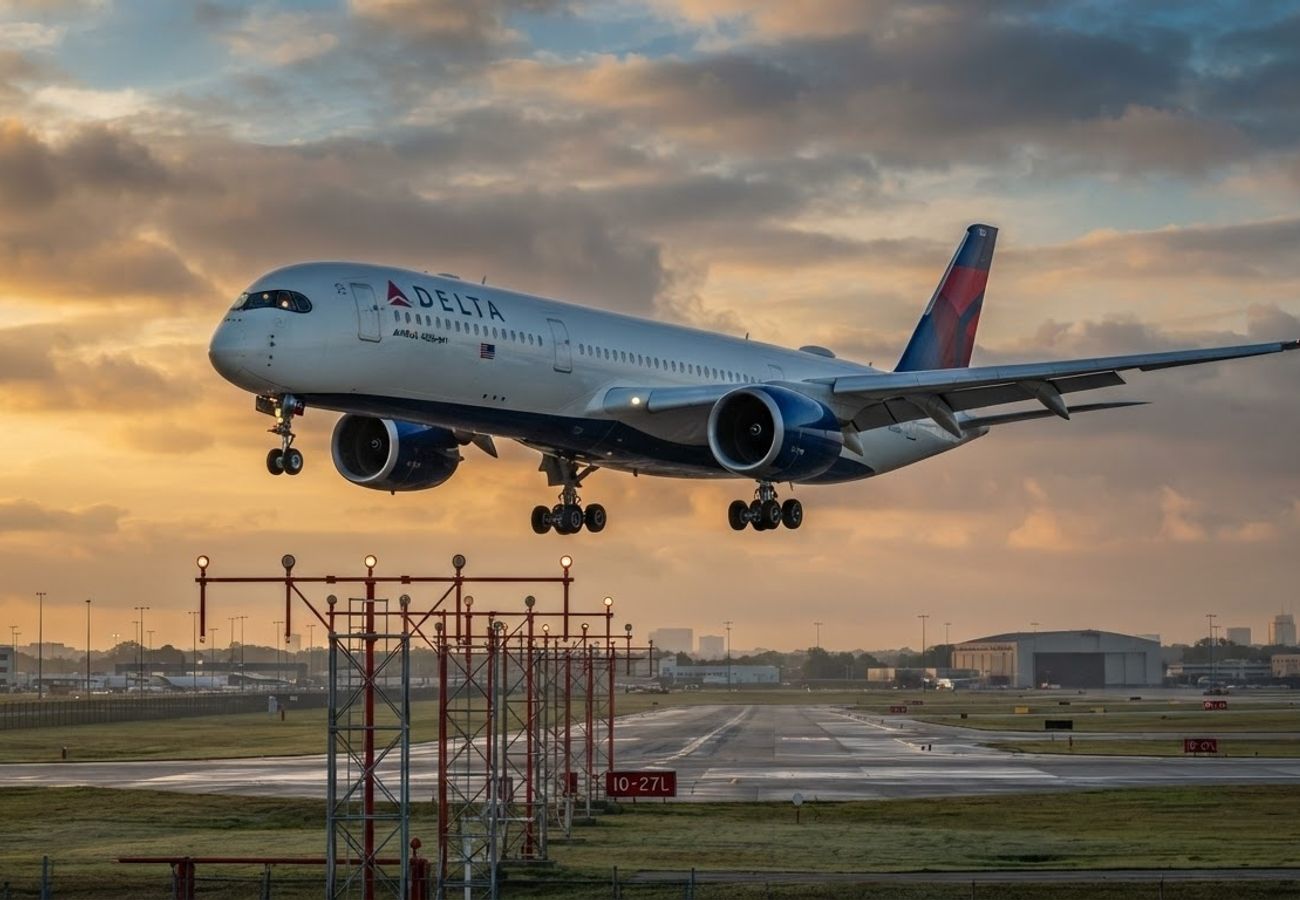
Image generated by AI
A transatlantic journey from Georgia to France was interrupted on Saturday, August 15, 2026, when Delta Air Lines flight DL82 was forced to make an emergency landing in Ireland due to a suspected medical crisis on board. The aircraft eventually reached its destination in Paris approximately four hours behind schedule after a strategic stop for medical assistance and refueling.
The incident occurred during a long-haul crossing from Hartsfield-Jackson Atlanta International Airport to Paris Charles de Gaulle Airport. While cruising at an altitude of roughly 39,000 feet, the flight crew received reports of a medical situation that required immediate ground-based intervention. Given the aircraft's position—approximately two hours away from its French destination—the crew opted to divert to Dublin Airport, a primary hub for North Atlantic emergency redirections.
Emergency Diversion of Airbus A350-900 to Dublin
The aircraft utilized for this route was an Airbus A350-941, registered under the tail number N503DN. Following the report of the medical emergency, the pilots initiated a descent toward Ireland, touching down on Dublin Airport’s Runway 28L. Flight tracking data indicates that the landing occurred approximately 10 hours and 25 minutes after the flight's initial departure from Atlanta.
The decision to land in Dublin rather than pushing through to Paris underscores the safety protocols governing transatlantic aviation. When a passenger's health is compromised at 39,000 feet, the priority shifts from schedule adherence to the fastest possible access to specialized medical facilities. Dublin Airport serves as a critical safety valve for these scenarios due to its robust runway infrastructure and the availability of high-tier emergency medical services.
Ground Operations and Refueling in Ireland
Upon landing, the Airbus A350 remained on the tarmac in Dublin for approximately three hours. This window was utilized by ground crews and medical professionals to address the suspected emergency and ensure the stability of the affected passenger. Simultaneously, the aircraft underwent necessary refueling operations to ensure it had sufficient reserves for the final leg of the journey to France.
For the remaining passengers on board, the diversion resulted in a significant pause in their travel. While such interruptions can lead to missed ground transportation or connecting flights in Paris, aviation protocols dictate that medical necessity outweighs operational efficiency. The coordinated effort between Delta Air Lines, Dublin air traffic control, and Irish ground teams allowed the aircraft to resolve the crisis without needing to offload all passengers or swap aircraft.
Final Arrival at Paris Charles de Gaulle
Once cleared for departure and fully refueled, flight DL82 resumed its trajectory across the English Channel. By continuing with the original aircraft rather than transferring passengers to a different service, the airline managed to mitigate further logistical chaos, though the overall timeline remained impacted.
The flight eventually touched down at Paris Charles de Gaulle Airport shortly after 10:00 a.m. local time. The cumulative time spent descending into Dublin, managing the medical response, and refueling resulted in a final arrival time approximately four hours later than originally scheduled.
Operational Data for Flight DL82
| Flight Detail | Information |
|---|---|
| Flight Number | DL82 |
| Aircraft Model | Airbus A350-941 |
| Aircraft Registration | N503DN |
| Departure Point | Hartsfield-Jackson Atlanta International Airport |
| Destination Point | Paris Charles de Gaulle Airport |
| Diversion Point | Dublin Airport (Runway 28L) |
| Departure Time (Atlanta) | Friday, Aug 14, approx. 4:20 p.m. EDT |
| Arrival Time (Paris) | Saturday, Aug 15, shortly after 10:00 a.m. local |
| Total Delay | Approximately 4 hours |
| Ground Time in Dublin | Approximately 3 hours |
Analysis of Long-Haul Aviation Safety Protocols
This incident highlights the complex decision-making process involved in "ETOPS" (Extended-range Twin-engine Operational Performance Standards) and general long-haul safety. When an emergency arises over the Atlantic, pilots do not simply look for the nearest strip of concrete; they evaluate a matrix of variables including:
- Medical Facility Quality: Does the diversion airport have the specific trauma or cardiac care required for the patient?
- Runway Suitability: Can the specific aircraft model (in this case, the A350) safely land and depart from the available runways?
- Fuel Reserves: Does the diversion leave enough fuel to reach the final destination, or is a refueling stop mandatory?
- Weather Conditions: Is the alternate airport experiencing visibility or wind issues that would make a landing riskier than continuing?
The successful resolution of flight DL82's crisis demonstrates the resilience of the North Atlantic aviation corridor. The ability to pivot from a scheduled route to an emergency landing and then back to the original destination within a few hours is a testament to the integrated nature of global air traffic management.
Why This Matters: The Passenger Perspective
For the modern traveler, an incident like the DL82 diversion serves as a reminder that "on-time performance" is always secondary to life safety. From a logistical standpoint, a diversion creates a ripple effect. Passengers arriving four hours late may face expired visas for short-term stays, missed non-refundable hotel bookings, or lapsed airport transfers.
However, from a legal and safety perspective, the airline's decision to divert is the only defensible action. Had the crew attempted to reach Paris while a passenger was in critical condition, the liability and ethical risks would have been far greater. For those flying long-haul, this event emphasizes the importance of travel insurance that covers "trip interruption" and the value of leaving a buffer window between an international arrival and a critical onward appointment.
A safe landing in Dublin ensured that a medical crisis did not become a tragedy at 39,000 feet.
Related Travel Guides
Disclaimer
This article is for informational and educational purposes only. It does not constitute legal, financial, or professional advice. While we strive to provide accurate and up-to-date information, travel policies, regulations, and conditions change rapidly. Always verify information with official sources before making travel decisions. Nomad Lawyer makes no representations about the accuracy, reliability, completeness, or suitability of the information provided. Readers should consult qualified professionals for advice specific to their circumstances. The views expressed in this article are those of the author and do not necessarily reflect the views of Nomad Lawyer.
Kunal K Choudhary
Co-Founder & Contributor
A passionate traveller and tech enthusiast. Kunal contributes to the vision and growth of Nomad Lawyer, bringing fresh perspectives and driving the community forward.
Learn more about our team →