
Delfines Hotel and Convention Center Targets Global Growth as Asian Buyers Boost Lima’s Event Appeal

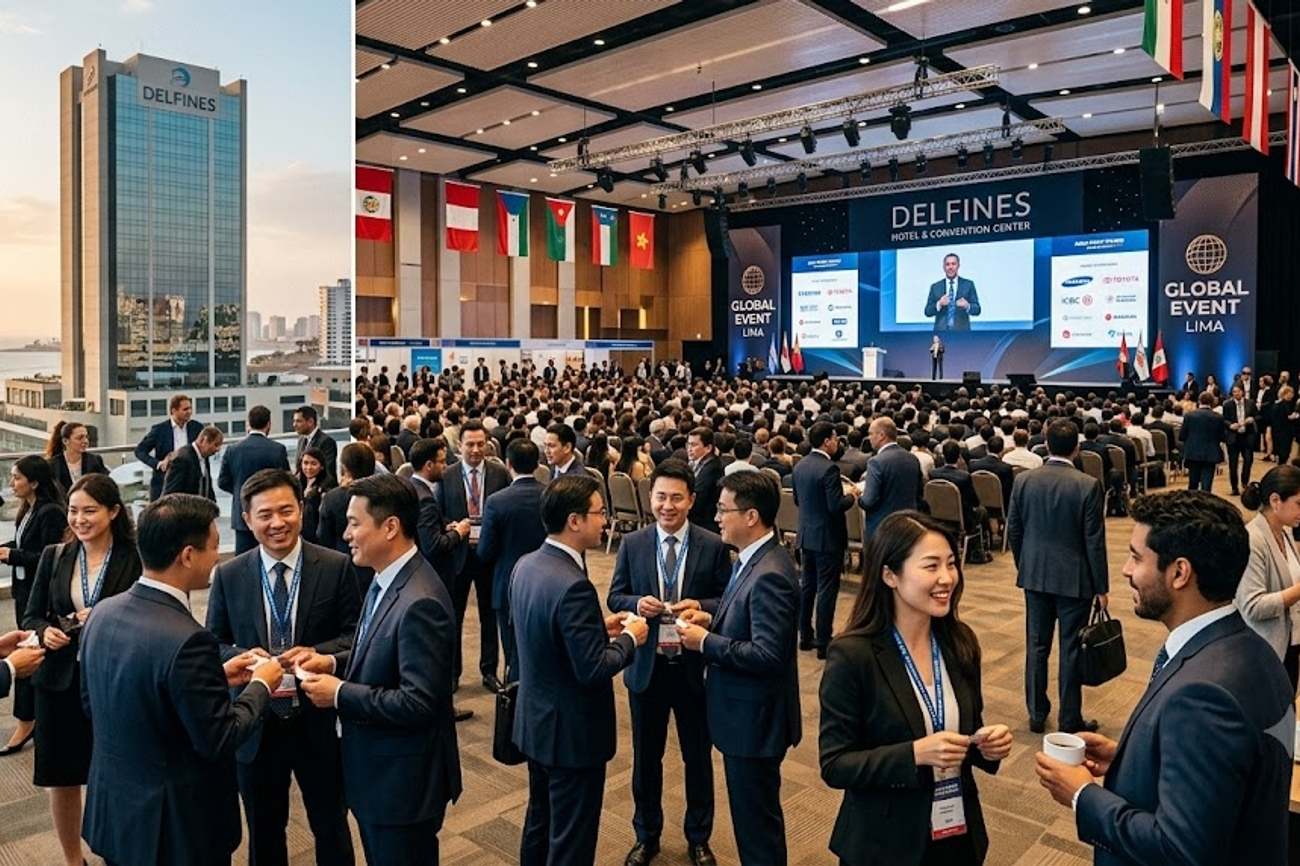
Delfines Hotel & Convention Center anchors Lima's corporate event sector
While most international visitors view Lima strictly through the lens of cliffside Pacific cevicherías or the baroque facades of its historic core, the Peruvian capital is experiencing a profound corporate migration anchored in the peaceful olive groves of San Isidro. At Delfines Hotel & Convention Center, a landmark property with more than 20 years of experience managing large-scale gatherings, an influx of Asian buyers is redefining how global delegations interact with the city. Speaking during the Peru Travel Mart, hotel executive Cindy Vilchez confirmed that this year's event has introduced a distinct wave of international buyers, particularly from established Asian commercial corridors alongside expanding Latin American networks, transforming the property's 880-capacity Mediterranean ballroom into a strategic venue for transpacific trade, international medical congresses, and global sporting summits.
Transpacific Event Corridors: How Asian Delegations Are Transforming Lima's Convention Sector
The corporate transformation taking place within Delfines Hotel reflects a strategic shift across Peru's hospitality sector. Historically, large-scale summits in South America centered on North American and European source markets. Today, direct trade ties and transpacific investments have elevated Lima into a favored commercial bridge between Latin America and the Asia-Pacific region.
At the center of this movement is the hotel's long-standing operational presence. With more than two decades in the metropolitan market, Delfines Hotel & Convention Center has established a proven track record for executing complex gatherings. Rather than operating merely as a luxury residence, the hotel combines guest accommodations with dedicated meeting spaces and on-site culinary operations. This integrated model provides international congress organizers with a self-contained campus where lodging, breakout seminars, and formal banquets unfold without requiring delegates to navigate the capital's congested avenues.
Speaking during Peru Travel Mart, Cindy Vilchez emphasized that the Asian market represents an established area of expertise for the property. Delfines has developed specialized familiarity with the logistical and hospitality requirements of Asian travelers. What distinguishes this season, according to Vilchez, is the notable presence of new buyers actively seeking contractual agreements. The hotel is working to convert these fresh connections into multi-year hosting arrangements, capitalizing on Lima's emergence as an aviation crossroads along the Pacific rim.
At the same time, the property maintains a dual commercial focus by capturing demand from neighboring Latin American markets. By pairing its entrenched Asian relationships with regional partnerships across South and Central America, Delfines is insulating its convention calendar against localized economic shifts. The centerpiece of this commercial offering remains its Mediterranean ballroom. Capable of accommodating up to 880 people, the ballroom ranks among the largest indoor event spaces in Lima, providing the physical footprint required to host multi-day medical congresses, scientific symposia, and athletic summits.
What Makes San Isidro and Coastal Lima Distinct
To appreciate why global buyers choose Delfines Hotel, one must understand the unique geography of San Isidro. While nearby Miraflores draws vacation crowds to its Pacific cliffs, San Isidro serves as Lima's financial and diplomatic heartbeat. The hotel itself sits in a tranquil enclave facing the verdant fairways of the Lima Golf Club, providing corporate visitors with an oasis of calm that contrasts with the high-density avenues of downtown.
Just a short stroll from the hotel entrance lies the historic Bosque El Olivar, an urban sanctuary containing centuries-old olive trees originally planted in the seventeenth century. Walking beneath these gnarled, silver-green canopies reveals a slower side of Lima, where hummingbirds dart between quiet residential mansions and shaded stone pathways.
Lima's cultural identity is deeply tied to its historical position as the capital of the Spanish Viceroyalty, an architectural legacy preserved within the Historic Centre of Lima, designated as a UNESCO World Heritage site for its ornate wooden balconies and baroque convents. Modern Lima is defined equally by its multi-layered immigrant history. Generations of Chinese and Japanese arrivals have transformed the city into the culinary capital of South America. Visiting executives can step from a morning plenary session into an evening exploring Nikkei cuisine—where fresh Pacific seafood meets Japanese technique—or savoring savory Chifa stir-fries blending Cantonese traditions with native Andean ingredients.
Visitor Insider Tips for Navigating Lima
Best Time Windows and Climate Awareness
Lima's coastal microclimate varies across the seasons. From December through April, the city enjoys sunny coastal weather with daytime temperatures around 26°C (79°F), ideal for combining conferences with seaside excursions. From May through October, the Humboldt Current brings the garúa—a cool marine mist hanging over the shoreline. Schedule outdoor receptions or coastal walks in Miraflores during the afternoon hours, between 1:00 PM and 4:30 PM, when the mist is most likely to clear.
Local Business Etiquette and Cultural Rhythms
Peruvian business culture places high value on interpersonal rapport and courteous formality. When meeting local partners, begin conversations with polite personal inquiries before transitioning into contractual specifics. A firm handshake accompanied by direct eye contact is standard, and exchanging physical business cards remains an expected ritual among visiting delegations. In corporate settings, punctuality is strictly observed, even if evening dinners follow a more relaxed cadence.
Regional Gastronomy Beyond Tourist Enclaves
Take full advantage of Lima's culinary scene by timing meals to local customs. Traditional cevicherías serve their freshest catch during lunch hours; locals rarely eat raw seafood after sunset. Order a classic tiradito with creamy ají amarillo sauce, savor causa limeña layered with avocado and crab, or enjoy skewered anticuchos de corazón prepared over hot coals. For a signature beverage, request a pisco sour crafted with aromatic Quebranta grapes, or try chilled chicha morada, brewed from Andean purple corn, pineapple rinds, and cinnamon.
Transport Hacks and Commuter Realities
Metropolitan Lima experiences dense traffic during weekday rush hours (7:30 AM to 9:30 AM and 5:30 PM to 8:30 PM). When traveling between San Isidro and the historic center, avoid hailing street cabs. Instead, utilize authorized app-based ride services or arrange chauffeured cars through the hotel concierge. Delegates needing rapid transit downtown can access the Metropolitano bus corridor that bypasses surface congestion. Travelers arriving at Jorge Chávez International Airport should arrange pre-booked transfers through PROMPERÚ certified transport providers to avoid terminal delays.
Cultural and Environmental Context: Sustainable Hospitality on the Pacific Rim
As Lima's convention footprint expands, the hospitality sector faces growing responsibilities regarding resource stewardship. Lima is the world's second-largest desert capital after Cairo, receiving less than an inch of rainfall annually. This acute geographical reality makes water conservation, plastic reduction, and energy efficiency immediate priorities for the local community.
During her interview, Cindy Vilchez noted that Delfines Hotel & Convention Center is preparing to implement a targeted sustainability policy, beginning with the installation of refillable dispensers in guest bathrooms to eliminate single-use plastic bottles. While the hotel is in the implementation phase rather than holding established global eco-certifications, this initiative represents a meaningful operational transition for a property that has operated for more than two decades under traditional models.
Phasing out individual plastic amenities prevents thousands of small containers from entering coastal municipal waste streams each month. High-volume event venues are also collaborating with agricultural cooperatives from nearby valleys, sourcing seasonal produce directly from local growers. By integrating environmental initiatives into its hosting capabilities, the hotel aligns its corporate growth with the ecological preservation of Peru's arid coastal strip.
FAQ: Visiting Lima 2026
What is the maximum capacity of the event space at Delfines Hotel?
The Mediterranean ballroom at Delfines Hotel & Convention Center accommodates up to 880 people, standing as one of the largest self-contained corporate event spaces in metropolitan Lima.
What is the best neighborhood in Lima for business travelers?
San Isidro is the premier district for business travelers, offering diplomatic security, financial offices, quiet residential avenues, the historic Bosque El Olivar, and close proximity to top-tier dining in Miraflores.
Do international travelers need a visa to enter Peru?
Citizens of the United States, Canada, the European Union, the United Kingdom, and several Asian economies do not need a tourist visa for stays up to 90 days. A passport valid for six months is required.
What environmental initiatives is Delfines Hotel currently introducing?
The hotel is preparing to implement an environmental policy that introduces refillable dispensers in all guest bathrooms, replacing single-use plastic amenity bottles to lower plastic waste.
As Asian trade winds meet the South American coast, Lima's historic olive groves and grand ballrooms offer the ultimate stage for global connection.
Related Travel Guides
Peru Tourism Surge: Chilean Traveler Boom and Jorge Chávez Expansion
Lima Cycling and Sustainable Urban Exploration Guide
The Insider Guide to Business Travel and Events in San Isidro Lima
Disclaimer
This article is for informational and educational purposes only. It does not constitute legal, financial, or professional advice. While we strive to provide accurate and up-to-date information, travel policies, regulations, and conditions change rapidly. Always verify information with official sources before making travel decisions. Nomad Lawyer makes no representations about the accuracy, reliability, completeness, or suitability of the information provided. Readers should consult qualified professionals for advice specific to their circumstances. The views expressed in this article are those of the author and do not necessarily reflect the views of Nomad Lawyer.
Raushan Kumar
Founder & Lead Developer
Full-stack developer with 11+ years of experience and a passionate traveller. Raushan built Nomad Lawyer from the ground up with a vision to create the best travel and law experience on the web.
Learn more about our team →