
Delays Cancellations Snarl 107 Flights at São Paulo Hubs in April 2026
Over 100 delays and cancellations snarl São Paulo's Guarulhos and Viracopos airports in 2026, cascading disruptions across Brazil's domestic network and transatlantic routes. Air France, Lufthansa, and United affected.

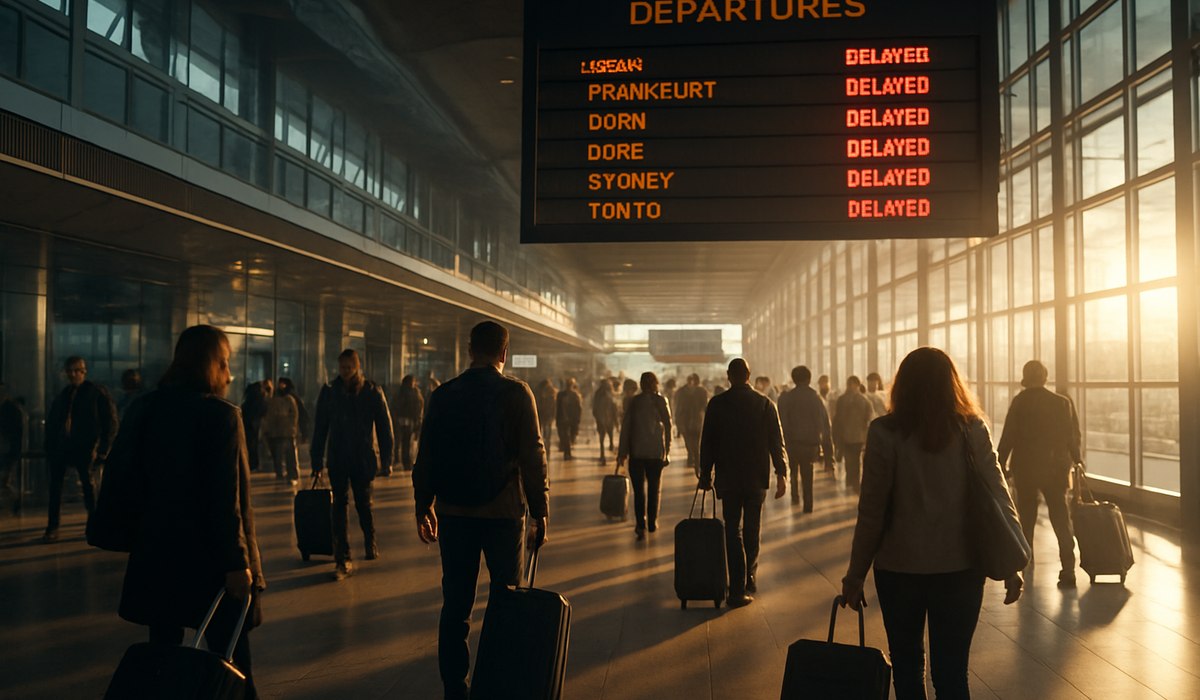
Image generated by AI
Major Flight Disruption Snarls São Paulo's Twin Aviation Hubs
São Paulo's Guarulhos and Viracopos airports grappled with significant operational strain on April 16, 2026, as 107 flights experienced delays and 14 services faced outright cancellation. The cascading disruptions rippled across Brazil's domestic network and severed critical links on transatlantic routes to New York, Paris, and Frankfurt. Major carriers including Air France, Lufthansa, and United Airlines reported schedule changes affecting thousands of passengers during peak travel hours at South America's busiest aviation gateway.
The delays cancellations snarl emerged during morning banking operations when competing demand for runway capacity collided with infrastructure constraints and weather-related capacity reductions at both facilities.
Disruption at Brazil's Busiest Aviation Gateways
Guarulhos International Airport, São Paulo's primary international terminal, bore the brunt of operational challenges on April 16. Flight tracking data revealed concentrated disruptions between 6 a.m. and noon, when overnight long-haul arrivals merged with domestic feeder services competing for limited runway slots. The airport's chronic capacity limitations—well documented in public performance records showing persistent double-digit delay percentages—amplified the impact of any additional operational friction.
Viracopos International Airport in Campinas compounded connectivity challenges, despite handling fewer annual passengers than Guarulhos. As a critical node in Azul Airlines' domestic network and a major cargo hub, delays at Viracopos cascaded into missed connections for travelers dependent on tight itineraries across Brazil's interior regions. Inbound aircraft delays forced subsequent departures to slip, creating a domino effect that persisted throughout the afternoon.
As a primary entry and exit point for Brazil's business and leisure corridors, these twin hubs control the flow of South American connectivity for Star Alliance and SkyTeam networks, making even localized disruptions consequential for passengers across multiple continents.
Cascading Delays Snarl Domestic and Long-Haul Networks
The delays cancellations snarl extended far beyond São Paulo's immediate airspace. Domestic flights feeding into Guarulhos and Viracopos arrived late, forcing international departures scheduled within narrow turnaround windows to hold aircraft while connecting passengers raced across terminals. Services linking smaller Brazilian cities—including routes from Salvador, Brasília, and Recife—encountered schedule shifts as crews and equipment repositioned around the disruption.
International services suffered particularly acute consequences. Air France flights between Guarulhos and Paris Charles de Gaulle experienced extended ground holds as aircraft awaited connecting passengers from delayed domestic arrivals. Lufthansa services to Frankfurt similarly incurred schedule compression, with crews facing duty-time limitations that further constrained operational flexibility. United Airlines routes to New York's Newark hub encountered knock-on delays after earlier domestic connections brought passengers late into Guarulhos.
The North Atlantic corridor proved especially vulnerable. Overnight departure banks—typically scheduled to depart between 9 p.m. and midnight—faced aircraft availability constraints as daytime irregularities consumed the turnaround window. Transatlantic capacity during April already reflects elevated congestion at both origin and destination airports, leaving minimal scheduling slack to absorb unexpected disruptions.
Guarulhos Emerges as Chronic Delay Hotspot
Public performance metrics confirm Guarulhos' precarious position within Brazil's aviation network. The airport consistently reports on-time performance lagging regional averages, with monthly delay rates frequently exceeding 20 percent and cancellation rates hovering above 1.5 percent. Infrastructure constraints—including periodic runway maintenance, limited gate availability during peak hours, and aging ground handling systems—contribute to this chronic challenge.
Weather patterns endemic to São Paulo's April weather windows exacerbate operational strain. Summer rainfall, scattered thunderstorms, and low-visibility conditions force air traffic controllers to increase separation standards and implement flow management initiatives that reduce hourly throughput. Recent months brought multiple episodes of heavy afternoon convection, particularly on April 14 and 15, pre-positioning the airport for operational stress when additional demand arrived on April 16.
Ground infrastructure limitations remain a persistent vulnerability. Maintenance-related runway closures periodically narrow available capacity, particularly during peak morning departure banks. When combined with tight airline scheduling aimed at maximizing aircraft utilization, these constraints leave negligible margin to absorb technical malfunctions, crew duty-time limitations, or unexpected airspace restrictions within São Paulo's terminal area.
Viracopos Connectivity Challenges
Viracopos International Airport faces unique connectivity constraints despite serving as Azul's primary domestic hub outside Rio de Janeiro. The facility's location in Campinas—approximately 30 kilometers northwest of São Paulo's metropolitan core—creates dependence on precise timekeeping for multi-leg itineraries requiring rapid aircraft and crew repositioning. April 16's disruptions exposed these vulnerabilities starkly.
Delayed inbound aircraft from regional Brazilian cities arrived late to Viracopos, forcing scheduled departures to slip as crews awaited passengers and ground handling operations extended. The airport's cargo operations—a significant revenue stream for operators including Azul Cargo—also experienced ripple effects, with freight positioning delays affecting subsequent cargo movements across South America.
Unlike Guarulhos' primarily international role, Viracopos anchors Brazil's domestic connectivity for interior routes, making delays there consequential for passengers connecting through secondary Brazilian cities rather than international gateways. This specialized role means Viracopos disruptions create distinct challenges from Guarulhos irregularities, requiring separate operational strategies and passenger communication protocols.
What This Means for Travelers
Passengers experiencing delays cancellations snarl across São Paulo's hubs face several critical action items during ongoing disruptions:
-
Check real-time flight status immediately using FlightAware or your airline's mobile application, as schedule changes often precede official notifications.
-
Contact your airline directly before heading to the airport, confirming current departure times and gate information, particularly for connecting services.
-
Request rebooking onto earlier flights if your service shows delays exceeding two hours, prioritizing options with shorter connections through less-congested hubs.
-
Document all expenses related to delays, including meals, accommodations, and ground transportation, as you may qualify for compensation under Brazilian air passenger rights regulations.
-
Verify passenger rights through the U.S. Department of Transportation's official consumer protection resources if traveling on U.S. carriers or connecting through American airports.
-
Confirm onward connections by reaching connecting airlines at least four hours before scheduled departure, particularly for international services where rebooking options prove limited.
-
Monitor weather forecasts for São Paulo through April 20 to anticipate additional potential disruptions as tropical weather patterns persist across the region.
What Caused the Delays Cancellations Snarl?
The April 16 disruption stemmed from multiple converging factors rather than a single catastrophic event. Morning rainfall at Guarulhos temporarily reduced runway capacity as controllers implemented weather-related separation increases. Simultaneously, scheduled runway maintenance at Viracopos narrowed available departure slots, creating bottlenecks that persisted through afternoon. Aircraft technical issues on several overnight long-haul arrivals further compressed turnaround windows for subsequent international departures.
Ground handling staffing constraints at both facilities—reflecting broader labor challenges in Brazilian aviation—slowed passenger boarding and baggage handling processes, extending aircraft dwell times beyond scheduled tolerances. By mid-morning, the accumulated delay propagated through the network as connecting passengers missed flights and crews encountered duty-time limitations that prevented equipment repositioning.
Real-Time Flight Tracking and Updates
Monitoring current flight status requires consulting multiple authoritative sources. [FlightAware](https
Disclaimer
This article is for informational and educational purposes only. It does not constitute legal, financial, or professional advice. While we strive to provide accurate and up-to-date information, travel policies, regulations, and conditions change rapidly. Always verify information with official sources before making travel decisions. Nomad Lawyer makes no representations about the accuracy, reliability, completeness, or suitability of the information provided. Readers should consult qualified professionals for advice specific to their circumstances. The views expressed in this article are those of the author and do not necessarily reflect the views of Nomad Lawyer.
Preeti Gunjan
Contributor & Community Manager
A passionate traveller and community builder. Preeti helps grow the Nomad Lawyer community, fostering engagement and bringing the reader experience to life.
Learn more about our team →