
Blaine County Fire Crews Contain Industrial Debris Blaze at Hailey Waste Transfer Station in 2026
Emergency responders successfully halted a dangerous debris fire at a key waste transfer facility near Hailey, Idaho, preventing a potential wildland fire escalation during a high-risk summer season.

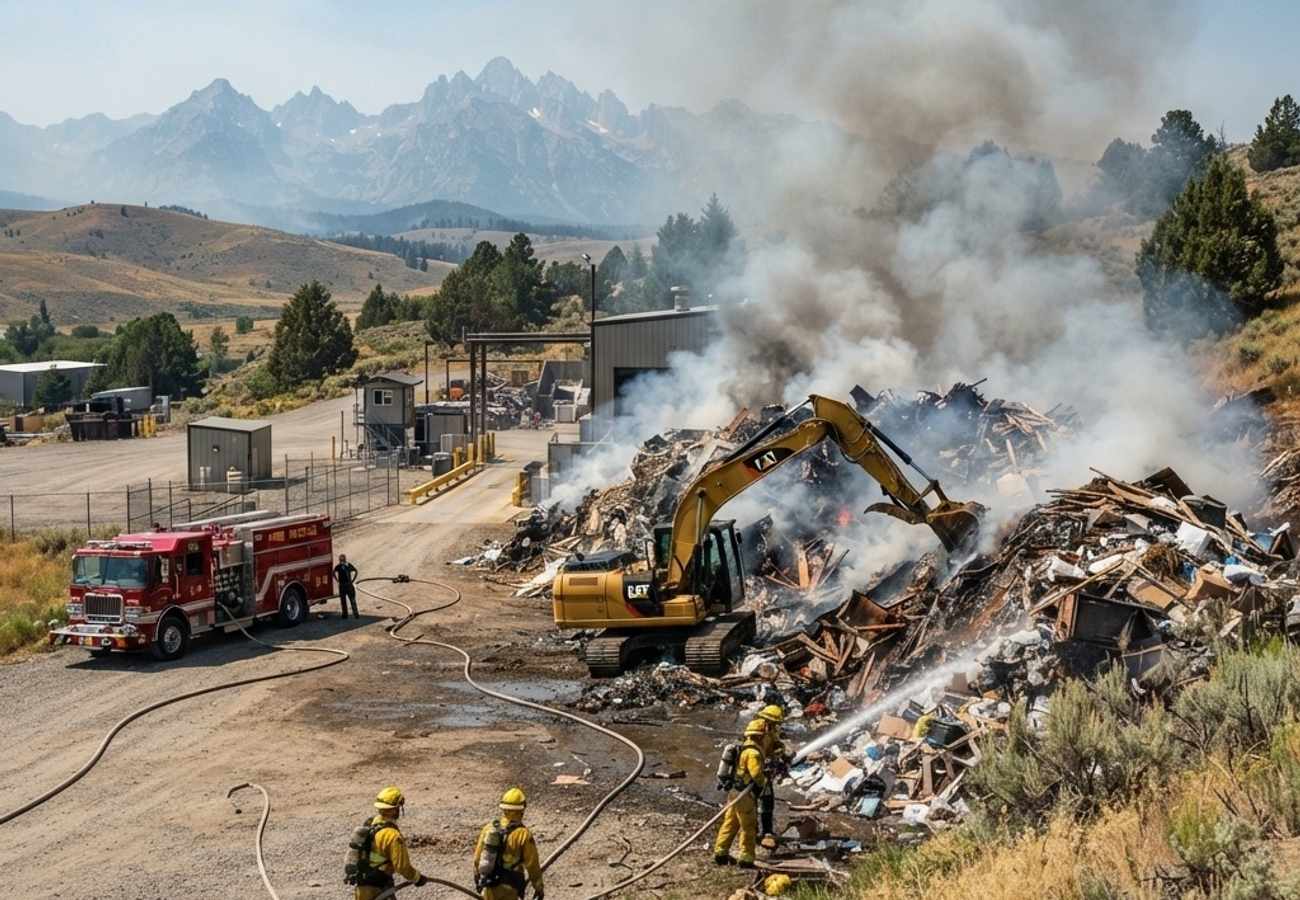
Image generated by AI
Emergency responders in Idaho successfully contained a debris fire at a regional waste transfer facility near Hailey on August 7, 2026, preventing the flames from encroaching upon residential zones and dry wildlands. The incident occurred during a period of heightened wildfire activity across the state, triggering immediate alarms for the local community.
The fire originated within a debris pile at a critical waste handling site located north of Hailey. This facility serves as the primary consolidation point for solid waste, recycling, and construction debris for Blaine County. Located in the Ohio Gulch area, the station manages a diverse array of materials, ranging from standard household refuse to large-scale yard and building waste.
Rapid Containment at Ohio Gulch Facility
Initial reports indicate that the blaze broke out in a concentrated pile of debris, which quickly produced visible smoke plumes. Firefighting crews, who are well-versed in the industrial layout of the Ohio Gulch site, arrived promptly to initiate suppression efforts. Because transfer stations act as hubs for massive volumes of combustible material, officials prioritized rapid isolation to prevent a deep-seated burn within the processed trash.
Tactical operations focused on separating the active fire from nearby stockpiles and critical facility infrastructure. Firefighters utilized heavy machinery to dismantle and overturn the burning material, a necessary step to cool the core of the pile. In solid waste environments, compacted debris often traps intense heat, creating a risk of rekindling if the material is not thoroughly aerated and extinguished.
By the time containment was officially confirmed, no structures within the facility or the surrounding neighborhoods had been lost. However, the speed of the ignition highlighted the volatility of industrial sites during the late summer months when humidity is low and fuels are dry.
Transport Disruptions and Community Impact in Wood River Valley
The fire caused immediate logistical friction for travelers and residents moving through the Hailey and Ketchum corridor. As firefighting apparatus and support vehicles occupied the area, drivers reported intermittent traffic slowdowns near the waste station entrance. Given that the facility is situated along a primary artery connecting communities in the Wood River Valley, the operational response had a direct effect on local transit.
Environmental conditions played a significant role in the public's perception of the event. Shifting wind patterns pushed columns of smoke and ash toward nearby residential areas, causing brief periods of poor visibility and air quality degradation. This localized plume merged with the broader regional haze already present due to other active wildfires across Idaho.
Local homeowners expressed significant anxiety regarding the potential for embers to jump from the industrial site into the adjacent hillsides. According to public wildfire risk assessments for Blaine County, the Ohio Gulch corridor is classified as a critical interface zone. This designation means it is a point where industrial operations, transportation networks, and wildland vegetation meet, often leading to complex and unpredictable fire behavior.
Industrial Waste Safety Under Increased Scrutiny
This incident brings renewed attention to the inherent risks associated with waste transfer stations across the Western United States. As summer temperatures rise and droughts persist, the combination of combustible materials—such as plastics, cardboard, wood waste, and improperly discarded lithium batteries—creates a high-risk environment for spontaneous or accidental ignition.
In Blaine County, the Hailey-area hub is essential for moving material to regional landfills. Existing planning documents for such sites mandate the maintenance of wide firebreaks and clear access lanes to ensure emergency vehicles can maneuver without obstruction. The recent blaze serves as a catalyst for reviewing these safety protocols.
From a public health perspective, environmental data suggests that waste-site fires pose unique risks. Even after visible flames are extinguished, smoldering debris can release harmful particulates and pollutants into the air. This necessitates prolonged monitoring and the physical overhaul of burned materials to ensure no subterranean hotspots remain.
Operational Adjustments and Future Prevention
Following the containment of the fire, facility management began an investigation into the specific ignition source. Standard operational guidelines for transfer stations suggest a rigorous post-incident audit of electrical systems and vehicle fueling zones. There is also a specific focus on "hot loads"—materials arriving from outside haulers that may already be smoldering upon delivery.
To mitigate future risks, operators are expected to implement the following measures:
- Increased frequency of temperature checks in high-volume debris piles.
- Reduction of maximum stockpile sizes to prevent heat trapping.
- Enhanced separation between different material streams (e.g., separating wood from plastics).
- Adjusted internal traffic patterns to keep heavy machinery away from cooling zones.
Blaine County’s emergency framework emphasizes the continuity of service. While some recycling or disposal services may face brief delays for safety evaluations, the facility is expected to maintain most operations.
The Broader Context of Idaho's Fire Season
The event near Hailey is a microcosm of the challenges facing Idaho in 2026. A combination of gusty winds and extreme dryness has pushed firefighting resources to their limits. Statistics on statewide fire starts indicate that human-caused ignitions, including equipment sparks and debris mismanagement, remain a primary driver of wildfire activity.
There is a growing movement among regional observers to treat non-traditional sites—such as rail corridors, utility easements, and waste stations—as high-priority monitoring zones. The Hailey incident proves that a localized industrial flare-up can quickly become a matter of regional concern in a valley already sensitized to smoke and fire.
The successful containment of this blaze underscores the importance of early detection and the ability of local crews to act decisively. As the season continues, the focus remains on community education regarding the safe disposal of flammable materials and the immediate reporting of smoke in industrial zones.
The swift response at the Hailey transfer station prevented a localized accident from evolving into a regional catastrophe.
Related Travel Guides
Disclaimer
This article is for informational and educational purposes only. It does not constitute legal, financial, or professional advice. While we strive to provide accurate and up-to-date information, travel policies, regulations, and conditions change rapidly. Always verify information with official sources before making travel decisions. Nomad Lawyer makes no representations about the accuracy, reliability, completeness, or suitability of the information provided. Readers should consult qualified professionals for advice specific to their circumstances. The views expressed in this article are those of the author and do not necessarily reflect the views of Nomad Lawyer.
Kunal K Choudhary
Co-Founder & Contributor
A passionate traveller and tech enthusiast. Kunal contributes to the vision and growth of Nomad Lawyer, bringing fresh perspectives and driving the community forward.
Learn more about our team →