
Damascus Mezzeh Airport Conversion: Private Jet Hub Plans Face Human Rights and Legal Scrutiny

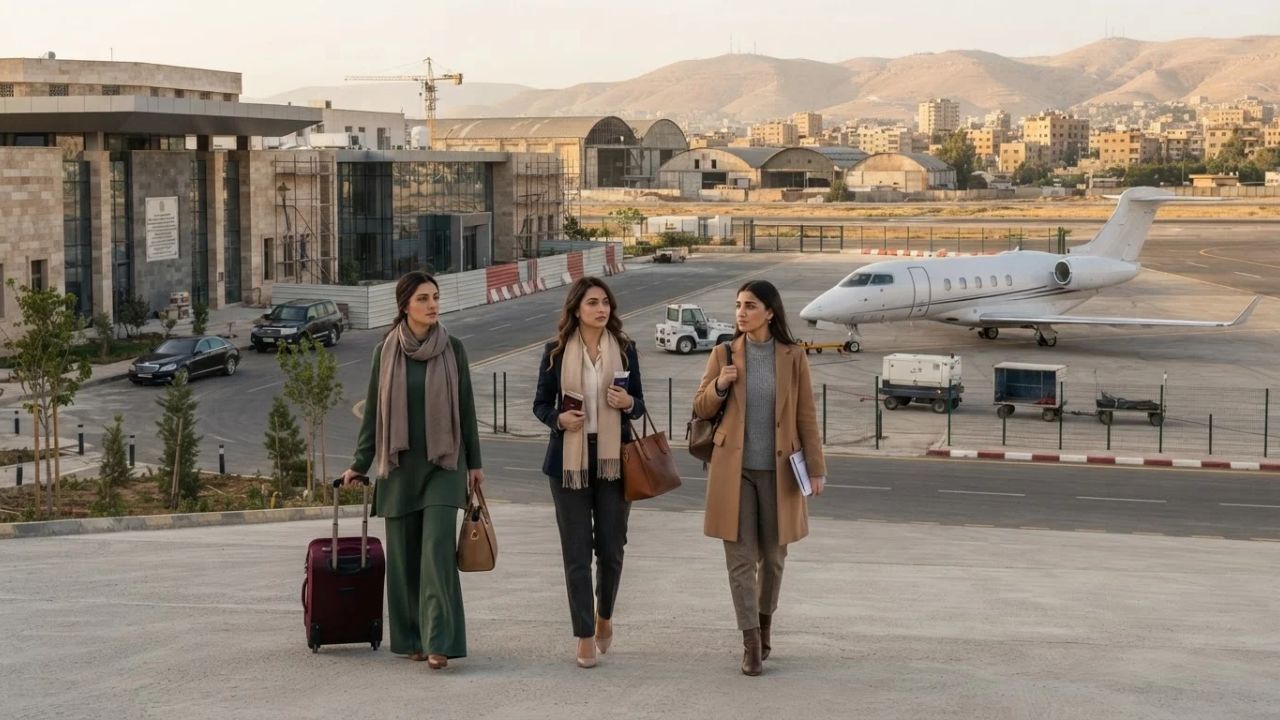
Syria's civil aviation authorities have initiated preliminary redevelopment to transform Damascus Mezzeh Airport from a military base into a dedicated private and executive aviation terminal under its Vision 2030 modernization strategy. While intended to attract corporate investors and complement Damascus International Airport, the project faces intense international scrutiny as human rights investigators warn that excavation risks disturbing suspected mass graves, alongside ongoing Level 4 "Do Not Travel" advisories from global governments.
The Local Trend: Executive Aviation Ambitions in Damascus
In an effort to rebuild economic connectivity, the Syrian General Authority of Civil Aviation is positioning Mezzeh Airport as a niche terminal for corporate jets, non-scheduled charters, and high-net-worth business travelers. Unlike Damascus International Airport (DAM)—which remains the principal commercial gateway alongside regional airfields in Aleppo and Latakia—Mezzeh is designed specifically as an executive aerotropolis featuring private jet maintenance, conference centers, and business hotels.
Rubble removal and early navigation upgrades have commenced at the airfield. However, authorities concede that significant regulatory and technical milestones remain before international civil aviation standards can be certified.
Yet, behind the commercial blueprint lies a site deeply entangled with wartime history. Documentation compiled by the Syria Justice and Accountability Centre and investigative findings reviewed by Reuters indicate that parts of the Mezzeh military complex were utilized for wartime detentions and summary executions during the Assad era. Forensic investigators caution that unchecked earthmoving and construction could erase critical evidence or disturb burial grounds needed by families seeking accountability for disappeared relatives.
Syria's Aviation Framework and Travel Warning Overview
| Aviation Facility / Metric | Operational Status | Strategic Function & Regulatory Context |
|---|---|---|
| Damascus International (DAM) | Active commercial hub | Principal gateway for scheduled international passenger flights |
| Mezzeh Airport (Damascus) | Conversion underway | Designated for private, executive, and non-scheduled corporate aviation |
| Aleppo & Latakia Airports | Operational secondary hubs | Regional commercial passenger and cargo support |
| Property Disputes (Moadamiya) | Contested ownership | Local residents challenging land seizures under UN property restitution principles |
| U.S. State Department Advisory | Level 4: Do Not Travel | Cites terrorism, civil unrest, kidnapping, armed conflict, and aviation risk |
| UK FCDO Travel Advisory | All travel advised against | Cites volatile security, transport hub terror risks, and flight suspensions |
Land Rights and the Moadamiya Property Disputes
Beyond human rights concerns, the proposed commercial zone is embroiled in longstanding property disputes. Archival land records indicate that airport parcels encompass farmland and residential plots historically owned by families in the neighboring Moadamiya district.
Displaced residents have formally challenged redevelopment proposals, calling for fair adjudication before commercial zoning proceeds. United Nations human rights experts have repeatedly pressed Syrian authorities to reform expropriation laws, establish transparent property restitution frameworks, and provide equitable compensation to original landowners before foreign investment is solicited.
Cultural & Environmental Value: Ancient Heritage Beyond the Modern Divide
For cultural historians and travelers monitoring the region, the debate surrounding Mezzeh illustrates the profound tension between historical accountability and economic reconstruction.
Damascus is widely recognized as one of the oldest continuously inhabited cities on earth. While modern executive aviation projects face heavy ethical headwinds, the cultural heritage of the Ancient City of Damascus—inscribed on the UNESCO World Heritage List—remains an irreplaceable beacon of human civilization:
- Safeguarding Ancient Urban Fabric: Preserving the Roman Straight Street, the 8th-century Umayyad Mosque, and Ottoman-era courtyards in the Old City requires rigorous archaeological oversight and heritage protection rather than rapid, uncoordinated commercial redevelopment.
- Living Artisan Communities: In the narrow quarters of Bab Sharqi and Bab Touma, multigenerational woodworkers and weavers continue traditional Damascene crafts, including inlaid mother-of-pearl woodwork, hand-blown stained glass, and silver-threaded brocade fabrics.
- Ethical Memory Stewardship: Global heritage bodies stress that true post-conflict healing requires preserving sites of memory and justice rather than paving over contested history for luxury infrastructure.
Visitor Insider Tips: Navigating Syria Travel Realities and Old Damascus
While Syria remains off-limits for conventional leisure holidays under Western government travel advisories, specialists and permitted cultural observers should understand the strict operational realities on the ground:
- Strict Consular and Visa Clearances: Foreign nationals cannot enter Syria independently without prior security clearances and an invitation through a licensed Syrian tour agency. Visas are stamped on paper or electronically via official immigration channels.
- Cash-Only Economy Under Sanctions: International credit cards, debit cards, and ATM networks do not function in Syria due to international banking sanctions. Travelers must carry sufficient crisp, undamaged US Dollar or Euro bills to exchange at official Central Bank booths or licensed money changers.
- Strict Photography Prohibitions: Never photograph military checkpoints, security personnel, government ministries, or aviation facilities—including the perimeter of Mezzeh or Damascus International Airport. Penalties are severe and can lead to immediate detention.
- Old City Cultural Etiquette: When visiting religious landmarks such as the Umayyad Mosque or Sayyidah Ruqayya Shrine, remove footwear at the entrance. Women must wear loose clothing covering their head, arms, and legs (modest hooded robes are provided at the mosque entrance).
- Historic Damascene Culinary Staples: If visiting the Old City, stop by the historic Souq Al-Hamidiyah for a cone of traditional booza at Bakdash, where mastic ice cream is hand-pounded with heavy wooden mallets and coated in crushed Aleppo pistachios. Savor traditional breakfast fatteh—layers of toasted flatbread, chickpeas, spiced yogurt, and hot sheep's ghee topped with pine nuts.
Tourism Outlook: Long Road to Normalization
The planned transformation of Mezzeh Airport highlights the steep obstacles facing Syria's aviation ambitions. While authorities envision executive jet aprons and luxury corporate corridors under Vision 2030, an airport cannot operate in isolation from its sociopolitical reality.
With ongoing Level 4 travel advisories from both the United States and the United Kingdom, resolving fundamental questions around human rights, missing persons, and land restitution remains essential before Damascus can emerge as a credible, trusted international travel destination.
Related Travel Guides
Disclaimer
This article is for informational and educational purposes only. It does not constitute legal, financial, or professional advice. While we strive to provide accurate and up-to-date information, travel policies, regulations, and conditions change rapidly. Always verify information with official sources before making travel decisions. Nomad Lawyer makes no representations about the accuracy, reliability, completeness, or suitability of the information provided. Readers should consult qualified professionals for advice specific to their circumstances. The views expressed in this article are those of the author and do not necessarily reflect the views of Nomad Lawyer.
Kunal K Choudhary
Co-Founder & Contributor
A passionate traveller and tech enthusiast. Kunal contributes to the vision and growth of Nomad Lawyer, bringing fresh perspectives and driving the community forward.
Learn more about our team →