
Dallas Gets Third Commercial Airport as Avelo Airlines Launches Service from McKinney with Five New Routes
Breaking airline news and aviation industry updates for 2026.

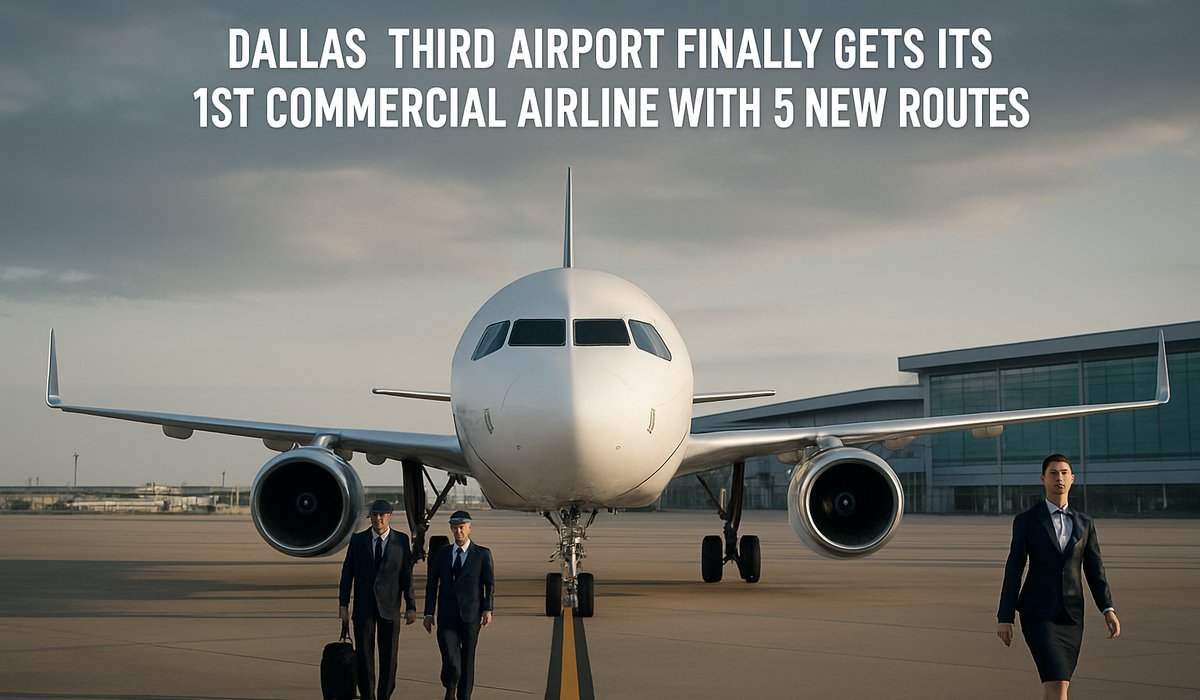
Image generated by AI
Dallas Gets Third Commercial Airport as Avelo Airlines Launches Service from McKinney with Five New Routes
Ultra-low-cost carrier marks major expansion milestone in competitive Texas aviation market
Breaking Ground in North Texas
Dallas-Fort Worth is entering a new era of regional aviation competition. Avelo Airlines, the U.S.-based ultra-low-cost carrier, has announced its inaugural commercial service from McKinney National Airport (DTX), marking the first scheduled passenger operations at what is poised to become the metroplex's third major commercial gateway. The carrier plans to establish nonstop connectivity to five leisure destinations, representing an aggressive market entry strategy for the newly operational facility serving the rapidly expanding northern Dallas region.
Strategic Expansion in Competitive Market
The move signals Avelo Airlines' confidence in Dallas-Fort Worth's travel demand, particularly as the metropolitan area continues explosive population growth. McKinney National Airport's emergence as a commercial hub addresses a long-standing infrastructure gap for residents on the northern side of the sprawling metroplex, traditionally underserved by the region's two established major airports: Dallas/Fort Worth International and Dallas Love Field.
Avelo Airlines, known for its lean operating model and competitive pricing structure, positions itself to capture price-sensitive leisure travelers seeking alternatives to congested hub airports. The carrier's entry into Dallas follows a strategic expansion pattern focused on secondary markets and underutilized regional airports across North America.
Market Implications and Regional Growth
The carrier's five-route inaugural network reflects carefully targeted leisure demand corridors, capitalizing on Dallas-Fort Worth's demographic profile and tourism patterns. This development carries broader significance for the aviation industry's post-pandemic recovery trajectory, demonstrating how regional carriers are capitalizing on infrastructure investments and changing consumer preferences for point-to-point connectivity over traditional hub-and-spoke models.
For Dallas-area travelers, the new service could introduce competitive pressure on airfares and baggage fee structures across the broader aviation market. Ultra-low-cost carriers typically compete aggressively on base fares while generating ancillary revenue through à la carte pricing for services including checked baggage, seat selection, and boarding priority—a model that influences pricing strategies across the wider industry.
What's Next
McKinney National Airport's transition to commercial service represents significant infrastructure maturation for North Texas. As jet fuel prices stabilize and airline capacity planning continues evolving in response to shifting travel patterns, additional carriers may evaluate the emerging facility as a strategic foothold in this densely populated market.
FAQ: Dallas Airport Expansion and Airline Service
Q: Why is McKinney National Airport significant for Dallas travelers? A: It becomes the third major commercial airport serving Dallas-Fort Worth, reducing congestion and providing northern metroplex residents with a closer alternative to DFW International and Love Field.
Q: How do ultra-low-cost carriers like Avelo affect airline fees and baggage charges? A: They compete aggressively on base fares but offset costs through ancillary fees for baggage, seat selection, and boarding—often triggering broader industry pricing adjustments.
Q: What destinations will Avelo serve from McKinney initially? A: The carrier will operate five nonstop leisure routes, though specific destinations reflect demand analysis and market positioning strategy.
Q: How does jet fuel pricing impact new airline routes? A: Fuel costs directly influence route profitability calculations; stable or declining prices make regional expansion more viable for carriers planning network growth.
Q: Will other airlines follow Avelo to McKinney National Airport? A: Market success at DTX will likely attract additional carriers evaluating Dallas-Fort Worth's growth potential and competitive positioning.
Related Travel Guides
External Resources
Disclaimer
This article is for informational and educational purposes only. It does not constitute legal, financial, or professional advice. While we strive to provide accurate and up-to-date information, travel policies, regulations, and conditions change rapidly. Always verify information with official sources before making travel decisions. Nomad Lawyer makes no representations about the accuracy, reliability, completeness, or suitability of the information provided. Readers should consult qualified professionals for advice specific to their circumstances. The views expressed in this article are those of the author and do not necessarily reflect the views of Nomad Lawyer.
Kunal K Choudhary
Co-Founder & Contributor
A passionate traveller and tech enthusiast. Kunal contributes to the vision and growth of Nomad Lawyer, bringing fresh perspectives and driving the community forward.
Learn more about our team →