
Dallas-Fort Worth Airport Chaos: 33 Cancellations, 585 Delays Cripple American Airlines Hub and Global Networks in June 2026
A catastrophic operational breakdown at Dallas-Fort Worth Airport left hundreds stranded as American Airlines, Delta, United, and Lufthansa recorded 33 cancellations and 585 delays, triggering global travel chaos across the US, UK, Europe, Mexico, Canada, and Japan.

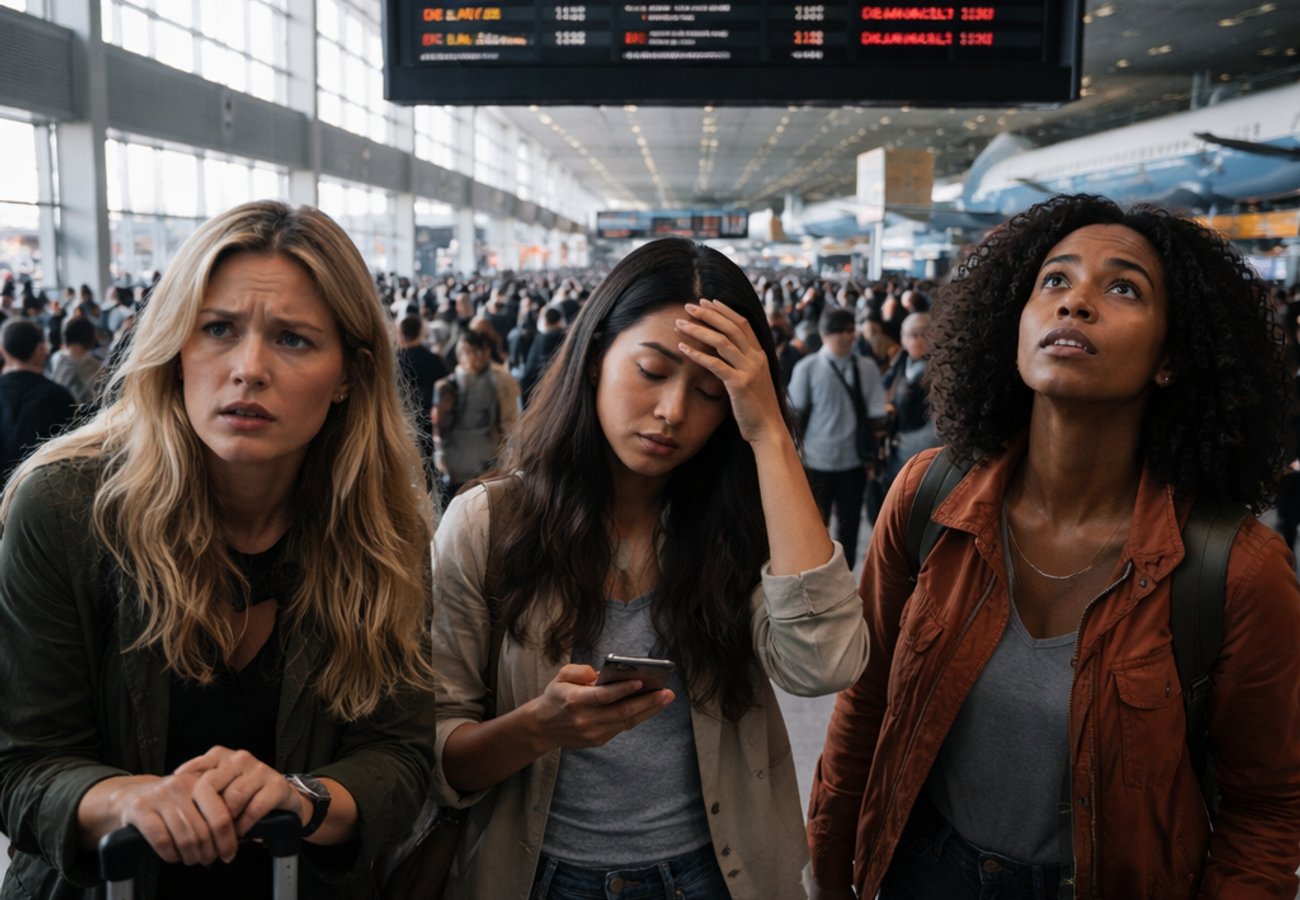
Image generated by AI
The Meltdown Nobody Saw Coming—But Should Have
An unprecedented operational crisis struck Dallas-Fort Worth Airport on Tuesday, leaving hundreds of travelers stranded or severely delayed in what quickly became one of the year's most disruptive aviation events. The Texas mega-hub—home to American Airlines' primary operations—experienced a systemic bottleneck that rippled across global aviation networks within hours.
The numbers tell the story: 33 cancellations and 585 delays across major carriers including American Airlines, Delta Air Lines, United Airlines, Lufthansa, and regional operators. But this wasn't a balanced crisis. One airline bore the brunt of the damage while others nearly escaped unscathed.
Reddit: "I was stuck at DFW for 8 hours on a flight that was supposed to go to Chicago. American's app was useless, and nobody at the gate knew what was happening. We finally left at 2 AM." — r/travel
American Airlines: The Epicenter of Disaster
The data is brutal. American Airlines alone recorded 30 cancellations and a staggering 392 delayed flights—a 33% delay rate across its entire daily schedule at DFW. This wasn't a minor hiccup. This was an operational collapse.
American's regional feeder partners shared the pain:
Envoy Air (American's largest regional subsidiary): 80 delayed flights representing a 16% delay rate.
PSA Airlines: 2 cancellations and 22 delays, hitting a 20% delay rate.
Combined, these carriers under the American Airlines umbrella accounted for the vast majority of the operational chaos that day. Crew rest violations, gate conflicts, and cascading delays trapped aircraft that should have been cycling back out into the national network.
Why Competitors Largely Escaped
Here's what's fascinating: Delta Air Lines recorded just 1 cancellation and 3 delays (a mere 4% delay rate). United Airlines suffered 16 delays but achieved zero cancellations. Frontier Airlines logged 19 delays with no cancellations.
The reason is straightforward. Carriers like Delta and United operate Dallas-Fort Worth as "outstations"—they fly aircraft in from their primary hubs, turn them quickly, and cycle them back out. They don't maintain large crew bases or complex hub-and-spoke operations at DFW. American Airlines does. That's the fundamental difference between a major hub disruption and a minor operational hiccup.
SkyWest Airlines recorded 32 delays (23% delay rate), and smaller operators scattered across the board logged single-digit disruptions. But the crisis was undeniably American's emergency.
The Domestic Cascade: When One Hub Breaks Everything
The impact wasn't confined to Texas. Chicago O'Hare International (ORD) emerged as the most severely impacted domestic origin, with 1 cancellation and 14 inbound delays representing a crushing 63% inbound delay rate. Outbound flights from DFW back to Chicago faced 1 cancellation and 13 delays (59% outbound delay rate).
Houston Bush Intercontinental (IAH) dealt with 1 cancellation and 6 inbound delays (31%), while San Antonio International (SAT) suffered 1 inbound cancellation plus 6 delays (40%) with brutal 9 outbound delays (69% outbound rate).
The damage extended to mid-tier hubs:
- St. Louis Lambert International (STL): 5 outbound delays (50% delay rate)
- Denver International (DEN): 1 cancellation and 4 inbound delays
- Nashville International (BNA): 1 cancellation and 3 inbound delays
Smaller regional airports like Portland International (PDX), Jacksonville International (JAX), and Pensacola International (PNS) recorded outright cancellations that completely severed their connections to the American Airlines network for the day.
The International Fallout: A Global Problem
This wasn't just a Texas problem anymore. The disruption cascaded internationally, impacting markets across continents.
United Kingdom: London Heathrow (LHR) logged 2 inbound cancellations and 1 inbound delay (14% rate), plus 1 outbound cancellation leaving DFW.
Europe took severe hits. Outbound flights from Dallas faced complete delays to major capitals:
- Paris Charles de Gaulle (CDG): 2 delays (100% delay rate)
- Barcelona (BCN), Athens (ATH), Rome Fiumicino (FCO), Frankfurt (FRA): All recorded 1 delay each (100% outbound delay rates)
Mexico and Latin America recorded inbound delays from Monterrey (MTY) (2 delays, 25% rate) and Mexico City (MEX) (3 delays, 42% rate). Outbound traffic faced 100% delay rates on single flights to Tulum (TQO), Cozumel (CZM), and San Luis Potosí (SLP).
Asia-Pacific experienced isolated but significant delays. Inbound traffic from Tokyo Haneda (HND), Incheon (ICN), and Hong Kong (HKG) each recorded 1 delay. Outbound flights to these same destinations all logged delays, pushing departures deep into the evening.
What Passengers Should Do Now
If you're caught in this gridlock, standard airport procedures will fail you. Terminal counters are overwhelmed. Here's what actually works:
Use the Mobile App First: American Airlines passengers should immediately open the carrier's mobile application to search for automatic rebooking options. The app processes rebooking requests faster than overwhelmed gate agents.
Bypass the Phone Queue: If airline phone lines are congested, try calling international customer service numbers (Canadian or UK support lines often have shorter queues) where agents possess identical rebooking authority.
Document Everything: Screenshot your original booking confirmation, flight status, and any communications from the airline. This documentation becomes critical if you file for compensation under applicable air passenger rights regulations.
Know Your Rights: Depending on your ticket type and destination, you may qualify for compensation. The U.S. Department of Transportation mandates specific passenger protections for cancellations and lengthy delays.
Consider Alternative Routings: Ask rebooking agents explicitly about connecting flights through Denver (DEN) or Phoenix (PHX) as alternatives to the DFW hub.
Reddit: "Pro tip: I emailed American's customer relations team directly with my booking confirmation and flight number. Got a response with rebooking options before I even got to the gate." — r/travel
The Bigger Picture: Why Hub Failures Matter
This event illustrates a critical vulnerability in modern aviation. The U.S. airline system relies on geographic concentration—American Airlines, Delta, and United each dominate specific hubs. When one hub breaks, it cascades outward. A Dallas-Fort Worth disruption doesn't just affect Dallas travelers; it ripples through Chicago, Houston, Denver, international markets, and beyond.
The airline industry has become increasingly efficient at maximizing aircraft utilization through hub-and-spoke networks. But that efficiency comes at a cost: single-point-of-failure risk. On Tuesday, June 9, 2026, that vulnerability became unavoidable reality for hundreds of passengers across multiple continents.
The lesson is clear: book your connections through competing carriers whenever possible, and always maintain travel insurance for hub-dependent itineraries.
Related Travel Guides
Disclaimer
This article is for informational and educational purposes only. It does not constitute legal, financial, or professional advice. While we strive to provide accurate and up-to-date information, travel policies, regulations, and conditions change rapidly. Always verify information with official sources before making travel decisions. Nomad Lawyer makes no representations about the accuracy, reliability, completeness, or suitability of the information provided. Readers should consult qualified professionals for advice specific to their circumstances. The views expressed in this article are those of the author and do not necessarily reflect the views of Nomad Lawyer.
Preeti Gunjan
Contributor & Community Manager
A passionate traveller and community builder. Preeti helps grow the Nomad Lawyer community, fostering engagement and bringing the reader experience to life.
Learn more about our team →