
Czechia Prepares for Changing Summer Travel as Mosquito Disease Risks Move Closer
Czechia Prepares for Changing Summer Travel as Mosquito Disease Risks Move Closer

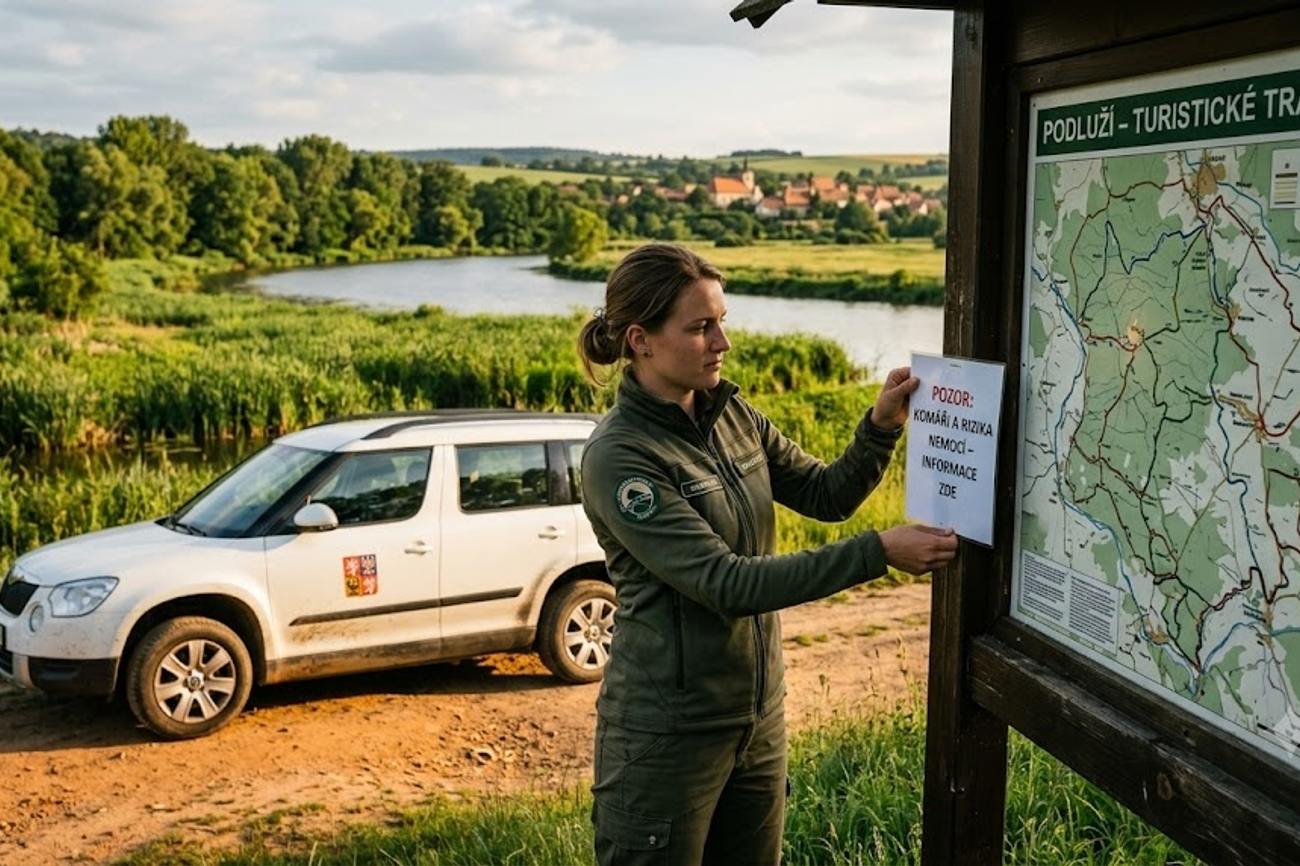
Image generated by AI
[Prague, August 2026] — Czech health authorities are intensifying surveillance of mosquito-borne illnesses across the republic as rising European temperatures drive an increase in dengue, chikungunya, and West Nile fever cases. While the government confirms there are currently no local outbreaks of these diseases within Czechia in 2026, the presence of invasive mosquito species and the proximity of outbreaks in neighboring EU states have triggered a heightened state of readiness for the summer travel season.
The current health alert centers on the distinction between "imported" and "local" transmissions. Between January and August 2026, Czech medical facilities recorded 83 notifications of dengue and 17 notifications of chikungunya. Crucially, these cases were diagnosed in individuals who contracted the viruses abroad; no evidence exists that a mosquito within Czech borders transmitted these specific viruses to a human during the current calendar year. However, the World Health Organization (WHO) has previously noted that the expansion of vector-borne diseases is closely tied to climatic shifts, a trend now manifesting across Central Europe.
The Vector Threat: Invasive Species
The primary concern for Czech epidemiologists is the movement of non-native mosquito species that act as efficient carriers for tropical diseases. Two specific species are under scrutiny:
- The Asian Tiger Mosquito: This species is a primary vector for dengue and chikungunya. While it has not yet established a permanent population in Czechia, it has been detected in parking lots and motorway areas. Because Czechia serves as a transit hub for vehicles entering from Germany, Austria, and Slovakia, health officials fear the insect is hitchhiking in cars, trucks, and luggage.
- The Asian Bush Mosquito: Unlike the Tiger mosquito, this species has already successfully colonized Czechia, with its first detection occurring in 2021. It is now widespread across multiple study sites and is capable of carrying West Nile fever, dengue, and chikungunya. This mosquito is particularly dangerous because it breeds in small, man-made water sources like flowerpot trays and rain barrels.
Affected Travelers, Airlines and Logistics
The risk profile varies significantly by region and activity. While the country remains open and safe for general tourism, specific zones require higher vigilance.
| Risk Category | Location/Group | Primary Concern | Risk Level |
|---|---|---|---|
| High Watch Zones | South Moravia & South Bohemia | Historical West Nile fever presence | Elevated |
| Urban Hubs | Prague | Imported cases from international travelers | Low (Local) |
| Transit Corridors | Motorways/Border Crossings | Introduction of Asian Tiger Mosquito | Moderate |
| Outdoor Enthusiasts | Campers, Gardeners, Cyclists | Asian Bush Mosquito bites | Moderate |
Practical Traveler Advisory and Strategic Insights
For the average tourist or digital nomad visiting Czechia, there are no longer any travel bans, mandatory vaccinations, or special entry requirements. However, the shift in the European biological landscape means that "tropical" precautions are now relevant in Central Europe.
Passenger Impact Assessment:
- Personal Protection: Travelers should utilize EPA-approved insect repellents. Because the Asian Tiger and Asian Bush mosquitoes are active during the day—unlike many native species—protection is necessary from morning until evening, not just at dusk.
- Accommodation Checks: Guests at holiday homes or rural Airbnbs should be aware that standing water in gardens increases the local mosquito population. Clearing debris or emptying water containers can reduce the immediate risk of bites.
- Health Monitoring: Anyone experiencing sudden fever, severe joint pain (characteristic of chikungunya), or intense headaches after visiting South Moravia or South Bohemia should seek medical attention and disclose their travel history to providers.
- Transit Awareness: Those traveling by car through Central Europe should be aware that the movement of vehicles is the primary method by which invasive mosquitoes are spreading across borders.
Health authorities are monitoring the northward migration of invasive mosquito species that may carry West Nile virus and other pathogens. Travelers are encouraged to review current health advisories and preventative measures provided by the Ministry of Health of the Czech Republic to ensure a safe summer visit.
The West Nile Fever Priority
While dengue and chikungunya are currently imported threats, West Nile fever represents the most significant local risk. The virus operates on a bird-to-mosquito-to-human cycle. Unlike other mosquito-borne illnesses, West Nile is not passed from person to person.
The European Centre for Disease Prevention and Control (ECDC) has tracked local West Nile cases in Germany, Austria, and Hungary throughout 2026. Given that Czechia has a history of finding the virus in local mosquito populations, the risk of a local spillover is higher than that of the tropical viruses. Most human infections are asymptomatic or mild, but a small percentage of cases can lead to severe neurological complications or inflammation of the brain.
Future Surveillance and Mitigation
The Czech government is focusing on a strategy of "early detection and rapid response." This involves continuous monitoring of motorway transit points to catch the Asian Tiger mosquito before it can breed. If a settled population is confirmed, health authorities will likely implement targeted insecticide programs in those specific zones.
Public health campaigns are now urging residents and hotel operators to eliminate "micro-breeding" sites. By removing small pools of standing water in urban environments, the country aims to limit the capacity of the Asian Bush mosquito to sustain a population that could potentially carry imported viruses.
FAQ: Czechia Mosquito Risks 2026
Are there any travel restrictions for visiting Czechia due to mosquitoes? No. There are no travel bans, quarantine requirements, or special entry rules. The country remains fully open to international tourists and residents.
Do I need a specific vaccine for these diseases before visiting? There are no mandatory vaccines for dengue or chikungunya for entry into Czechia. Travelers should consult their healthcare provider regarding West Nile fever and general preventative measures.
Which parts of Czechia are the highest risk? South Moravia and South Bohemia are under the closest watch due to their history with West Nile fever. Prague is considered low risk for local transmission.
How do I protect myself from the Asian Tiger and Bush mosquitoes? Use insect repellent and wear long sleeves. Because these species bite during the day, protection is required throughout the daylight hours, especially when camping or gardening.
Stay vigilant, keep the water drained, and enjoy the Czech summer safely.
Related Travel Guides
- Malaysia and Indonesia Stand Alongside Southeast Asia’s Tourism Powerhouses as Spending Redefines Travel Value
- Bandung Faces New Tourism Safety Questions as BMKG Records 118 Earthquakes Across Indonesia’s West Java
- Colombia Aligns With Panama and More as Australia Issues New Travel Advisory Over Entry Rules and Travel Disruptions
Disclaimer
This article is for informational and educational purposes only. It does not constitute legal, financial, or professional advice. While we strive to provide accurate and up-to-date information, travel policies, regulations, and conditions change rapidly. Always verify information with official sources before making travel decisions. Nomad Lawyer makes no representations about the accuracy, reliability, completeness, or suitability of the information provided. Readers should consult qualified professionals for advice specific to their circumstances. The views expressed in this article are those of the author and do not necessarily reflect the views of Nomad Lawyer.
Raushan Kumar
Founder & Lead Developer
Full-stack developer with 11+ years of experience and a passionate traveller. Raushan built Nomad Lawyer from the ground up with a vision to create the best travel and law experience on the web.
Learn more about our team →