
Croatia Tourism Pivot: Massive Crowds Force Travelers From Dubrovnik to Istria and Šolta
As peak-season congestion overwhelms Dubrovnik and Split, international travelers are structurally shifting their itineraries toward the Istrian peninsula and Šolta.

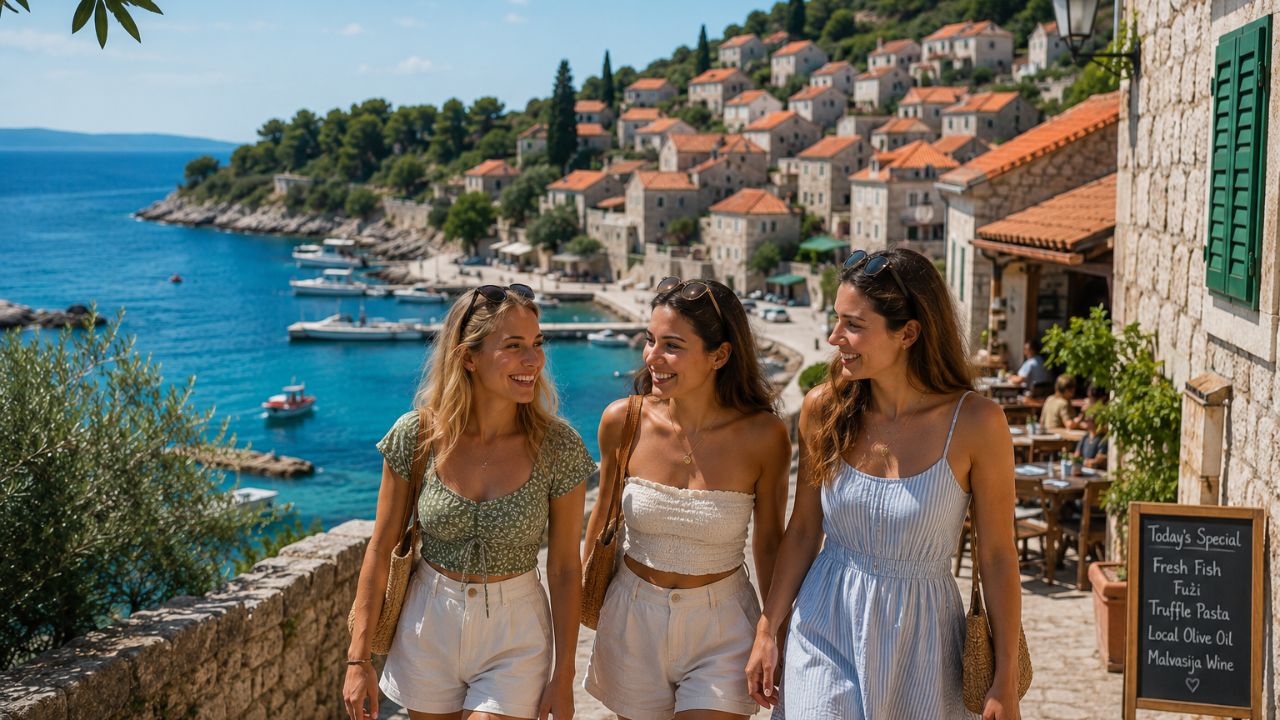
Image generated by AI
[Zagreb, July 3] — The traditional blueprint for summer travel in Croatia is fracturing under the weight of its own success. For over a decade, international tourism heavily concentrated around the stone fortifications of Dubrovnik and the ancient thoroughfares of Split. However, recent metrics released by the Croatian National Tourist Board confirm a severe geographic redistribution of incoming visitors. Weary of suffocating peak-season crowds and aggressive price gouging, international travelers are executing a massive structural shift away from these saturated southern hubs.
Instead of fighting for space in heavily commercialized ports, high-yield tourists are rerouting their capital toward secondary markets that promise authentic cultural immersion and ecological preservation. This immediate migration forces local authorities to aggressively pivot the national tourism strategy, rapidly prioritizing sustainable regional development over the pursuit of sheer visitor volume.
Istrian Peninsula Drives Luxury Agritourism Expansion
In northwestern Croatia, the Istrian peninsula is capitalizing on the exodus from the south by pioneering an exclusive, high-end agritourism model. Rather than authorizing sprawling, high-density concrete beach resorts, regional planners are funneling investment directly into nature conservation and epicurean experiences. The misty, dense truffle forests encircling the medieval hilltop village of Motovun have rapidly transformed into a premium destination. Visitors bypass crowded beaches to forage with local guides before sampling indigenous Malvazija wines and world-class olive oils.
To accommodate this affluent demographic, massive institutional capital is flooding the region's hospitality infrastructure. The newly constructed Valamar Pical Resort in Poreč stands as a prime example, representing a staggering €200 million investment designed to drastically elevate local luxury accommodation standards. These aggressive, high-value developments ensure the region can absorb wealthy travelers while keeping rural hiking trails and historical sites fundamentally uncrowded.
Šolta Emerges as the Anti-Hvar Island Escape
Off the central Dalmatian coast, a similar rejection of mass tourism is taking hold. While the nearby island of Hvar remains overwhelmed by massive summer party crowds and mega-yachts, the tranquil island of Šolta has established itself as the premier sanctuary for mindful travelers. Accessible via a short ferry ride across the Adriatic from Split, Šolta operates entirely independently from the frantic energy of the mainland.
The quiet port of Rogač filters visitors into a strictly protected agricultural landscape dominated by multi-generational olive groves and family-run honey apiaries. Local zoning authorities have strictly banned large-scale commercial real estate developments, forcing tourists to swap massive beach clubs for isolated rocky coves and traditional stone taverns. This highly regulated, slow-growth approach proves that Mediterranean micro-economies can successfully monetize modern tourism without destroying their indigenous identity.
Modern Aviation Upgrades Accelerate Regional Access
This sweeping geographic shift is heavily supported by a multi-million-dollar modernization of Croatia’s international transport network. State carrier Croatia Airlines recently executed a massive fleet overhaul, replacing aging legacy aircraft with highly fuel-efficient Airbus A220-300 models. These upgraded jets now operate across 55 active European routes, significantly reducing regional carbon emissions while improving short-haul passenger comfort.
Transatlantic access has also evolved drastically to support decentralized travel. United Airlines recently launched highly anticipated direct flights connecting Newark directly to Split. This strategic routing allows North American passengers to completely bypass traditional layovers in Zagreb, instantly dispersing high-spending tourists directly into the central coastal network. Simultaneously, the Ministry of Tourism has enforced a strict price stability directive, heavily monitoring ancillary costs across local restaurants and excursions to suppress rampant inflation and protect the country's overall value proposition.
Key Facts Breakdown
- Data Source: Croatian National Tourist Board reports a massive geographic redistribution of visitors.
- Investment Surge: The Valamar Pical Resort in Poreč represents a €200 million luxury development.
- Aviation Upgrades: Croatia Airlines deploys new Airbus A220-300 jets across 55 European routes.
- Transatlantic Access: United Airlines launches direct flights from Newark to Split.
- Economic Controls: Ministry of Tourism enforces strict price stability directives to combat inflation.
Impact Analysis
The immediate diversion of tourist capital away from Dubrovnik and Split demonstrates that global travelers are actively punishing destinations that fail to control local inflation and cruise ship volume. By aggressively funneling high-yield tourists into Istria via targeted infrastructure upgrades (like the €200 million Valamar Pical Resort), Croatian authorities are successfully diversifying their economic dependency. This regional redistribution prevents catastrophic infrastructure failure in the south while simultaneously elevating the national average daily rate (ADR) across luxury northern properties.
Why This Matters
Our analysis of the flight data and regional investment indicates that Croatia's tourism sector is executing a highly successful controlled burn of its mass-market appeal. When a region like Istria secures a €200 million single-site luxury investment, it proves that institutional capital no longer views Dubrovnik as the sole profit engine of the Adriatic. Furthermore, the strategic deployment of United Airlines' direct Newark-to-Split route acts as a massive circulatory bypass, pumping high-yield North American dollars directly into the central coast while entirely starving the congested Zagreb transit hub. The Ministry of Tourism’s aggressive price control directives indicate that the government is terrified of the "tourist trap" label currently decimating visitor numbers in rival Mediterranean markets like Greece and Italy.
Industry Outlook
Market trends suggest that the financial decoupling of Croatia's tourism regions will rapidly accelerate over the next 36 months. Expect airlines to increasingly request landing slots at secondary airports like Pula and Zadar as they follow the affluent passenger base migrating into Istria and the northern islands. While Dubrovnik will continue to rely heavily on the high-volume, low-margin cruise ship industry, the interior regions will likely implement aggressive local tourist taxes to artificially suppress budget traveler volume. Moving forward, the successful preservation of Šolta’s agricultural identity will serve as the definitive blueprint for dozens of other Mediterranean islands currently fighting to reclaim their shorelines from commercial overdevelopment.
Disclaimer
This article is for informational and educational purposes only. It does not constitute legal, financial, or professional advice. While we strive to provide accurate and up-to-date information, travel policies, regulations, and conditions change rapidly. Always verify information with official sources before making travel decisions. Nomad Lawyer makes no representations about the accuracy, reliability, completeness, or suitability of the information provided. Readers should consult qualified professionals for advice specific to their circumstances. The views expressed in this article are those of the author and do not necessarily reflect the views of Nomad Lawyer.
Kunal K Choudhary
Co-Founder & Contributor
A passionate traveller and tech enthusiast. Kunal contributes to the vision and growth of Nomad Lawyer, bringing fresh perspectives and driving the community forward.
Learn more about our team →