
Croatia's €945 Million Tourism Surge 2026: Poland, Germany, Italy Drive Record European Visitor Boom
Croatia smashed tourism records in Q1 2026, generating €945 million in foreign revenue as Poland, Germany, Italy, and the UK fuel unprecedented Adriatic coast demand.

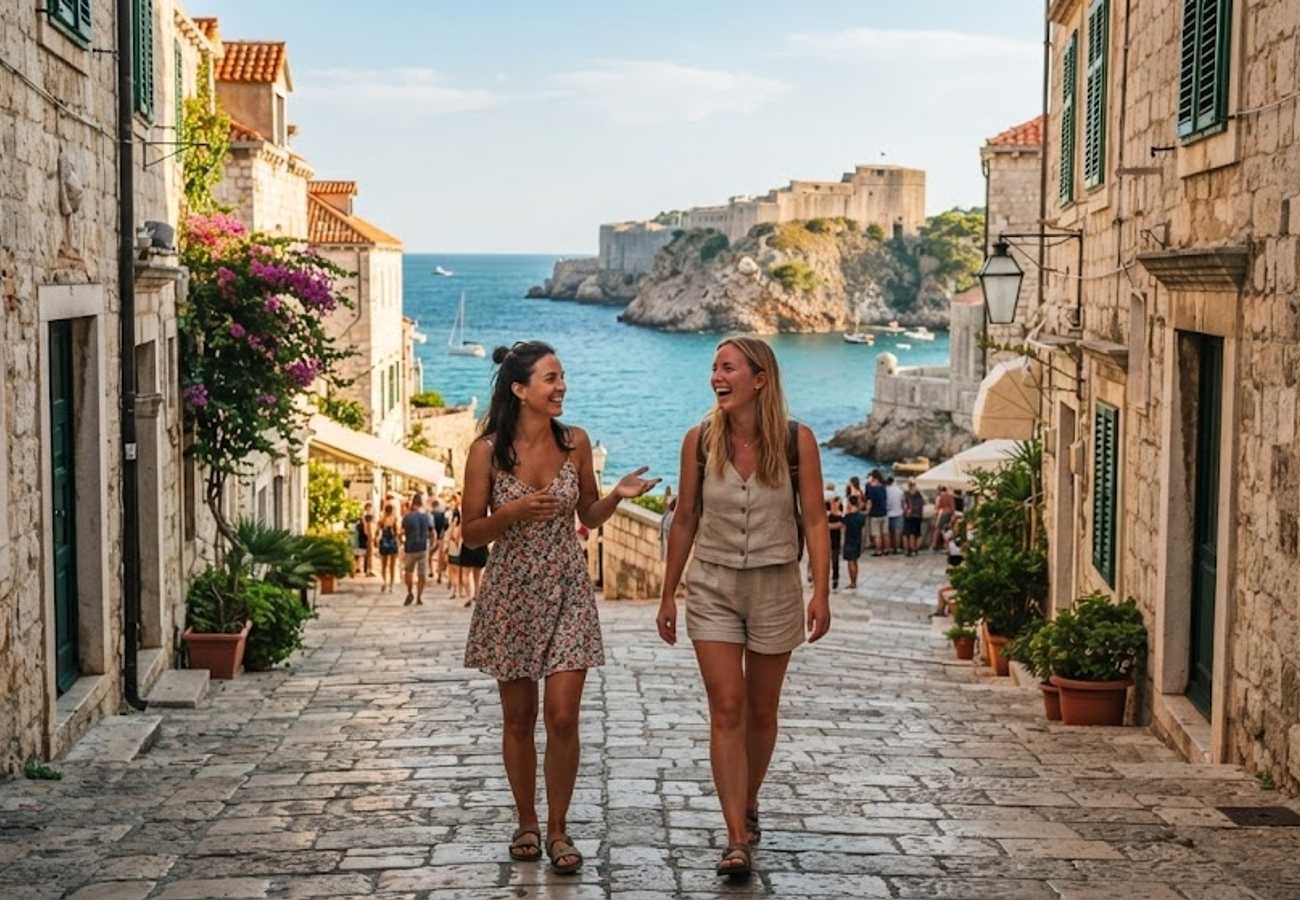
Image generated by AI
Croatia Posts Record Tourism Revenue as European Markets Converge on the Adriatic
Croatia just closed out Q1 2026 with staggering numbers—€945.2 million in foreign tourism revenue, a 9.2% surge from the same period in 2025. That's an additional €79.7 million in just three months. The Adriatic nation isn't just seeing a temporary spike; it's riding a structural wave of demand that's reshaping Mediterranean travel.
The country welcomed approximately 1.2 million tourist arrivals and 3 million overnight stays in the first quarter alone. Extended into May, the numbers tell an even bigger story: 4.5 million total arrivals and 14 million overnight stays across the first five months, with arrivals climbing 5% and stays jumping 7% year-over-year.
This isn't recovery—it's expansion at scale.
Why Poland, Germany, Italy, and the UK Can't Get Enough of Croatia
The real engine behind Croatia's tourism boom sits squarely in Europe's major outbound markets. Germany remains the largest and most consistent source market, while Poland is showing the fastest growth trajectory, particularly in summer and shoulder seasons. Close behind are Italy, Slovenia, the United Kingdom, plus steady contributions from the Czech Republic and Austria.
Reddit: "Croatia is finally getting the recognition it deserves. Cheaper than Italy, cleaner than Greece, better vibes than Spain right now." — r/travel
The geographic proximity of these markets matters enormously. Short-haul travel from central and southern Europe requires minimal friction—direct flights, affordable pricing, and cultural familiarity make Croatia an obvious choice. What's driving the spending surge, however, is perception: Croatia has evolved from a seasonal Adriatic beach destination into a year-round Mediterranean competitor.
The Adriatic Coast's Stranglehold on Tourism Revenue
Here's where the numbers get interesting: the Adriatic coast generated 12.2 million overnight stays in the first quarter—an 8% increase year-over-year—representing the overwhelming majority of tourist activity. The coastline isn't just dominant; it's the gravitational center of Croatian tourism.
This concentration reveals both opportunity and risk. While coastal destinations thrive on natural beauty, maritime infrastructure, and cultural heritage, inland Croatia recorded only a 3% increase in overnight stays. Tourism authorities are quietly pushing diversification: cultural tourism, wellness travel, and inland city experiences are gaining traction through government development strategies.
The strategy is smart. Spreading tourists across continental attractions reduces seasonal pressure on coastal infrastructure while extending the economic benefits nationwide.
A Decade of Structural Growth, Not Annual Fluctuation
What makes Croatia's 2026 performance truly significant is the historical context. Compare Q1 2026 to Q1 2016, and the picture becomes unmistakable: foreign tourism revenue has jumped by more than €509 million over the decade. That's a structural transformation, not market noise.
The expansion has been built on:
- International flight connectivity expansion driving accessibility
- Strong Adriatic branding positioning the coast as Europe's premier seaside destination
- Cruise and nautical tourism surge attracting high-value visitors
- Hospitality infrastructure upgrades increasing hotel and accommodation capacity
- European travel network integration making Croatia a natural stop on continental itineraries
Croatia's tourism evolution reflects a broader shift in European travel patterns. As traditional Mediterranean destinations face overtourism, infrastructure strain, and price inflation, alternatives like Croatia benefit from lower costs, better value, and emerging cultural appeal.
Off-Season Growth Is the Real Story
Here's the narrative that matters: Croatia's tourism authorities have long pushed for year-round visitation rather than summer-dependent seasonality. The data validates this strategy. Q1 growth—typically the weakest quarter—proves that demand now exists outside July and August.
This reflects changing traveler behavior. European short-haul markets increasingly seek off-peak travel: milder weather, lower prices, fewer crowds. Croatia's geographic position, improved transport infrastructure, and expanding activity roster (beyond just beach tourism) make it competitive even when summer sun isn't the draw.
Government tourism planning now emphasizes gastronomy, cultural experiences, adventure travel, and wellness tourism—offerings that work year-round.
What These Numbers Mean for Travelers
The €945 million Q1 revenue figure translates to one reality: Croatia is increasingly confident, increasingly expensive, and increasingly crowded. Visitor spending per person has risen alongside volume, suggesting the country is attracting higher-value travelers willing to pay premium prices.
For travelers planning 2026-2027 visits, timing becomes critical. Off-season travel (spring and fall) offers better value and fewer crowds than historical patterns. Early booking is essential, particularly for Adriatic coast accommodation, as European demand from Poland, Germany, and Italy shows no signs of cooling.
The Long Game: Croatia's Position as a European Tourism Anchor
By end of May 2026, Croatia had already locked in growth that signals full-year momentum. The country is no longer positioning itself as a secondary Mediterranean alternative—it's competing for primary destination status against Spain, Greece, and Italy.
The convergence of European outbound markets (particularly from Poland and Central Europe) on the Adriatic coast represents a geographic and economic shift. Travel patterns are rebalancing. Croatia is winning that rebalance.
With sustained infrastructure investment, expanding flight connectivity, and a proven ability to attract high-value European visitors, Croatia's tourism sector has entered a new phase. The €945 million Q1 2026 figure won't be remembered as a peak—it'll be remembered as the moment when structural growth became undeniable.
Croatia's tourism boom isn't hype—it's mathematics, and the equations favor the Adriatic.
Related Travel Guides
Disclaimer
This article is for informational and educational purposes only. It does not constitute legal, financial, or professional advice. While we strive to provide accurate and up-to-date information, travel policies, regulations, and conditions change rapidly. Always verify information with official sources before making travel decisions. Nomad Lawyer makes no representations about the accuracy, reliability, completeness, or suitability of the information provided. Readers should consult qualified professionals for advice specific to their circumstances. The views expressed in this article are those of the author and do not necessarily reflect the views of Nomad Lawyer.
Kunal K Choudhary
Co-Founder & Contributor
A passionate traveller and tech enthusiast. Kunal contributes to the vision and growth of Nomad Lawyer, bringing fresh perspectives and driving the community forward.
Learn more about our team →