
Colombia 7.4 Magnitude Earthquake Hits Western Regions: Impact on Cali, Pereira, and Chocó 2026
A powerful 7.4 magnitude earthquake has devastated western Colombia, causing building collapses in Cali and Pereira and triggering a massive emergency response in the Chocó region.

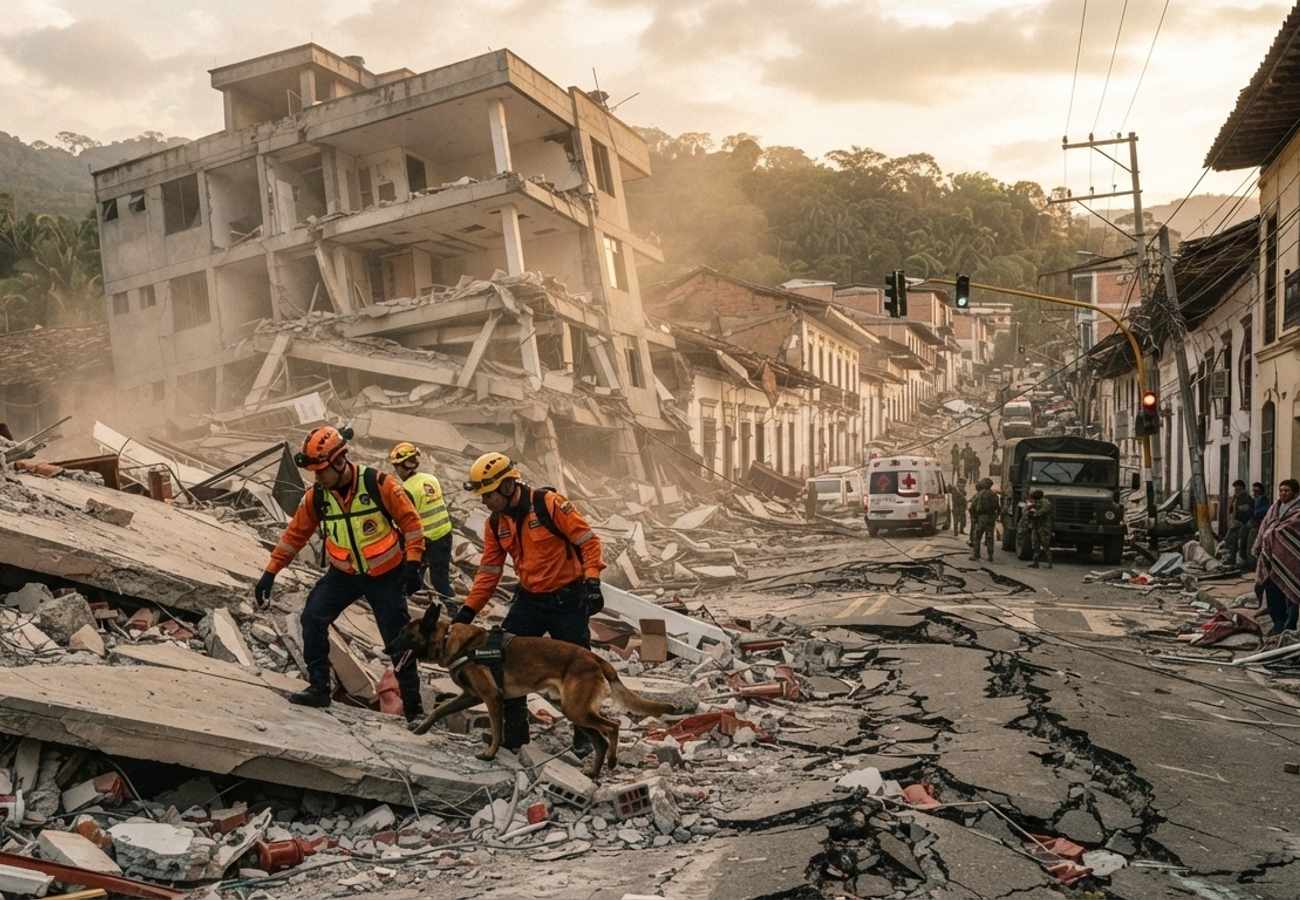
Image generated by AI
A massive 7.4 magnitude earthquake has struck western Colombia, causing widespread structural collapses and triggering a national emergency. Rescue operations are currently prioritized in the Chocó region and the major urban hubs of Cali and Pereira.
The seismic event has severely disrupted infrastructure and transport networks across the Pacific region, prompting an immediate mobilization of military personnel, emergency workers, and international aid. While the disaster has created a humanitarian crisis in the west, authorities are working to isolate the impact to prevent a broader collapse of the national tourism and transport sectors.
Seismic Impact and Regional Destruction
The earthquake, recorded at a powerful 7.4 magnitude, originated near the Chocó region. Because Colombia is situated in a highly active geological zone influenced by tectonic plate boundaries, the country is prone to recurring seismic risks, though the scale of this event has challenged current emergency preparations.
The most severe damage is concentrated in:
- Cali: Significant structural failures in urban buildings and increased pressure on medical facilities.
- Pereira: Heavy damage to infrastructure within the Coffee Cultural Landscape.
- Quibdó: Severe disruption to communications and public facilities.
- Chocó Region: Widespread destruction complicated by dense terrain and limited road access.
President Abelardo de la Espriella has officially announced emergency measures, prioritizing the deployment of specialized search-and-rescue equipment to locate survivors trapped beneath collapsed structures.
Logistics and Infrastructure Challenges in the West
The geography of western Colombia has significantly hindered the speed of the initial response. In the Chocó region, dense landscapes and existing transport limitations have slowed the arrival of emergency teams.
In urban centers like Cali and Pereira, the sheer density of the population has amplified the crisis. Hundreds of buildings have been reported as damaged, with several complete collapses. The disruption of communication systems has further complicated the coordination between local volunteers and national agencies.
Travel and Tourism Implications for 2026
Colombia has seen rapid growth as a South American destination, but this disaster creates immediate short-term volatility for the western corridor.
High-Impact Zones
Travelers visiting the "Coffee Region" via Pereira or exploring the salsa culture and gastronomy of Cali should expect significant disruptions. Hotels, restaurants, and local attractions in these areas are currently pivoting toward emergency management and public safety.
Stable Zones
The earthquake's impact was regional. Major hubs and tourist destinations including Bogotá, Medellín, and Cartagena were not equally affected and continue to operate normally.
Responsible Travel Guidance
Industry experts suggest that visitors avoid unnecessary panic but remain vigilant. Those with bookings in the west should:
- Verify the structural status of accommodations directly with providers.
- Monitor official government announcements regarding road closures.
- Check for airline updates regarding flights into regional airports.
Emergency Response and Recovery Framework
The recovery operation is a multi-tiered effort involving the Colombian military, government agencies, and international humanitarian partners. The current priority is the restoration of essential services, specifically transportation routes and medical support.
Seismic experts warn that aftershocks remain a primary concern. Residents and visitors are advised to avoid entering any building that has sustained visible structural damage.
Summary of Affected Areas and Status
| Region/City | Impact Level | Primary Issues | Status |
|---|---|---|---|
| Chocó | Severe | Infrastructure collapse, limited access | Active Rescue |
| Cali | High | Building failures, medical facility strain | Emergency Mgmt |
| Pereira | High | Damage to tourism hubs, road disruption | Recovery Phase |
| Quibdó | High | Communications failure, public facility damage | Active Rescue |
| Bogotá/Medellín | Low | Minimal to no structural impact | Operational |
Key Takeaways
- Magnitude: A 7.4 magnitude quake hit Western Colombia.
- Primary Hit Zones: Cali, Pereira, Quibdó, and the Chocó region.
- Infrastructure: Significant building collapses and transport network failures.
- Tourism: Western regions are disrupted; Bogotá, Medellín, and Cartagena remain stable.
- Government Action: President Abelardo de la Espriella has declared emergency measures.
Frequently Asked Questions
Is it safe to travel to Colombia right now? Yes, but with caution. While the western regions (Cali, Pereira, Chocó) are dealing with a crisis, the rest of the country, including the capital and the Caribbean coast, remains safe and operational.
Which cities were most affected by the earthquake? The most significant damage occurred in Cali, Pereira, and Quibdó, with the epicenter affecting the broader Chocó region.
What should I do if I have a hotel booking in Cali or Pereira? Contact your hotel or travel agent immediately to confirm if the property is structurally sound and if the local area is accessible.
Colombia's resilience in the face of natural disaster will define its recovery path for the remainder of 2026.
Related Travel Guides
Disclaimer
This article is for informational and educational purposes only. It does not constitute legal, financial, or professional advice. While we strive to provide accurate and up-to-date information, travel policies, regulations, and conditions change rapidly. Always verify information with official sources before making travel decisions. Nomad Lawyer makes no representations about the accuracy, reliability, completeness, or suitability of the information provided. Readers should consult qualified professionals for advice specific to their circumstances. The views expressed in this article are those of the author and do not necessarily reflect the views of Nomad Lawyer.
Preeti Gunjan
Contributor & Community Manager
A passionate traveller and community builder. Preeti helps grow the Nomad Lawyer community, fostering engagement and bringing the reader experience to life.
Learn more about our team →