
Chongqing Landslide Disrupts Wu River Travel and Tourism Operations Across Southwestern China in 2026
A major landslide near Chongqing's Wu River corridor has disrupted river cruises, road travel, and tourism operations across southwestern China following prolonged heavy rainfall.

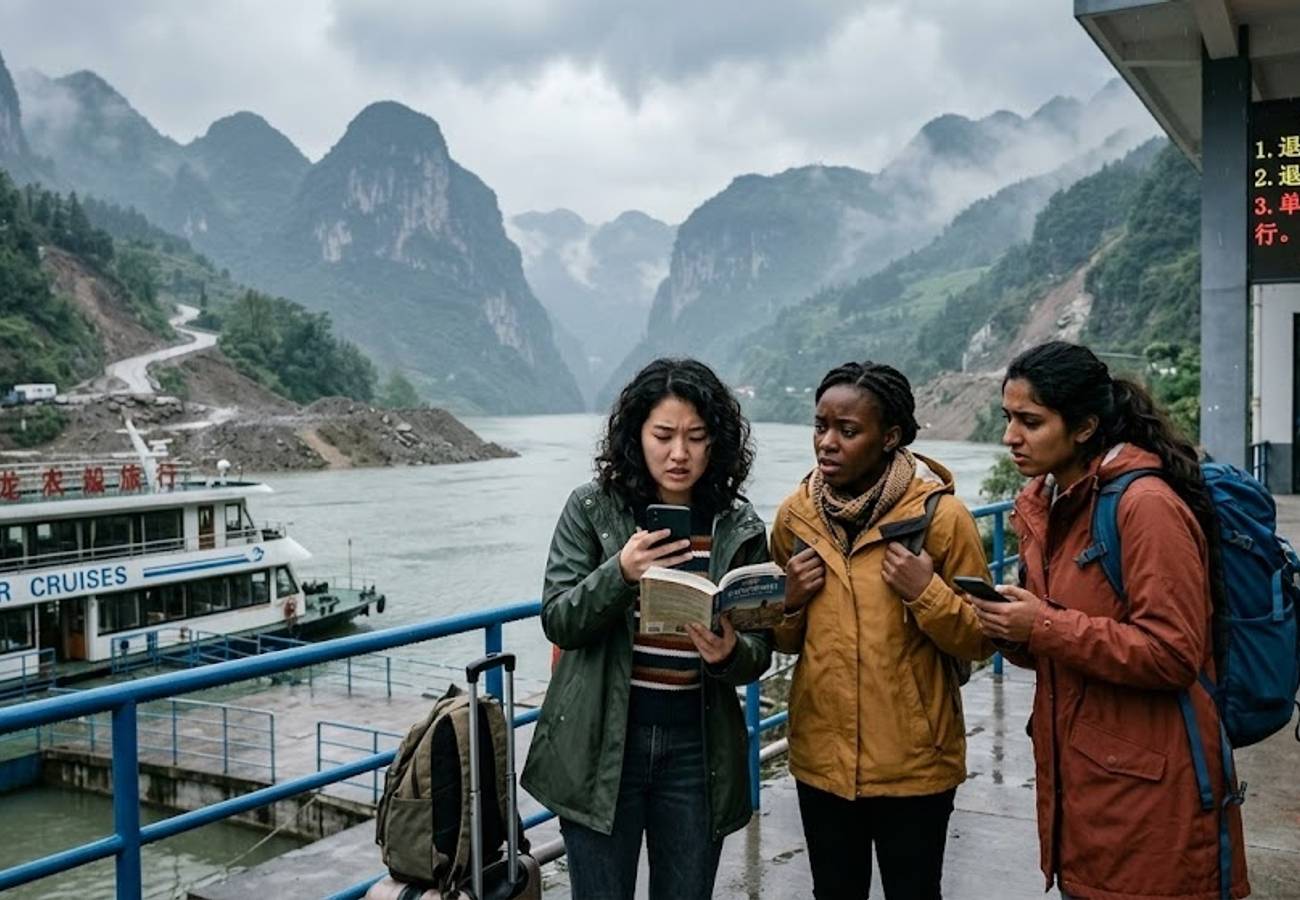
Image generated by AI
A major landslide triggered by prolonged heavy rainfall has struck Chongqing's Wu River corridor, disrupting river navigation, mountain road access, and tourism operations across one of southwestern China's most visited natural destinations. Emergency teams are conducting rescue operations while authorities work to clear debris from waterways and assess slope stability in surrounding areas.
The incident underscores how China's summer rainy season can rapidly transform conditions in mountainous tourism regions, forcing travellers, tour operators, and hospitality businesses to adapt quickly.
Heavy Rainfall Triggers Landslide Near Wu River Corridor
Continuous rainfall across parts of Chongqing Municipality triggered a significant landslide that affected communities near the Wu River corridor. Emergency services, geological experts, and local authorities were quickly deployed to conduct search and rescue operations while assessing the stability of surrounding slopes.
The landslide deposited large volumes of soil, rocks, and debris into nearby waterways, creating additional challenges for navigation and emergency response. Authorities have continued clearing affected sections of the river while monitoring changing weather conditions and potential secondary geological hazards.
For travellers, the event serves as a stark reminder that China's summer rainy season can rapidly alter conditions in mountainous destinations that normally draw thousands of visitors for their dramatic limestone landscapes and river valleys.
Wu River Navigation and Cruise Operations Disrupted
The Wu River serves as both an important transport corridor and a popular tourism asset in southwestern China. It supports sightseeing cruises, local transport services, and tourism experiences centred on dramatic limestone landscapes and river valleys.
Following the landslide, dredging operations began to remove debris from sections of the river. These activities are essential for restoring safe navigation but temporarily affect normal river traffic and some tourism operations.
River cruise schedules may experience adjustments while authorities ensure waterways remain safe for commercial and passenger vessels. Tour operators offering river excursions are expected to monitor official navigation updates before resuming full operations.
Mountain Road Travel Becomes Increasingly Difficult
Mountain roads remain particularly vulnerable during periods of prolonged rainfall. Landslides can temporarily block highways, damage local roads, and restrict access to rural tourism destinations. Emergency vehicles and engineering teams often receive priority while debris removal and safety inspections continue.
Visitors planning self-drive holidays or coach tours through Chongqing's mountainous areas should expect possible diversions and longer travel times if weather conditions deteriorate further. Road safety remains a key priority for transport authorities during the ongoing rainy season.
Air Travel Operational but Ground Connections Affected
Although the landslide primarily affected ground infrastructure, travellers flying into Chongqing should remain aware that onward transport may take longer than usual depending on road conditions. Airports continue operating under normal procedures unless adverse weather directly affects flight schedules.
Passengers travelling onward to mountain attractions or rural destinations should check local transport conditions before departure. Travel companies may also revise transfer arrangements if access routes become temporarily unavailable.
Rail Transport Provides Reliable Alternative
China's extensive railway network continues to provide an important alternative where road conditions become less reliable. Rail operators regularly monitor infrastructure safety during periods of heavy rainfall and conduct inspections whenever weather creates additional operational risks.
Although the landslide itself does not necessarily affect major railway corridors, passengers travelling between Chongqing and surrounding destinations should remain alert for any timetable adjustments caused by severe weather. Rail travel continues to offer one of the most dependable transport options for many domestic visitors.
Hotels and Hospitality Sector Adapt to Changing Visitor Needs
Hotels throughout Chongqing continue welcoming visitors, although accommodation providers closest to affected areas may experience temporary booking changes. Some travellers may postpone outdoor holidays while others choose to modify itineraries towards urban attractions, museums, cultural sites, and indoor experiences.
Hospitality businesses are supporting guests by providing updated transport information and assisting visitors whose travel plans require adjustment. Flexible booking policies may become increasingly important while weather conditions remain unpredictable.
Adventure Tourism Faces Seasonal Risk
Southwestern China is renowned for hiking, canyon exploration, river adventures, and eco-tourism. However, these experiences depend heavily on stable weather conditions. The latest landslide demonstrates the seasonal risks associated with mountain tourism during periods of intense rainfall.
Adventure tour operators may temporarily suspend activities in areas where geological conditions remain unstable until safety inspections are completed. Nature-based tourism typically recovers once weather improves and authorities reopen affected attractions.
Visitor Confidence and Economic Impact on Local Tourism
Natural disasters often influence traveller behaviour even beyond directly affected locations. Some visitors postpone holidays after seeing reports of severe weather, while others choose different destinations until conditions stabilise. International tourists unfamiliar with China's geography may incorrectly assume wider regions are affected, despite many destinations continuing normal operations.
The tourism economy around Chongqing relies on accommodation providers, restaurants, transport operators, river cruises, local guides, souvenir businesses, and outdoor activity companies. Temporary disruptions reduce visitor spending, particularly for businesses located near scenic river corridors and mountain attractions. Small tourism enterprises are often the first to experience reduced visitor numbers following weather-related emergencies.
However, China's tourism industry has repeatedly demonstrated resilience following natural disasters through coordinated recovery efforts and infrastructure restoration.
What Travellers Should Know Before Visiting Chongqing
Visitors planning trips to Chongqing or nearby mountain destinations should remain flexible. Before travelling, visitors should:
- Monitor local weather forecasts
- Confirm transport schedules before departure
- Check whether planned attractions remain open
- Follow official safety advice regarding mountain areas
- Allow extra travel time for road journeys
- Consider alternative sightseeing options if outdoor activities are suspended
Urban Chongqing continues offering numerous cultural attractions, shopping districts, museums, historic neighbourhoods, and culinary experiences that remain accessible even when some rural tourism areas experience temporary disruptions.
Data Table: Chongqing Landslide Travel Impact Summary
| Category | Impact Status | Affected Area | Advisory |
|---|---|---|---|
| River Cruises | Temporarily disrupted | Wu River corridor | Monitor official navigation updates |
| Mountain Roads | Partially blocked or damaged | Chongqing rural routes | Expect diversions and delays |
| Air Travel | Operating normally | Chongqing airports | Check onward ground transport |
| Rail Transport | Operating with monitoring | Chongqing regional corridors | Watch for timetable adjustments |
| Hotels | Open with possible booking changes | Near affected areas | Confirm flexible booking policies |
| Adventure Tourism | Temporarily suspended in unstable zones | Mountain and canyon areas | Await safety inspection clearance |
| Urban Attractions | Fully accessible | Chongqing city centre | No disruption reported |
Key Takeaways
- A major landslide near Chongqing's Wu River corridor, triggered by prolonged heavy rainfall, has disrupted river navigation, mountain road access, and tourism operations across southwestern China.
- Dredging operations are underway to clear debris from the Wu River, with river cruise schedules likely to face temporary adjustments.
- Airports and rail services continue operating, though onward ground transport to mountain destinations may experience delays.
- Hotels and hospitality businesses are adapting with flexible booking policies while some travellers shift to urban attractions.
- Adventure tourism operators have temporarily suspended activities in geologically unstable areas pending safety inspections.
- Urban Chongqing attractions remain fully accessible, offering alternative sightseeing options for affected visitors.
FAQ
Is it safe to travel to Chongqing after the landslide? Urban Chongqing remains accessible and safe for visitors. However, travellers heading to mountain destinations or the Wu River corridor should monitor official updates, check transport schedules, and follow safety advisories before departure.
Are river cruises on the Wu River still operating? River cruise schedules may experience temporary adjustments while dredging operations clear debris from the waterway. Tour operators are expected to monitor official navigation updates before resuming full operations.
Are flights to Chongqing affected by the landslide? Airports continue operating under normal procedures. The landslide primarily affected ground infrastructure, though onward road transport to mountain or rural destinations may take longer than usual.
What should travellers do if they have bookings near the affected area? Visitors should contact their accommodation providers and tour operators directly. Many hotels are offering flexible booking policies, and hospitality businesses are assisting guests with updated transport information and itinerary adjustments.
When will tourism operations return to normal? Infrastructure restoration, river clearance, and continued safety inspections will gradually restore visitor access as weather conditions improve. Nature-based tourism typically recovers once authorities complete safety inspections and reopen affected attractions.
Travellers to southwestern China should stay informed, remain flexible, and prioritise safety as recovery efforts continue across the Wu River corridor.
Related Travel Guides
Disclaimer
This article is for informational and educational purposes only. It does not constitute legal, financial, or professional advice. While we strive to provide accurate and up-to-date information, travel policies, regulations, and conditions change rapidly. Always verify information with official sources before making travel decisions. Nomad Lawyer makes no representations about the accuracy, reliability, completeness, or suitability of the information provided. Readers should consult qualified professionals for advice specific to their circumstances. The views expressed in this article are those of the author and do not necessarily reflect the views of Nomad Lawyer.
Raushan Kumar
Founder & Lead Developer
Full-stack developer with 11+ years of experience and a passionate traveller. Raushan built Nomad Lawyer from the ground up with a vision to create the best travel and law experience on the web.
Learn more about our team →