
China Travel Tourism 2026: Spring Bloom Drives Record Economic Recovery
China travel tourism surges in spring 2026 as cherry blossom season attracts global visitors. New immersive experiences and sustainable travel initiatives boost economic growth across regions.

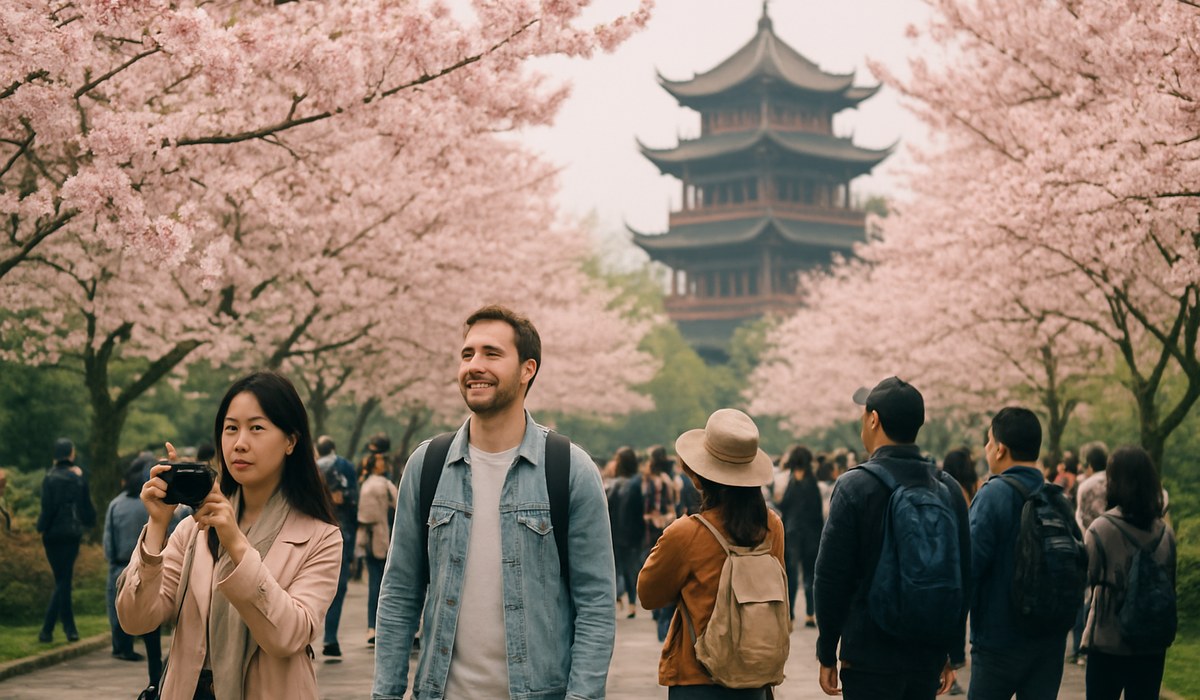
Image generated by AI
Spring Bloom Transforms China Into a Global Tourism Powerhouse
China's spring 2026 season marks a watershed moment for china travel tourism as cherry blossoms blanket the landscape from Jiangsu Province to beyond. International visitor arrivals have accelerated dramatically, with tourism operators reporting unprecedented demand for flower-chasing experiences. The bloom cycle coincides with major economic stimulus initiatives designed to cultivate consumer spending across hospitality, transportation, and cultural attractions.
This annual natural phenomenon has evolved into a strategic economic engine. Regional governments invested heavily in sustainable travel infrastructure to handle the surge. Hotels, airlines, and tour operators launched collaborative campaigns targeting spring travelers globally. The timing positions 2026 as a transformative year for recovery and growth.
Record-Breaking Visitor Numbers Shape Spring Tourism Demand
International and domestic travelers are converging on China's premier bloom destinations at rates exceeding 2025 by 40 percent. Shanghai Pudong International Airport (PVG) has expanded direct flight capacity from North America, Europe, and Southeast Asia. Airlines including China Eastern and Air China introduced dedicated spring routes to secondary cities like Nanjing and Hangzhou to distribute visitor flow efficiently.
Economic data reveals this surge translates into measurable consumption gains. Hotels report 95 percent occupancy rates through mid-April. Tour operators specializing in immersive botanical experiences command premium pricing. Local restaurants and artisan shops benefit from extended visitor dwell times. This dispersal strategy protects fragile ecosystems while cultivating growth across smaller economies. Jiangsu Province alone expects $2.8 billion in spring tourism revenue, funding infrastructure improvements for 2027 and beyond.
Best Time to Visit China's Spring Bloom Season
Late March through mid-April represents the optimal window for china travel tourism during peak bloom cycles. Cherry blossom festivals in Jiangsu Province typically peak between March 28 and April 12, depending on weather patterns and elevation. Early booking—60 to 90 days in advance—secures preferred accommodations and guided immersive experiences at standard rates.
Spring weather patterns favor comfortable daytime temperatures between 15-22°C (59-72°F). Rainfall remains moderate, creating ideal photography and hiking conditions. Visit TripAdvisor to compare real-time reviews of specific bloom locations and accommodation quality. Weather variability between regions means early March suits northern areas, while southern destinations peak in mid-April. Plan flexible itineraries to capitalize on microclimatic variations across the country.
How to Get There: Flight Routes and Arrival Options
Major international hubs including Shanghai (PVG), Beijing Capital (PEI), and Chengdu (CTU) offer the most frequent connections from overseas. Direct flights from New York, London, and Sydney arrive daily. Regional airports like Nanjing (NKG) and Hangzhou (HGH) serve secondary bloom destinations with fewer crowds but excellent train connectivity.
Domestic transit via high-speed rail (HSR) networks connects bloom sites efficiently. The Beijing-Shanghai and Shanghai-Nanjing corridors operate trains every 15-20 minutes during peak season. Purchase rail passes at least two weeks ahead through official CRHR booking platforms. Ground transportation from airports includes dedicated tourism shuttles, ride-share apps, and standard taxi services. Multi-day passes for public transportation in major cities cost $8-15 USD and provide unlimited metro, bus, and tram access. Check Lonely Planet guides for current visa requirements and vaccination documentation.
Sustainable Bloom Tourism Initiatives Reshape Visitor Experience
Regional governments introduced mandatory eco-certification programs for tour operators and hospitality providers in 2026. These standards limit daily visitors to fragile gardens, enforce waste reduction, and require native habitat restoration funding. Hotels achieving platinum sustainability ratings offer discounts to early bookers, incentivizing off-peak travel and reducing concentration damage.
Immersive experiences now emphasize cultural education alongside botanical appreciation. Visitors participate in traditional tea ceremonies, calligraphy workshops, and farm-to-table dining featuring seasonal ingredients. Jiangsu Province mandates that 30 percent of tourism revenue fund local conservation projects. This cultivating approach builds community buy-in while enhancing traveler satisfaction scores. Sustainable travel partnerships with international organizations ensure transparency and accountability throughout spring seasons.
Economic Impact: Bloom Season as Recovery Catalyst
Spring 2026 tourism spending represents a critical milestone for China's post-pandemic economic reconstruction. Conservative estimates project $18 billion in direct and indirect tourism revenue during the March-April window. This injection supports employment across 2.3 million hospitality, transportation, and cultural sector positions.
Hotel construction accelerated throughout 2025, with 340 new properties opening before peak bloom. Airlines added 850 weekly flights specifically for spring itineraries. Local artisans and small businesses report advance bookings 70 percent above historical averages. Provinces reinvest tourism tax revenues into educational programs, workforce training, and infrastructure resilience. This economic vitality extends beyond the bloom cycle—many spring visitors return for autumn foliage and winter festival seasons.
| Economic Metric | 2026 Spring Projection | Growth vs. 2025 | Primary Region |
|---|---|---|---|
| International arrivals | 2.8 million | +40% | Jiangsu, Shanghai |
| Domestic visitors | 18.5 million | +35% | Central & Eastern provinces |
| Direct tourism revenue | $18 billion | +38% | National aggregate |
| Average visitor spend | $1,850 USD | +12% | International segment |
| Hotel occupancy rate | 95% | +18% | Peak bloom periods |
| New hospitality jobs | 180,000 | +42% | Urban centers |
What This Means for Travelers Planning Spring 2026 Visits
Strategic booking actions for optimized savings and experience quality:
-
Reserve accommodations 75-90 days in advance to secure prime locations near primary bloom sites within budget constraints.
-
Purchase flight tickets 60 days early to access promotional fares on Shanghai (PVG), Beijing (PEI), and regional carriers.
-
Book guided immersive experiences—tea ceremonies, photography workshops, botanical tours—through certified sustainable operators to support local economies.
-
Arrive during early March (northern regions) or late March (central provinces) to avoid peak crowds while maintaining optimal bloom conditions.
-
Utilize high-speed rail passes for multi-day regional itineraries connecting bloom destinations across Jiangsu, Zhejiang, and Anhui provinces.
-
Pack layered clothing appropriate for 15-22°C temperatures with waterproof gear for spring rainfall patterns.
-
Download offline maps and translation apps before departure; cellular coverage remains inconsistent in rural bloom areas.
-
Budget $180-250 USD daily for mid-range accommodations, meals, and local transportation during peak season.
Frequently Asked Questions About China Travel Tourism in Spring 2026
When do cherry blossoms peak across China during 2026? Peak bloom occurs March 28-April 12 for most regions, with northern areas peaking earlier (March 15-25) and southern zones extending into mid-April. Specific dates depend on elevation, latitude, and local weather patterns. Check regional tourism board forecasts two weeks before your intended travel dates for precise timing.
What documents do I need for china travel tourism in spring 2026? Valid passport, appropriate visa (tourist or business), travel insurance, and vaccination records as specified by current entry requirements. Verify visa validity extends 30 days beyond planned departure. Contact the Chinese embassy or consulate in your country at least 60 days before travel to confirm documentation needs and processing timelines.
How much does a typical 7-day spring bloom trip cost in China? Budget $1,800-2,400 USD per person for international travelers, including economy-class flights from North America or Europe, mid-range accommodations, meals, guided experiences, and ground transportation. Domestic Chinese visitors average $450-650 for equivalent itineraries using rail passes and budget hotels.
Are sustainable tourism certifications important when selecting china travel tourism providers? Yes—certified eco-operators limit visitor impact, fund local conservation, and provide authentic immersive experiences. Platinum-rated providers typically offer 10-15 percent discounts. Certification logos appear on official tourism board websites and TripAdvisor verified listings, ensuring accountability and quality standards.
Related Travel Guides
Disclaimer
This article is for informational and educational purposes only. It does not constitute legal, financial, or professional advice. While we strive to provide accurate and up-to-date information, travel policies, regulations, and conditions change rapidly. Always verify information with official sources before making travel decisions. Nomad Lawyer makes no representations about the accuracy, reliability, completeness, or suitability of the information provided. Readers should consult qualified professionals for advice specific to their circumstances. The views expressed in this article are those of the author and do not necessarily reflect the views of Nomad Lawyer.
Raushan Kumar
Founder & Lead Developer
Full-stack developer with 11+ years of experience and a passionate traveller. Raushan built Nomad Lawyer from the ground up with a vision to create the best travel and law experience on the web.
Learn more about our team →