
China Travel Deep: 1,000-Meter Submersible Opens Civilian Ocean Tourism
China's Shipbuilding Research Center launches a breakthrough 1,000-meter submersible for civilian deep-sea tourism in 2026. This strategic pivot transforms ocean leisure travel across Asia's maritime routes.

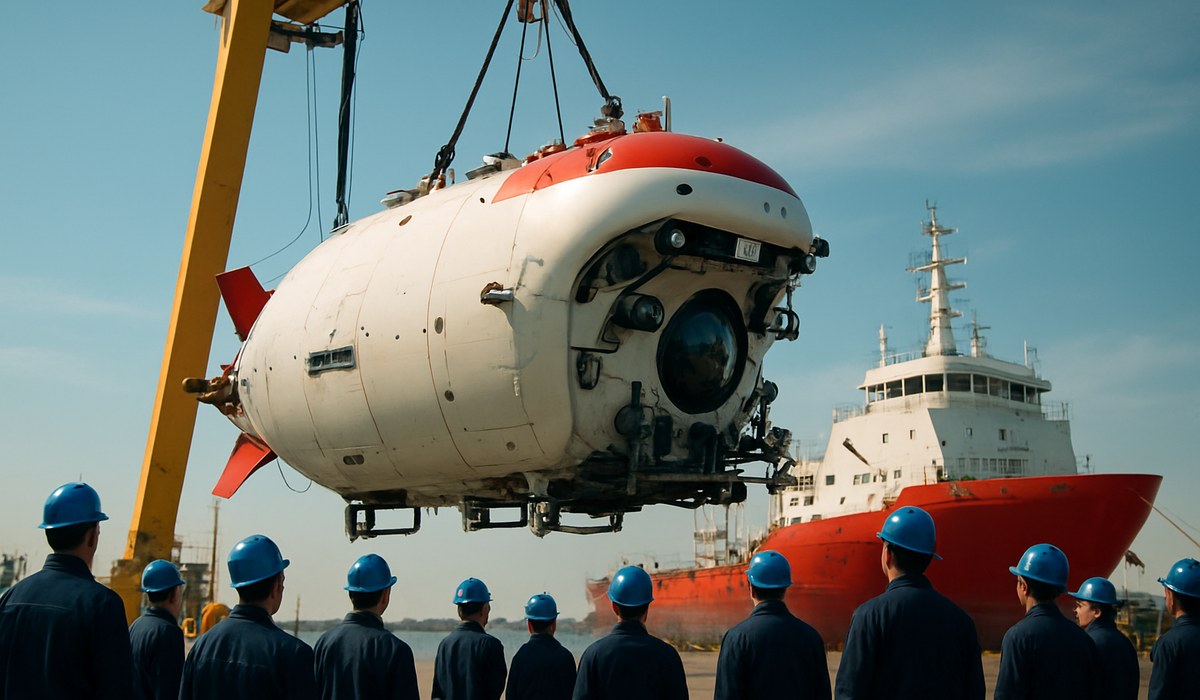
Image generated by AI
China's Deep-Sea Tourism Revolution Launches in 2026
China's Shipbuilding Research Center has unveiled an ambitious plan to deploy a 1,000-meter deep-sea submersible for civilian tourism operations. This strategic pivot marks a watershed moment for ocean leisure travel across the Asia-Pacific region. The vessel will enable tourists to explore underwater ecosystems previously accessible only to military and research expeditions. This development positions China as a global leader in deep-water tourism infrastructure.
Cruise Itinerary at a Glance
| Destination Zone | Depth Range | Duration | Tourist Capacity | Launch Window | Expected Activity |
|---|---|---|---|---|---|
| South China Sea Basin | 500–1,000 meters | 8 hours | 20–30 passengers | Q2 2026 | Marine biodiversity observation |
| Okinawa Trough Region | 800–1,000 meters | 10 hours | 20–30 passengers | Q3 2026 | Hydrothermal vent exploration |
| East China Sea Shelf | 600–900 meters | 6 hours | 20–30 passengers | Q2 2026 | Geological formation study |
| Yellow Sea Scientific Route | 400–800 meters | 5 hours | 20–30 passengers | Q4 2026 | Fossil and sediment layers |
| Bohai Bay Expedition | 300–600 meters | 4 hours | 20–30 passengers | Q3 2026 | Shallow-water ecosystem tour |
| Taiwan Strait Corridor | 700–1,000 meters | 7 hours | 20–30 passengers | Q4 2026 | Submarine canyon navigation |
The 1,000-Meter Submersible: Engineering Marvel and Leisure Game-Changer
The newly developed submersible represents a significant leap in civilian deep-sea tourism technology. China's marine engineering team engineered the vessel to withstand extreme pressure at depths previously considered too dangerous for casual tourism. The craft features reinforced titanium hull plating, advanced life-support systems, and redundant safety protocols. Multiple observation ports provide panoramic views of the ocean floor and mid-water marine species. The submersible can operate continuously for 12 hours, enabling full-day expeditions from major Chinese ports.
This vessel transforms how leisure travelers experience the ocean environment. Traditional cruise lines have long restricted passengers to surface-level observation. Deep-sea submersible tourism eliminates that constraint. Travelers boarding this submersible gain access to bioluminescent organisms, rare fish species, and geological formations visible nowhere else on Earth. Cruise Critic's deep-sea travel guide notes that submersible experiences rank among the fastest-growing luxury tourism segments globally.
Strategic Port Infrastructure Across China's Maritime Network
China's major cruise ports have undergone rapid modernization to support submersible tourism operations. Shanghai Port, Tianjin Port, and Shenzhen Port lead investment in dedicated submersible launch facilities. These ports feature specialized pressure-chamber maintenance areas, passenger briefing centers, and safety certification labs. Each facility meets international maritime standards established by the International Maritime Organization.
Shanghai Port operates the largest civilian submersible terminal in Asia, handling up to 15 daily descents during peak season. Tianjin Port serves expeditions into the Bohai Bay and Yellow Sea zones. Shenzhen Port coordinates South China Sea operations. Port facilities include decompression chambers, oxygen recycling systems, and emergency recovery equipment. Passengers board from climate-controlled terminals with real-time submersible tracking displays. The infrastructure investment signals China's commitment to establishing long-term ocean leisure dominance.
Cabin Features and Passenger Amenities for Deep-Sea Comfort
The submersible's interior design balances safety with luxury tourism expectations. Passenger cabins accommodate 20–30 people per dive, with individual observation seats offering unobstructed views through reinforced acrylic portholes. Cabin temperature remains constant at 22°C (72°F), providing comfort during extended deep-water immersion. The vessel includes a dedicated oxygen regeneration suite and carbon dioxide absorption chambers, ensuring air quality throughout 12-hour operations.
Each submersible features a professional marine biologist as tour guide, providing real-time species identification and geological commentary. High-definition camera systems broadcast live ocean floor footage to onboard monitors. Passengers receive laminated identification charts featuring common deep-sea species, submarine topography, and depth-pressure relationships. Digital connectivity in the passenger cabin enables pre-dive data access and post-dive experience sharing. Pressure suits and emergency breathing apparatus remain readily accessible in sealed storage compartments. The vessel's design prioritizes both scientific education and tourism enjoyment.
Pricing Structure and Booking Windows for 2026 Operations
Standard deep-sea submersible tours begin at 4,800 CNY (approximately USD $680) per passenger for 4-hour shallow expeditions. Mid-range 8-hour submersible experiences cost 9,600 CNY (USD $1,360). Premium 10-hour deep-trench expeditions command 14,400 CNY (USD $2,050) per person. Family packages offer 15% discounts for groups of four or more travelers. Corporate team-building submersible excursions start at 72,000 CNY (USD $10,240) for private charter operations.
Early-bird bookings made during March 2026 qualify for 20% pricing reductions on Q2 and Q3 departures. Advance purchases require non-refundable deposits of 30% per passenger. Full payment must be completed 14 days before scheduled descent. Insurance coverage through the official China Cruise & Ferry Association is mandatory and costs an additional 300 CNY (USD $43) per passenger. Cancellation policies provide full refunds if submersible operations cease due to mechanical issues or adverse weather.
Embarkation Requirements and Safety Certification Process
All submersible passengers must complete a mandatory four-hour pre-descent certification program. This training covers pressure equalization, emergency protocol recognition, and equipment operation basics. Medical clearance from certified maritime physicians is required for passengers with cardiovascular conditions, ear pressure sensitivity, or respiratory limitations. Participants under 18 years old must be accompanied by adults; pregnant travelers face restrictions beyond 600-meter depths per international safety guidelines.
Security screening at submersible terminals follows protocols similar to commercial air travel. Valid passports, proof of medical clearance, and signed liability waivers are non-negotiable documents. Passengers board 90 minutes before scheduled descent, allowing time for pressure suit fitting and safety briefing completion. The boarding process emphasizes procedural repetition and confidence-building. Each descent commences only after all safety checklist items receive final verification from the vessel captain and marine safety officer.
What This Means for Travelers in 2026 and Beyond
This submersible development fundamentally reshapes expectations for ocean leisure experiences in Asia. Here are key implications for travelers:
-
Unprecedented access to deep-sea ecosystems — Standard cruise passengers can now witness bioluminescent organisms and rare species impossible to see from surface vessels.
-
Premium pricing justified by scarcity — Submersible tourism commands prices 10–15 times higher than traditional cruise experiences, reflecting limited capacity and cutting-edge technology deployment.
-
Extended China travel deep itineraries — Multi-day ocean exploration packages combine surface cruises with 2–3 submersible dives, creating immersive 10–14 day holidays.
-
Booking windows narrow significantly — Capacity restrictions mean reservations fill 4–6 months in advance; casual bookings after March 2026 face waiting lists for summer departure slots.
-
Insurance and medical requirements increase — Travelers must budget additional time and expense for pre-trip health certification and maritime insurance policies.
-
Environmental consciousness becomes mainstream — Submersible operations emphasize non-invasive observation, establishing sustainable tourism standards for deep-ocean experiences.
FAQ Section
What is China's new 1,000-meter submersible tourism program? China's Shipbuilding Research Center deployed a civilian-rated submersible capable of descending to 1,000 meters depth for tourist exploration. The vessel operates from major Chinese ports including Shanghai, Tianjin, and Shenzhen. It accommodates 20–30 passengers and conducts 4–10 hour deep-sea expeditions into the South China Sea, Bohai Bay, and Okinawa Trough regions. This represents the first large-scale commercial deep-ocean leisure offering in Asia.
How much does a China travel deep submersible experience cost in 2026? Pricing ranges from 4,800 CNY (USD $680) for 4-hour shallow expeditions to 14,400 CNY (USD $2,050) for premium 10-hour deep-trench dives. Family packages provide 15% discounts. Early-bird bookings made in March 2026 qualify for 20% reductions on Q2 and Q3 departures. Insurance adds approximately 300 CNY (USD $43) per passenger.
What are the health requirements for submersible tourism? All passengers must obtain medical clearance from certified maritime physicians. Individuals with cardiovascular conditions, ear pressure sensitivity, or respiratory limitations face potential restrictions. Pregnant travelers cannot descend beyond 600 meters. Passengers under 18 require adult supervision. Mandatory pre-descent certification takes four hours and covers pressure equalization and emergency protocols.
When can tourists book China travel deep submersible departures? Submersible operations begin Q2 2026 (April–June) from Shanghai and Shenzhen ports. Q3 2026 (July–September) launches Tianjin operations. Q4 2026 (October–December) introduces specialized deep-trench expeditions. Early bookings made through March 2026 receive priority slot allocation and price discounts. Standard booking windows open approximately 120 days before scheduled departures.
Related Travel Guides
Asia Pacific submersible tourism regulations and safety standards
China's maritime ports and cruise infrastructure modernization
Disclaimer
This article is for informational and educational purposes only. It does not constitute legal, financial, or professional advice. While we strive to provide accurate and up-to-date information, travel policies, regulations, and conditions change rapidly. Always verify information with official sources before making travel decisions. Nomad Lawyer makes no representations about the accuracy, reliability, completeness, or suitability of the information provided. Readers should consult qualified professionals for advice specific to their circumstances. The views expressed in this article are those of the author and do not necessarily reflect the views of Nomad Lawyer.
Preeti Gunjan
Contributor & Community Manager
A passionate traveller and community builder. Preeti helps grow the Nomad Lawyer community, fostering engagement and bringing the reader experience to life.
Learn more about our team →