
China Sends Five Thousand Corporate Incentive Travelers to South Korea in a High-Impact Cruise Tourism Surge as Wuliangye Group Tour Ignites Jeju and Busan Visitor Boom and Strengthens Asia’s Premium MICE Travel Network
South Korea welcomes 5,000 Chinese corporate travelers from Wuliangye Group via Adora Cruises, boosting MICE tourism and

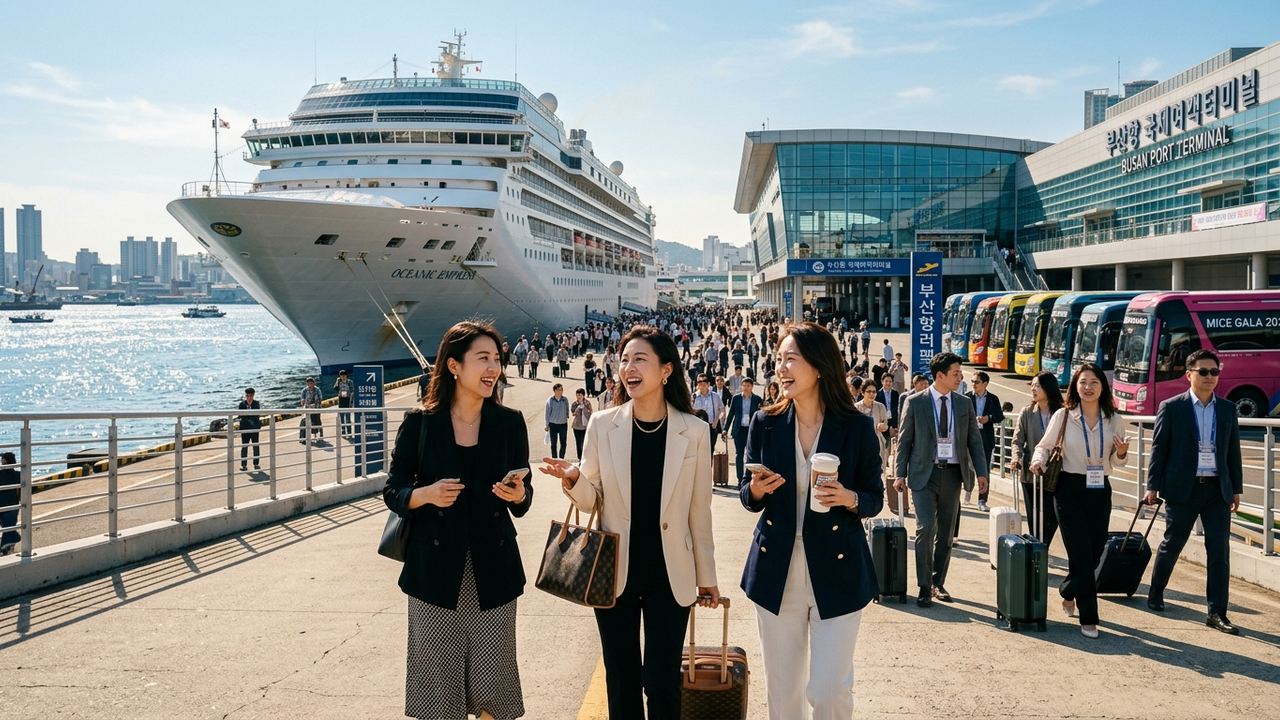
Image generated by AI
[Seoul, June 25, 2026] — South Korea is experiencing a massive surge in high-value tourism as 5,000 corporate incentive travelers from China arrive in a coordinated effort to boost the regional MICE (Meetings, Incentives, Conferences, and Exhibitions) sector. This large-scale movement, centered around a reward program for the Wuliangye Group, is utilizing cruise operations to funnel thousands of premium visitors into the key maritime hubs of Jeju Island and Busan.
A New Era for East Asian Corporate Travel
The arrival of this delegation represents one of the most significant coordinated group incentive tours of the year, signaling a robust recovery and expansion of premium tourism flows between China and South Korea. According to industry reports, the program is specifically designed as a performance-based reward for the employees, distributors, and business associates of the Wuliangye Group, a titan in the Chinese beverage industry.
By leveraging the MICE framework, South Korea is positioning itself as the primary destination for high-spending corporate groups. This strategy focuses not just on volume, but on the quality of spend, targeting a demographic that seeks immersive cultural experiences and luxury travel. The initiative is expected to catalyze a broader trend of corporate-led inbound tourism, moving away from traditional independent leisure travel toward structured, high-yield corporate excursions.
Coordinated Cruise Operations and Phased Arrivals in Busan and Jeju
To manage the logistics of transporting 5,000 individuals while maintaining a premium experience, the tour has been split into two distinct waves of approximately 2,500 participants each. The first contingent departed from Shanghai aboard a vessel operated by Adora Cruises, integrating maritime transport with corporate reward travel.
The itinerary is strategically designed to maximize impact at South Korea's most vital tourism gateways. The first group's visit spans from Thursday to Monday, with the second wave following immediately, extending the surge of activity into early July. This staggered approach allows local infrastructure to absorb the high volume of visitors without compromising service quality.
The choice of Adora Cruises is particularly significant, as it demonstrates the operational viability of using large-scale cruise ships to move corporate delegations across international borders, blending the luxury of a cruise with the objectives of a corporate retreat.
Strategic Recruitment Targeting China’s Liquor Manufacturing Hubs
The success of this massive booking is attributed to a highly targeted marketing campaign led by the Chengdu branch of the Korea Tourism Organization. Rather than broad outreach, officials focused their efforts on China’s western provinces, specifically Sichuan and Guizhou.
These regions are the heart of China’s liquor production ecosystem and are home to six of the nation's top ten liquor brands. By identifying the Wuliangye Group—which was already in the process of planning an international reward trip—the tourism authorities were able to secure a high-volume contract through tailored engagement and sustained on-ground marketing. This "ecosystem-based" recruitment strategy serves as a blueprint for future campaigns aiming to attract corporate giants from specific industrial clusters.
Strengthening the Korea–Adora Cruises Strategic Alliance
This influx of travelers marks the first major operational milestone resulting from the strategic partnership between South Korean tourism authorities and Adora Cruises, China’s largest cruise operator. The agreement, formalized in March, aimed to synchronize cruise routes with the needs of the MICE sector.
The collaboration focuses on expanding port calls in South Korean cities, with a particular emphasis on Busan and Yeosu. By integrating these ports into corporate itineraries, both entities are transforming cruise ships into mobile venues for corporate incentive travel. This synergy is intended to solidify South Korea's reputation as a premier hub for large-scale professional gatherings and reward tours.
Cultural Programming and Destination Readiness in Jeju and Busan
Local authorities in Jeju and Busan are deploying comprehensive welcome programs to ensure a high-impact visitor experience. The Jeju Tourism Organization and the Busan Tourism Organization are coordinating a series of cultural receptions to showcase Korean heritage and hospitality to the Chinese delegation.
Planned activities include:
- Traditional Performances: Live samulnori percussion displays to greet arriving guests.
- Ceremonial Displays: Formal greeting ceremonies designed for high-profile corporate groups.
- Cultural Immersion: Hanbok costume presentations and traditional craft showcases.
These immersive touchpoints are designed to reinforce South Korea's destination branding, ensuring that the high-spending visitors associate the country with both modern luxury and rich tradition.
Tourism Flow Distribution Analysis
| Entity | Role in Operation | Key Locations Involved |
|---|---|---|
| China | Origin Country | Shanghai, Sichuan, Guizhou |
| Wuliangye Group | Corporate Sponsor | Corporate HQ & Provincial Networks |
| Adora Cruises | Logistics/Transport | Shanghai $\rightarrow$ South Korea |
| South Korea | Host Destination | Jeju Island, Busan, Yeosu |
| KTO (Chengdu Branch) | Strategic Recruitment | Chengdu, Sichuan Province |
Economic and Regional Tourism Impact Analysis
The immediate economic impact of 5,000 high-net-worth individuals entering Jeju and Busan is substantial. Industry observers expect a sharp spike in hotel occupancy rates, increased demand for premium ground transportation, and a surge in retail spending within luxury sectors.
Beyond the immediate financial gain, this movement signals a structural shift in East Asian tourism. The "hybrid model"—which blends maritime transport, corporate rewards, and curated cultural experiences—is becoming a dominant driver of high-yield inbound traffic. For South Korea, this means deeper penetration into the Chinese corporate travel ecosystem and a diversified revenue stream that is less dependent on individual tourists.
For the Chinese market, the tour reflects a growing confidence in outbound corporate travel and the increasing use of international luxury experiences as a tool for employee motivation and partner relationship management.
Future Implications for the MICE Sector
The successful execution of the Wuliangye Group tour sets a precedent for future large-scale corporate movements in Northeast Asia. As the partnership between cruise operators and national tourism boards matures, it is likely that more Chinese corporations will adopt this phased, cruise-based approach to incentive travel.
South Korea is now better positioned to capture this high-value segment by leveraging its maritime infrastructure and cultural assets. The long-term implication is a more resilient tourism economy that can attract thousands of visitors in single, coordinated waves, ensuring consistent growth in the premium MICE sector.
Related Travel Guides
Disclaimer
This article is for informational and educational purposes only. It does not constitute legal, financial, or professional advice. While we strive to provide accurate and up-to-date information, travel policies, regulations, and conditions change rapidly. Always verify information with official sources before making travel decisions. Nomad Lawyer makes no representations about the accuracy, reliability, completeness, or suitability of the information provided. Readers should consult qualified professionals for advice specific to their circumstances. The views expressed in this article are those of the author and do not necessarily reflect the views of Nomad Lawyer.
Kunal K Choudhary
Co-Founder & Contributor
A passionate traveller and tech enthusiast. Kunal contributes to the vision and growth of Nomad Lawyer, bringing fresh perspectives and driving the community forward.
Learn more about our team →