
China Flight Disruption: Weather Causes 4133 Delays and 133 Cancellations
China's aviation network faces severe disruptions as Typhoon Noul and heavy rain cause 4,133 flight delays and 133 cancellations across major hubs.

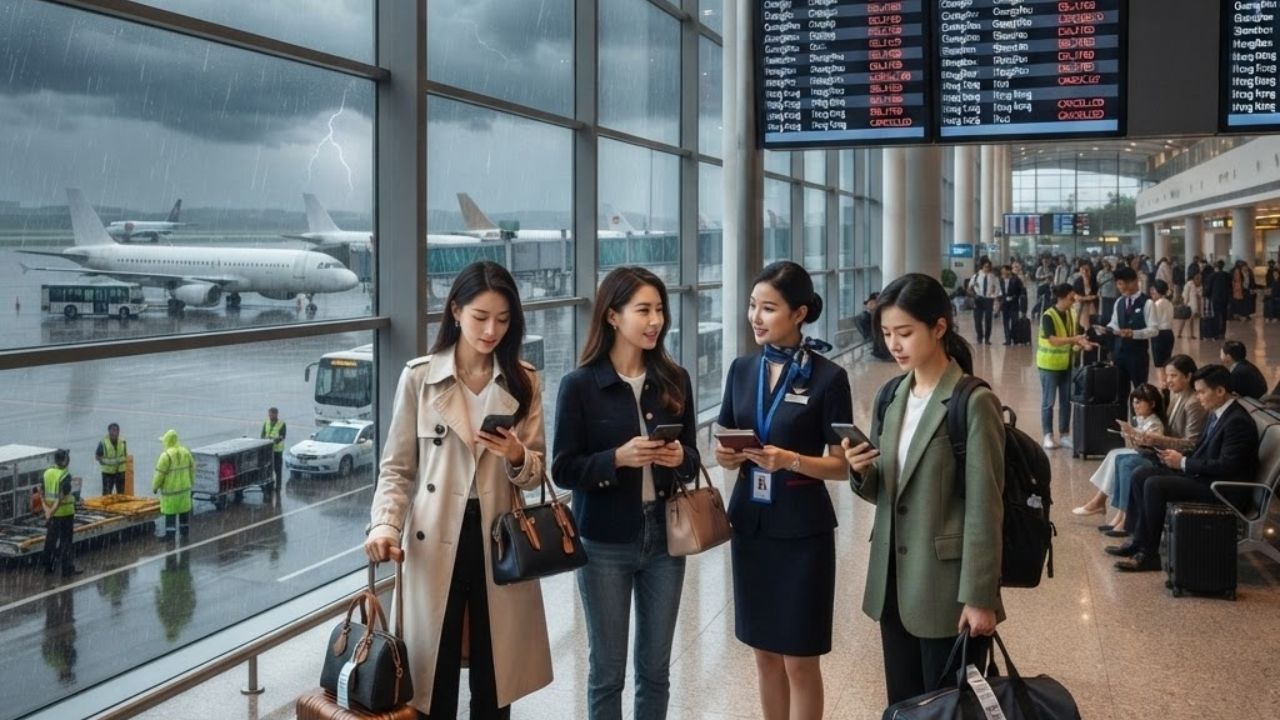
Image generated by AI
Beijing, July 28, 2026 — Severe weather alerts confirm that Typhoon Noul and widespread regional storms have triggered a massive transportation bottleneck in China, resulting in 4,133 delayed and 133 cancelled flights.
Beijing, July 28, 2026 — A staggering 4,133 delays and 133 cancellations have crippled aviation networks across China as Typhoon Noul unleashes severe flooding and torrential downpours. The widespread China flight cancellations and airport delays are disrupting critical transport lines from Beijing to Guangzhou. Industry data indicates that the extreme weather is forcing major hubs to operate at drastically reduced capacities to preserve passenger safety.
Typhoon Noul Unleashes Severe Storm Systems Across Southern China
A massive weather front linked to Typhoon Noul has collided with seasonal monsoon currents, producing heavy rainfall, flash floods, and landslides across multiple Chinese provinces. According to the China Meteorological Administration, severe alerts are active in several high-population areas, prompting emergency responses to protect municipal infrastructure. The storm system is sweeping through several provinces, including Guangdong, Hunan, Jiangxi, Sichuan, Gansu, and Xinjiang, causing substantial disruption to road networks and regional rail lines.
Ground logistics surrounding major airports have degraded rapidly as flash flood warnings restrict access to terminal gates. In several tourist destinations, local emergency teams are conducting rescue operations to assist visitors stranded by mudslides and localized flooding. These challenges have increased pressure on municipal transit services, making it difficult for flight crews and ground workers to reach their designated airport stations.
Industry observers note that the combination of low visibility, convective wind shear, and water accumulation on runways has forced air traffic control units to implement strict flow management protocols. To maintain safety margins, flights are being held at their origin stations or diverted to alternate airports outside the storm's path. These safety measures have caused a backlog of aircraft, creating delays that are cascading through the domestic network.
Evaluating the Operational Impact on China's Hub Airports
The flight disruptions are concentrated at some of the country's busiest aviation facilities, where the sheer volume of daily aircraft movements leaves little margin for schedule slippage. According to aggregated reports from FlightAware, Chengdu Tianfu International Airport (TFU) has recorded the highest number of flight disruptions in southwestern China, with 449 delayed flights and 12 cancellations. The facility serves as a primary gateway to western China, and the delays have severely affected connecting traffic across the region.
Guangzhou Baiyun International Airport (CAN) is also facing major challenges, reporting 428 delayed flights and four cancellations. Located in the southern province of Guangdong, the airport was directly in the path of the rain bands associated with Typhoon Noul. Similarly, Kunming Changshui International Airport (KMG) has registered 403 delays and six cancellations, while Shanghai Pudong International Airport (PVG) has reported 357 delays and six cancellations, reflecting the storm's impact on eastern gateways.
In the north, Beijing's two primary airports are experiencing significant disruptions as storms move across the capital region. Beijing Capital International Airport (PEK) has reported 192 delays and 11 cancellations, while Beijing Daxing International Airport (PKX) has registered 223 delays and seven cancellations. The widespread nature of these delays suggests that the aviation grid is struggling to absorb the impact of the severe weather.
Major Airports Face Severe Disruption Matrix
To illustrate the geographic reach of the weather emergency, the table below outlines the specific cancellation and delay statistics across the most heavily impacted Chinese airports:
Affected Airport Flight Disruption Statistics
| Airport | City | Cancelled Flights | Delayed Flights |
|---|---|---|---|
| Chengdu Tianfu International Airport (TFU) | Chengdu | 12 | 449 |
| Beijing Capital International Airport (PEK) | Beijing | 11 | 192 |
| Haikou Meilan International Airport (HAK) | Haikou | 9 | 160 |
| Beijing Daxing International Airport (PKX) | Beijing | 7 | 223 |
| Wuhan Tianhe International Airport (WUH) | Wuhan | 7 | 165 |
| Tianjin Binhai International Airport (TSN) | Tianjin | 7 | 75 |
| Chongqing Jiangbei International Airport (CKG) | Chongqing | 7 | 217 |
| Ningbo Lishe International Airport (NGB) | Ningbo | 7 | 85 |
| Changsha Huanghua International Airport (CSX) | Changsha | 6 | 214 |
| Xiamen Gaoqi International Airport (XMN) | Xiamen | 5 | 240 |
| Chengdu Shuangliu International Airport (CTU) | Chengdu | 4 | 213 |
In addition to these major hubs, notable flight delays and cancellations are affecting several regional facilities, including airports in Zhuhai, Dalian, Shijiazhuang, Kaohsiung, Aksu, Hohhot, Nanchang, Hefei, Yangzhou Taizhou, and Kashgar. According to reports archived at 4:17 pm ET in the United States on July 27, 2026 (corresponding to 4:19 am GMT+8 on July 28, 2026), the total flight disruptions nationwide stand at 4,133 delays and 133 cancellations, with numbers expected to shift as airlines adjust their schedules.
Air China and China Eastern Airlines Absorb the Brunt of Cancellations
The high volume of delayed and cancelled flights has placed significant operational strain on domestic airlines, which must manage aircraft rotations, crew limits, and passenger rebooking logistics. China Eastern Airlines has reported the highest number of delayed flights, with 818 delays and 10 cancellations. The carrier's massive domestic network means that disruptions at hubs like Shanghai and Kunming quickly affect flights across the country.
China Southern Airlines has also faced major schedule disruptions, reporting 512 delayed flights and eight cancellations. Meanwhile, Air China has registered 307 delays and 30 cancellations, representing the highest number of total cancellations among the carriers in the active dataset. The cancellations suggest that the airline is proactively adjusting its schedule to avoid aircraft being stranded at storm-affected airports.
Regional and low-cost carriers are also experiencing significant challenges. China Express Airlines has reported 17 cancellations and 102 delays, while Hainan Airlines has registered 13 cancellations and 164 delays. These figures show that no segment of the domestic market is immune to the effects of the weather emergency.
National and Regional Carrier Disruption Metrics
To provide a detailed overview of the airline impact, the table below summarizes the operational disruption statistics for the major domestic carriers:
Affected Airline Flight Disruption Statistics
| Airline | Cancelled Flights | Delayed Flights |
|---|---|---|
| Air China | 30 | 307 |
| China Express Airlines | 17 | 102 |
| Hainan Airlines | 13 | 164 |
| China Eastern Airlines | 10 | 818 |
| China Southern Airlines | 8 | 512 |
| Tianjin Airlines | 7 | 106 |
| Spring Airlines | 3 | 138 |
| XiamenAir | 2 | 294 |
| Juneyao Airlines | 2 | 107 |
| Shenzhen Airlines | 1 | 322 |
| Lucky Air | 1 | 112 |
| Jiangxi Airlines | 1 | 29 |
| Urumqi Air | 1 | 20 |
What Passengers Receive During Severe Weather Disruptions
Under international aviation guidelines, including standard rules supported by the International Air Transport Association (IATA), passengers affected by weather-related delays and cancellations have access to specific protections and services. While airlines are generally not required to pay cash compensation for disruptions caused by weather events, they must provide reasonable assistance to stranded travelers.
Key passenger services during weather disruptions include:
- Duty of Care Services: If a delay extends beyond several hours, airlines must provide passengers with vouchers for meals and refreshments at the terminal.
- Alternative Rebooking Options: Carriers are required to offer passengers seats on the next available flights to their destinations without charging change fees.
- Lobby and Lounge Access: For long-term delays, passengers may be allowed access to transit lounges, or provided with hotel accommodation if the flight is postponed to the following day.
- Luggage Retrieval Support: In cases of multi-day cancellations, passengers have the right to retrieve their checked bags if they choose to cancel their journeys entirely.
Actionable Steps for Travelers Managing Flight Disruptions in China
For passengers currently traveling through China or planning trips in the coming days, navigating these delays requires a proactive approach. Before leaving for the airport, travelers should verify the status of their flights using official airline websites, mobile applications, or airport information lines. Because conditions can change rapidly, checking schedules before departing can prevent long waits in crowded terminals.
Additionally, travelers should prepare for extended transit times to and from airports. Heavy rainfall and urban flooding have compromised several highways and public transit lines, making airport access more difficult. Allowing extra travel time is a sensible precaution to ensure that passengers do not miss flights that manage to depart on schedule.
Finally, passengers whose flights are cancelled should contact their airlines immediately to discuss rebooking. Utilizing mobile applications or online customer service portals is often faster than waiting in long lines at airport service desks. Travelers should also keep essential items, including travel documents, medication, and electronic chargers, in their carry-on baggage.
From a Logistical Standpoint: Why Tropical Storms Paralyze Modern Hubs
From a logistical standpoint, the rapid disruption of China's aviation grid demonstrates the sensitivity of high-density air traffic systems to extreme weather. When a major hub like Chengdu Tianfu or Guangzhou Baiyun experiences reduced capacity, it creates a ripple effect across the entire country. Aircraft that are delayed in the south cannot perform their subsequent flights to the north, causing delays at airports that are experiencing clear weather.
Additionally, weather-related safety protocols are strictly enforced to protect passengers and crew. High winds and lightning make ground handling activities, such as baggage loading and aircraft fueling, too dangerous for ramp workers. This stops airport operations even if planes are capable of taking off, creating a backlog of aircraft at terminal gates and taxiways.
For the traveler, this means that summer storm seasons require increased flexibility and preparation. While airlines and airports work to restore normal operations as weather conditions improve, fully recovering from a backlog of over 4,000 delayed flights can take several days. Understanding the logistical realities of air travel helps passengers set realistic expectations when extreme weather compromises their plans.
FAQ: China Flight Cancellations and Airport Delays 2026
Q1: What is the primary cause of the widespread flight disruptions in China in July 2026?
A1: The primary cause is the severe weather system associated with Typhoon Noul, which has produced torrential rain, flash flooding, and strong winds across southern and central China, compromising airport capacity and flight safety.
Q2: Which Chinese airports and airlines are recording the highest number of flight disruptions?
A2: Chengdu Tianfu (TFU) has recorded the most flight delays, while Air China has reported the highest number of cancellations. China Eastern Airlines has also experienced severe network pressure, reporting over 800 delayed flights.
Q3: Are passengers entitled to cash compensation for weather-related flight delays?
A3: No, airlines are not legally required to provide cash compensation for delays caused by extreme weather. However, they must fulfill their duty of care by providing food vouchers, rebooking options, and hotel accommodation for overnight delays.
Related Travel Guides
- LATAM Airlines São Paulo New York Route Reaches 87% Occupancy
- United Airlines São Paulo Houston Route Reaches 95% Occupancy
- Turkish Airlines Joins SAFFA Fund to Accelerate Sustainable Fuel Production
Meta Description: Flight cancellations and airport delays expand across China as Typhoon Noul triggers severe storm systems, compromising major aviation hubs.
Disclaimer
This article is for informational and educational purposes only. It does not constitute legal, financial, or professional advice. While we strive to provide accurate and up-to-date information, travel policies, regulations, and conditions change rapidly. Always verify information with official sources before making travel decisions. Nomad Lawyer makes no representations about the accuracy, reliability, completeness, or suitability of the information provided. Readers should consult qualified professionals for advice specific to their circumstances. The views expressed in this article are those of the author and do not necessarily reflect the views of Nomad Lawyer.
Kunal K Choudhary
Co-Founder & Contributor
A passionate traveller and tech enthusiast. Kunal contributes to the vision and growth of Nomad Lawyer, bringing fresh perspectives and driving the community forward.
Learn more about our team →