
China Completes High-Pressure Shield Cutter Replacement for World's Longest Undersea High-Speed Rail Tunnel in 2026
China has successfully replaced 104 shield cutting tools in the Jintang Undersea Tunnel, a critical milestone for the world's longest undersea high-speed rail project connecting Zhoushan and Ningbo.

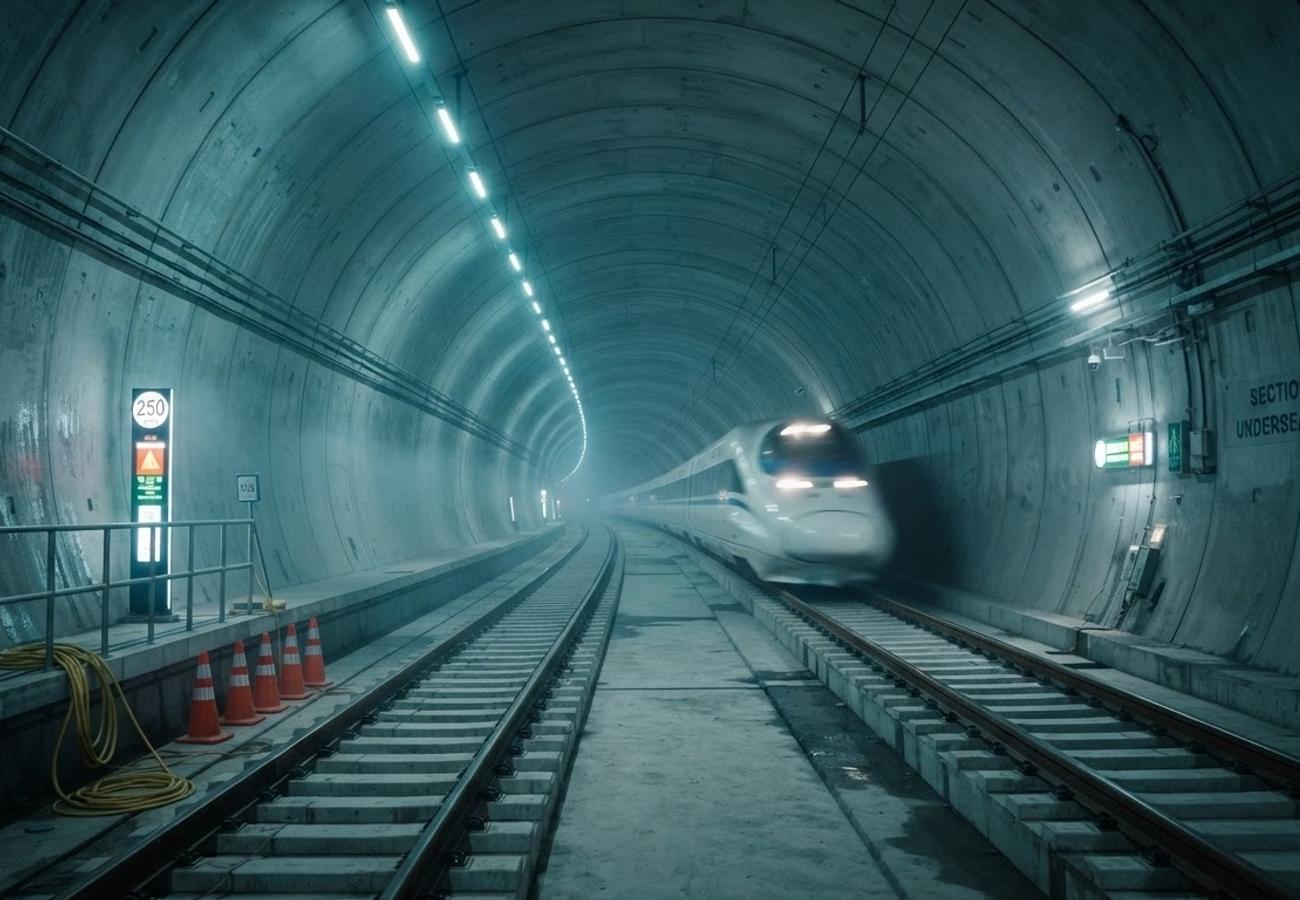
Image generated by AI
The completion of a critical maintenance operation in the East China Sea marks a major technical leap for the Jintang Undersea Tunnel. This project is set to become the world’s longest undersea high-speed rail tunnel, fundamentally altering transit patterns in eastern China.
Technical Milestone in Undersea Excavation
Engineering teams have successfully completed the inspection and replacement of 104 shield cutting tools within the tunnel boring system. This operation was conducted over a 21-day period under extreme high-pressure underwater conditions.
The cutters are integral to the "Linghang" shield tunneling machine, which features a 15.4-metre cutterhead. These tools are responsible for breaking through complex geological materials to maintain the trajectory and progress of the underwater passage.
Our analysis of the engineering data indicates that the operation required specialized maintenance technology developed specifically for deep seabed pressure. The precision of this replacement is vital, as any misalignment in the tunnel bore would compromise the strict safety tolerances required for high-speed rail operations.
Infrastructure Impact and Route Breakdown
The Jintang Undersea Tunnel is a cornerstone of the Ningbo-Zhoushan railway project located in Zhejiang Province. While the tunnel is not yet open for passenger traffic, its completion will integrate previously isolated island regions into the national rail grid.
Primary Impact Zones:
- Zhoushan: Transitioning from reliance on ferries and bridges to direct high-speed rail access.
- Ningbo: Strengthening its position as a primary transport hub and port city.
- Zhejiang Province: Expanding domestic tourism capacity and regional mobility.
- Eastern China Corridor: Reducing transit times between coastal cities and mainland hubs.
Passenger Rights & Future Advisory
For the future traveler, the transition from multi-modal transport (ferries/roads) to high-speed rail represents a significant shift in travel planning. While tickets are not yet available, passengers should be aware of the following frameworks once the line opens:
Ticketing and Booking Our analysis of China’s railway policy suggests that the Ningbo-Zhoushan route will follow standard national rail booking protocols. Passengers should expect dynamic pricing and a mandatory reservation system via official railway channels.
Rebooking and Compensation Rights Once operational, passengers affected by delays or cancellations on this route will be subject to the regulations of the China Railway Corporation. For international travelers, this means:
- Delay Compensation: Rights to refunds or alternative transport depending on the length of the disruption.
- Booking Modifications: Standard windows for ticket changes, though high-demand periods (such as Lunar New Year) typically restrict these options.
Travel Planning Advice Until official service dates are announced, travelers to Zhoushan must continue to utilize existing ferry and bridge infrastructure. We advise monitoring official announcements from the Ministry of Transport of the People's Republic of China for the first passenger trial runs.
Industry Analyst View
The successful maintenance of the "Linghang" machine underscores a broader trend in global infrastructure: the move toward "extreme engineering" to bypass geographical bottlenecks. By utilizing large-scale shield technology that allows excavation and lining to occur simultaneously, China is reducing the timeline for massive undersea projects.
From a tourism perspective, this project is a catalyst. High-speed rail historically increases visitor volume to secondary and tertiary cities. The Jintang tunnel will likely trigger a surge in hospitality investment across Zhoushan, shifting the region from a niche maritime destination to a mainstream domestic tourism hub.
The ability to maintain these machines under high pressure without abandoning the bore is the real victory here. It proves that the operational risks of undersea rail—previously a deterrent for many nations—are becoming manageable through technological innovation.
The Jintang Undersea Tunnel represents the future of coastal connectivity, turning island barriers into high-speed corridors.
Related Travel Guides
Disclaimer
This article is for informational and educational purposes only. It does not constitute legal, financial, or professional advice. While we strive to provide accurate and up-to-date information, travel policies, regulations, and conditions change rapidly. Always verify information with official sources before making travel decisions. Nomad Lawyer makes no representations about the accuracy, reliability, completeness, or suitability of the information provided. Readers should consult qualified professionals for advice specific to their circumstances. The views expressed in this article are those of the author and do not necessarily reflect the views of Nomad Lawyer.
Preeti Gunjan
Contributor & Community Manager
A passionate traveller and community builder. Preeti helps grow the Nomad Lawyer community, fostering engagement and bringing the reader experience to life.
Learn more about our team →