
China and Asia-Pacific Markets Drive Australian Tourism Surge to 9.1 Million Visitors
Australia's visitor economy has hit a critical turning point in 2026, with short-term arrivals reaching 9.1 million as Asian travel markets replace traditional Western sources of growth.

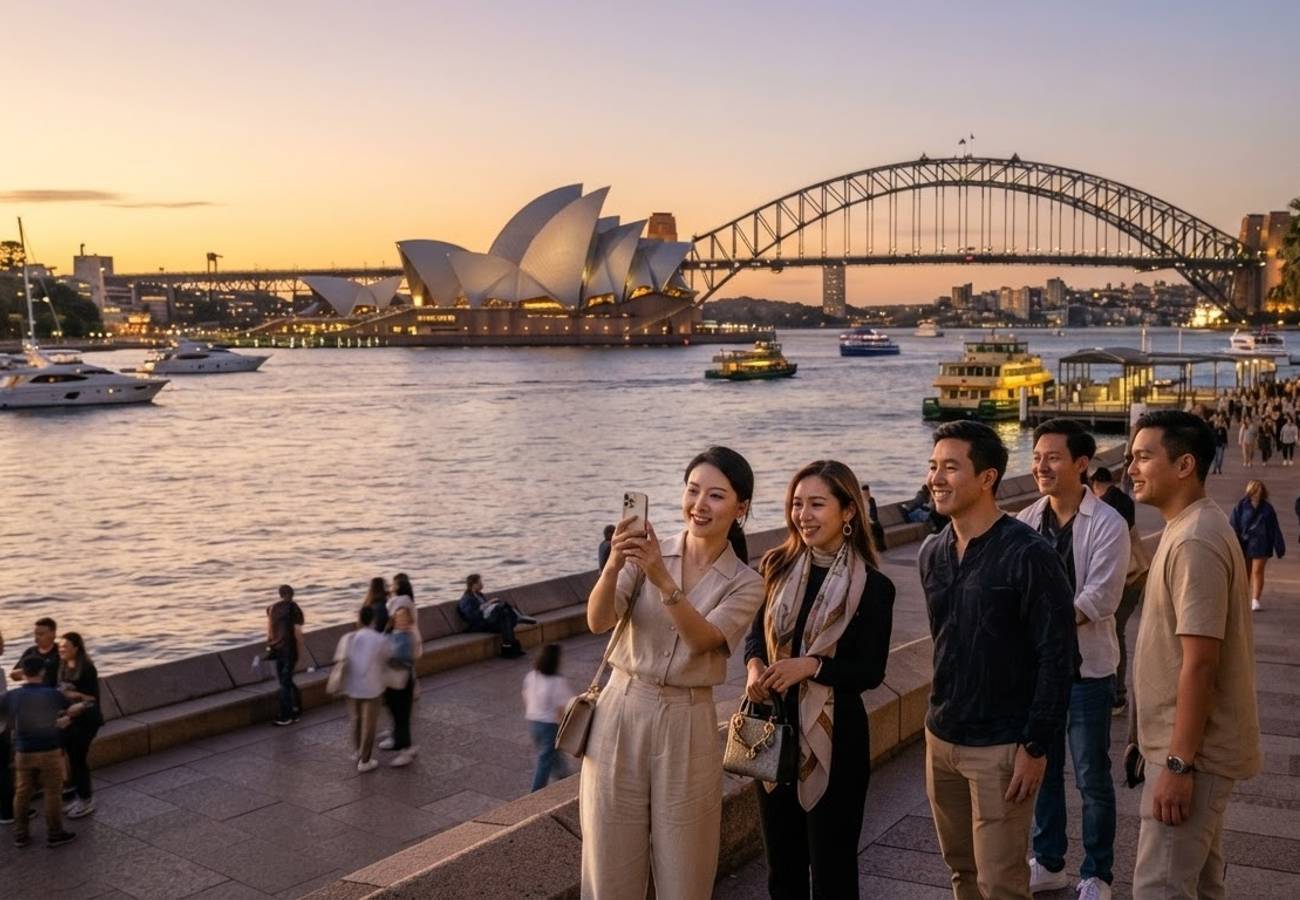
Image generated by AI
Australia welcomed 9.1 million short-term visitor arrivals in the 2025-26 financial year, marking an 8 per cent growth driven by a massive resurgence in Chinese and Asia-Pacific travel markets.
The Local Trend Revealed: Pivot to the Asia-Pacific Travel Market
A structural realignment is transforming the Australian visitor economy. While traditional Western source markets like the United States have experienced a slight softening in demand, international arrivals from the Asia-Pacific region are expanding rapidly. According to data from the Australian Bureau of Statistics (ABS) published on August 14, 2026, short-term visitor arrivals reached 9.1 million for the 2025-26 financial year—marking the fifth consecutive year of sustained growth.
This transition is supported by a significant resurgence in Chinese outbound travel. February 2026 alone witnessed a 79.5 per cent year-on-year surge in arrivals from China, and the twelve-month period ending February 2026 saw Chinese visitation grow by 21.3 per cent to 1.1 million, establishing China as Australia’s second-largest inbound market behind New Zealand.
Parallel to leisure travel, the Asia-Pacific corporate travel sector is expanding, with regional business travel spending projected to near $700 billion in 2026. This corporate demand is supported by key regional markets, including China, Japan, India, South Korea, and Australia.
Australia Inbound Tourism and Regional Growth Performance (2026)
| State / Market Sector | Inbound Visitor Volume | Spend / Financial Contribution | Year-on-Year Growth | Primary Strategic Drivers |
|---|---|---|---|---|
| Victoria (State Performance) | 2.9 Million visitors (83.3M nights) | $10.5 Billion international spend | +16.7% spend (+8.0% volume) | Cultural tourism, major events, and Melbourne CBD revitalization |
| Chinese Inbound Market | 1.1 Million arrivals | High-yield premium retail & luxury stays | +21.3% (with +79.5% in Feb 2026) | Streamlined visa processing and expanded airline capacity |
| Southeast Asian Market | Vietnam, Singapore, Indonesia | High-frequency short-haul travel | +16.1% (Vietnam outbound growth) | Proximity and competitive budget aviation networks |
| Corporate Travel (APAC) | Multi-city business delegates | High daily spend on premium venues | Projected $700 Billion regionally | Trade normalization and major conferences (like Adelaide ATE 2026) |
Cultural & Environmental Value: Supporting THRIVE 2030 and Regional Dispersal
For the traveler, the real impact of this Asia-led growth is the opportunity to participate in sustainable travel initiatives that support regional and First Nations communities. Under the Australian Government's THRIVE 2030 national strategy, coordinated by Trade and Tourism Minister Senator Don Farrell, the goal is to achieve $230 billion in annual visitor expenditure by 2030. A core objective of the plan is the "dispersal" of visitor spending away from congested cities into rural areas.
To support this, the government has allocated $130 million for the second stage of Tourism Australia's "Come and Say G'day" campaign, alongside $18.5 million in targeted funding to preserve iconic natural destinations like the Great Barrier Reef and the Red Centre. By choosing carbon-neutral regional rail networks and booking certified Indigenous-guided walking tours, international visitors directly support community-led conservation and preserve cultural heritage.
Destination Specialist Local Insider Tips
To help you explore Australia comfortably and sustainably during this travel boom, regional specialists suggest the following tips:
- Travel in the Shoulder Seasons: Visit Victoria in late autumn (April to May) or spring (September to October) to enjoy mild weather and avoid the heavy summer crowds.
- Explore Beyond Gateway Cities: Spend time in regional areas like East Gippsland in Victoria or the Atherton Tablelands in Queensland to support local rural economies.
- Respect First Nations Protocols: When visiting sacred natural sites in the Red Centre (such as Uluru-Kata Tjuta National Park), follow local Anangu traditional owner requests, stick to designated tracks, and avoid photographing sacred rock formations.
- Savor Saltbush and Lemon Myrtle: Experience authentic local gastronomy. Try modern Australian dishes seasoned with native botanicals like saltbush, lemon myrtle, or wattleseed at Indigenous-owned dining venues.
- Use Digital Passenger Cards: Save time at border security by completing the digital passenger card introduced in July 2026 before landing at major international gateways.
Long-Term Outlook: Sustainable Destination Management
The long-term outlook for the Australian visitor economy depends on balancing growth with ecological stewardship. Moving toward the 2030 milestones, federal bodies like Tourism Research Australia (TRA) are using data from the Industry Data and Expert Analysis (IDEA) Working Group to coordinate visa processing, aviation capacity, and regional infrastructure upgrades. Chaired by federal and state ministers, these agencies are working to address supply-chain costs, fuel security, and natural disaster resilience. By focusing on high-yield, low-footprint travelers from key Asian markets, Australia is building a resilient tourism model that supports local communities while protecting its unique natural biomes for future generations.
Related Travel Guides
Disclaimer
This article is for informational and educational purposes only. It does not constitute legal, financial, or professional advice. While we strive to provide accurate and up-to-date information, travel policies, regulations, and conditions change rapidly. Always verify information with official sources before making travel decisions. Nomad Lawyer makes no representations about the accuracy, reliability, completeness, or suitability of the information provided. Readers should consult qualified professionals for advice specific to their circumstances. The views expressed in this article are those of the author and do not necessarily reflect the views of Nomad Lawyer.
Raushan Kumar
Founder & Lead Developer
Full-stack developer with 11+ years of experience and a passionate traveller. Raushan built Nomad Lawyer from the ground up with a vision to create the best travel and law experience on the web.
Learn more about our team →