
Children Gaza Reenact Funeral Rituals in Displacement Camps 2026
Children in Gaza displacement camps reenact funeral processions during play in 2026, using dolls to process grief and trauma from ongoing conflict and forced relocation.

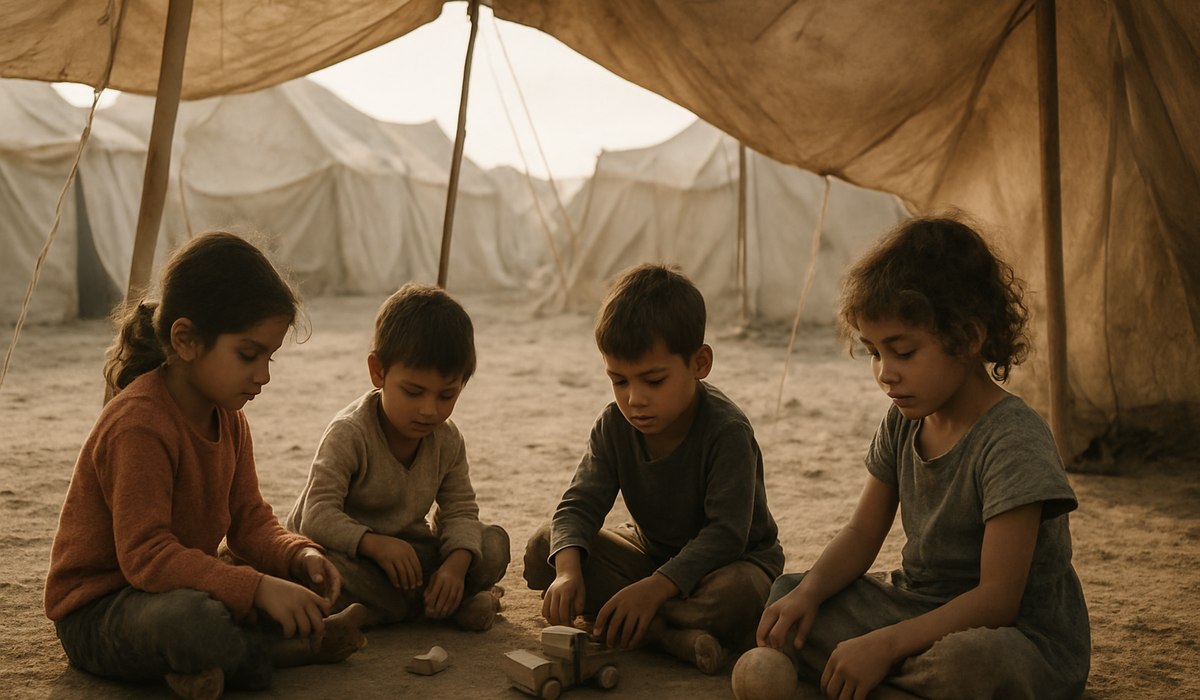
Image generated by AI
Children in Gaza Reenact Funeral Processions: A Window Into Displacement Trauma
Children in Gaza displacement camps have begun reenacting funeral processions with dolls during recreational play, offering a sobering glimpse into how young people process collective grief and trauma during humanitarian crises. Documented observations from multiple camps across the Gaza region in March 2026 reveal that displaced children are channeling their emotional experiences through ritualistic play patterns, transforming their dolls into symbolic representations of loss and mourning.
This phenomenon has captured international attention from humanitarian organizations, child psychologists, and development agencies monitoring the psychological impact of displacement on vulnerable populations. The behavior underscores the urgent need for trauma-informed interventions and mental health support systems within refugee and displacement settings.
Childhood Play as Coping Mechanism in Crisis Zones
Play serves as one of the most fundamental psychological tools available to children during acute stress situations. When children experience displacement, loss, and community disruption, imaginative play becomes a non-verbal processing mechanism that allows them to externalize internal emotional states that they cannot articulate through language alone.
In Gaza displacement camps, children's reenactment of funeral rituals represents a form of what psychologists term "traumatic play"—repetitive recreational patterns that mirror distressing real-world experiences. These children have witnessed loss at unprecedented scales, whether through direct family bereavement, community deaths, or the symbolic death of their former communities through forced displacement.
The dolls used in these processions become therapeutic objects, allowing children to maintain emotional distance while simultaneously processing grief. This coping strategy, while concerning to observers, is a documented response in child psychology literature across conflict zones globally. Research from organizations like Save the Children and UNICEF has extensively documented similar play patterns in post-conflict and displacement settings worldwide.
For families and humanitarian workers supporting these children, understanding that this play represents adaptive coping—rather than pathology—is critical for appropriate intervention and support design.
The Reality of Child Displacement in Gaza
The displacement crisis affecting Gaza's child population represents one of the most significant humanitarian emergencies of 2026. Hundreds of thousands of children have been forcibly relocated from their homes, separated from extended family networks, and placed in camps characterized by resource scarcity, overcrowding, and minimal educational opportunities.
Child displacement creates compounding psychological, social, and developmental challenges. Beyond the immediate trauma of losing homes and witnessing community disruption, displaced children face interrupted education, limited access to healthcare, restricted play spaces, and reduced social interaction with peer networks outside their immediate camp environment.
The United Nations Office for the Coordination of Humanitarian Affairs (OCHA) has documented that children comprise approximately 45% of Gaza's displaced population, with infants and young children representing the most vulnerable subset. Malnutrition rates, vaccine-preventable disease outbreaks, and untreated mental health conditions have increased significantly throughout 2026.
Displacement camps, while providing emergency shelter and basic humanitarian assistance, cannot replace the stability, social structures, and psychological security that established communities provide. The long-term developmental consequences of early childhood displacement remain poorly understood but are expected to generate intergenerational impacts on educational attainment, economic opportunity, and mental health outcomes.
Understanding Trauma Expression Through Ritual Recreation
Rituals carry profound psychological significance across all human cultures, serving functions of community cohesion, meaning-making, and emotional regulation. Funeral rituals specifically represent some of humanity's most universal processing mechanisms for collective and individual grief.
When children reenact funeral processions, they are engaging in meaningful cultural and spiritual practice—not merely engaging in disturbing play. The procession format creates temporal and spatial structure around grief, transforming nebulous emotional pain into choreographed, bounded experiences that can be psychologically contained and processed incrementally.
Developmental psychology research indicates that ritualistic play allows children to practice emotional regulation, test social responses, and gradually metabolize traumatic material at manageable psychological doses. The repetitive nature of these funeral reenactments suggests children are working through traumatic material systematically, attempting to achieve some form of psychological resolution or integration.
However, when such play becomes the primary available coping mechanism—rather than one among many supportive interventions—it indicates systemic failure to provide age-appropriate mental health resources, counseling services, and psychosocial support programming. The prevalence of children's Gaza reenact behavior through funeral processions highlights the absence of adequate mental health infrastructure within displacement camp settings.
Organizations like Doctors Without Borders have emphasized that trauma-informed mental health services, trained counselors, and structured psychosocial programming must accompany emergency humanitarian assistance to prevent long-term psychological sequelae in displaced child populations.
Global Impact and Humanitarian Concerns
The situation in Gaza displacement camps has triggered significant policy discussions within international humanitarian governance structures. The visible manifestation of child trauma through funeral reenactment play has become a focal point for advocacy around adequate humanitarian funding and priority resource allocation toward mental health services in crisis settings.
Mental health resources in humanitarian response historically receive critically inadequate funding relative to medical care and emergency shelter. The Gaza displacement situation in 2026 has prompted major donors and humanitarian organizations to reassess whether current funding architectures appropriately prioritize psychological wellbeing alongside physical safety and basic needs provision.
Trauma response specialists have called for expanded training programs for humanitarian workers in trauma-informed care, child development, and appropriate mental health referral pathways. The challenge of scaling psychological support services within under-resourced displacement camps remains a significant operational and logistical barrier to evidence-based intervention.
Child protection agencies have also emphasized that documenting children's play patterns and trauma responses serves investigative functions for potential future accountability processes, adding complexity to how humanitarian workers should approach observation and documentation of vulnerable populations in crisis settings.
Key Data Table: Gaza Displacement and Child Welfare Indicators 2026
| Indicator | Value | Data Source | Notes |
|---|---|---|---|
| Estimated displaced children in Gaza (2026) | 450,000+ | OCHA reports | Represents 45% of displaced population |
| Children under age 5 in displacement camps | 120,000+ | UNICEF assessment | Highest vulnerability category |
| Camps with mental health services | 23% | Humanitarian field reports | Critical gap in coverage |
| Average counselors per 10,000 children | 2.3 | MSF/Doctors Without Borders | WHO recommends minimum 15 per 10,000 |
| Children exhibiting trauma play patterns | 68% | Psychosocial assessment surveys | Indicates widespread traumatic exposure |
| Access to recreational/play spaces (camps) | 31% | Camp infrastructure audits | Severely limited physical play areas |
What This Means for Travelers
Travel disruptions, humanitarian access restrictions, and security concerns directly connected to the Gaza displacement crisis affect travelers planning Middle Eastern itineraries.
Actionable traveler considerations:
-
Verify current travel advisories through official government resources before booking any travel to Gaza, West Bank, or adjacent regions. Security situations change rapidly, and many countries maintain formal travel warnings.
-
Support legitimate humanitarian organizations if you wish to contribute to child welfare in displacement settings. Verify organizational credentials through charity watchdog databases like GiveWell or Charity Navigator before donating.
-
Book travel insurance that explicitly covers humanitarian crisis scenarios, political instability, and forced itinerary changes. Standard policies may exclude coverage during active displacement crises.
-
Consider alternative regional travel to Israel, Egypt, Jordan, or Lebanon if your original plans included Gaza or directly affected areas. These neighboring destinations remain accessible and offer cultural continuity without current security risks.
-
Document travel plans comprehensively if traveling to any Middle Eastern destination, including emergency contact information for your embassy and real-time communication access with family members.
FAQ: Children Gaza Reenact Funeral Rituals and Displacement
Q: Why do children in Gaza reenact funeral processions during play? A: Children process trauma through play because their developing brains cannot fully articulate complex grief verbally. Reenacting fu
Kunal K Choudhary
Co-Founder & Contributor
A passionate traveller and tech enthusiast. Kunal contributes to the vision and growth of Nomad Lawyer, bringing fresh perspectives and driving the community forward.
Learn more about our team →