
Chicago O'Hare Grounds 91 Flights as United, SkyWest, American Airlines Face July 4 Operational Crisis
Chicago O'Hare International Airport experiences major operational disruption with 91 cancellations and 104 delays affecting United Airlines, SkyWest, and American Airlines on July 4, 2026.

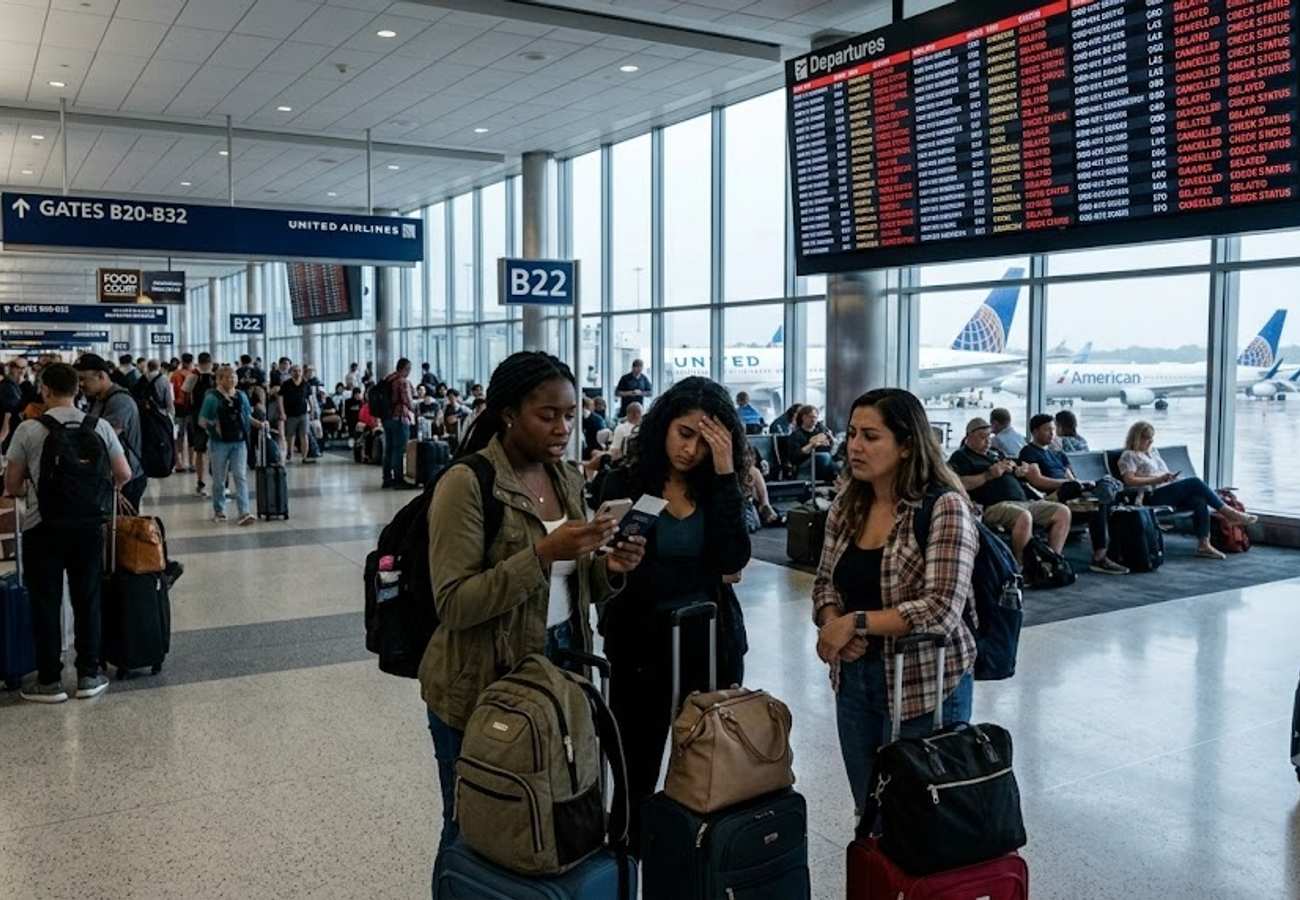
Image generated by AI
Chicago O'Hare International Airport (ORD) descended into operational chaos on July 4, 2026, as three major US carriers ground nearly 200 flights during one of the busiest holiday travel periods. The disruption—comprising 91 cancellations and 104 delays—cascades across domestic networks and threatens international connections, affecting thousands of passengers bound for destinations across North America, Europe, Asia, and the Middle East.
The scale of today's operational failure underscores the fragility of hub-dependent air networks. When a single major airport experiences disruption, ripple effects propagate through hundreds of connecting flights operated by multiple airlines. United Airlines, SkyWest Airlines, and American Airlines bear the primary operational burden, with combined cancellations accounting for approximately 71% of all grounded flights.
Operational Impact: 195 Disrupted Flights Across Major Hub
Chicago O'Hare functions as a critical connectivity node for North American aviation. The airport handles over 800 daily departures and arrivals, making it one of the three busiest US airports by traffic volume. Today's disruption directly affects scheduled operations while simultaneously blocking future rotations, as aircraft, crews, and gates remain unavailable for planned services throughout the day.
Delayed flights impose operational costs exceeding those of cancellations. While cancellations remove aircraft entirely from service, delays compound across multiple flight segments. An aircraft scheduled for three rotations daily experiencing a 90-minute morning delay cascades that disruption forward, potentially affecting evening departures and creating overnight crew scheduling conflicts.
Flight Disruption Summary
| Metric | Count |
|---|---|
| Total Cancellations | 91 |
| Total Delays | 104 |
| Total Disrupted Flights | 195 |
| Percentage of Daily Operations Affected | ~24% |
Airline-by-Airline Breakdown: United and SkyWest Dominate Disruption
United Airlines leads in absolute cancellations with 35 grounded flights, alongside 24 delayed services. The carrier's dominance at Chicago O'Hare—where it operates a primary hub with thousands of daily connections—amplifies the operational impact. A 5% cancellation rate translates to meaningful disruption for passengers transferring to regional destinations throughout the Midwest and beyond.
SkyWest Airlines follows with 30 cancellations and 41 delays—the highest delay count among all operators. SkyWest operates regional services under United Airlines contracts, meaning the carrier's operational stress directly impacts United's ability to feed passengers into long-haul flights. Regional aircraft operating multiple daily rotations mean delays multiply rapidly across smaller markets.
Together, these two carriers account for 65 of 91 cancellations (71.4%) and 65 of 104 delays (62.5%), demonstrating that today's disruption concentrates heavily among Chicago O'Hare's largest operators.
Detailed Airline Performance Data
| Airline | Cancellations | % Rate | Delays | % Rate |
|---|---|---|---|---|
| United Airlines | 35 | 5% | 24 | 4% |
| SkyWest Airlines | 30 | 5% | 41 | 7% |
| American Airlines | 13 | 3% | 9 | 2% |
| GoJet (UAL) | 6 | 4% | 1 | 0% |
| Delta Air Lines | 4 | 8% | 1 | 2% |
| Endeavor Air (DAL) | 1 | 16% | 3 | 50% |
| Republic Airways | 1 | 0% | 5 | 2% |
| Envoy Air (AAL) | 1 | 0% | 1 | 0% |
| British Airways | 0 | 0% | 4 | 66% |
| China Airlines | 0 | 0% | 3 | 100% |
American Airlines recorded 13 cancellations and 9 delays, a moderate operational burden reflecting its secondary hub status at Chicago O'Hare. The carrier's 3% cancellation rate remains below regional operators percentage-wise, though absolute passenger impact remains substantial.
Regional Carriers Reveal Cascade Vulnerability
Regional airlines operating feeder services to major carriers experience disproportionate percentage impacts. Endeavor Air (DAL) reported a striking 50% delay rate across 3 delayed flights—a high percentage reflecting relatively small scheduled operations rather than systemic failure, but indicative of significant disruption for affected passengers.
Republic Airways cancelled 1 flight and delayed 5 others, while Envoy Air (AAL) experienced 1 cancellation and 1 delay. These regional carriers operate the foundation of hub-and-spoke networks. Even limited disruptions cascade upward, preventing passengers from reaching long-haul international departures and triggering extensive operational recovery efforts.
International Carriers Face Delay-Driven Disruption
Unlike US carriers, international operators at Chicago O'Hare have largely avoided cancellations, instead absorbing delay-based disruption that reflects congestion rather than capacity removal.
British Airways recorded 4 delays affecting 66% of its scheduled movements, while China Airlines reported 3 delays representing a 100% delay rate—meaning every scheduled operation during the reporting period experienced timing disruptions.
KLM, Iberia, and TAP Air Portugal each recorded single delayed flights at 50% rates, reflecting small scheduled operation counts. Turkish Airlines, Emirates, and Cargolux Airlines International each recorded delays between 20-25%, suggesting international schedules absorbed secondary impacts from primary hub disruptions rather than experiencing direct operational failures.
Network Cascade Risk: Why Hub Disruption Matters
Chicago O'Hare serves as a connectivity point for passengers traveling across North America, Europe, Asia, and the Middle East. The airport's disruption extends well beyond Illinois borders. Passengers connecting through Chicago to Denver, Dallas, Los Angeles, and New York face delayed onward services. International passengers originating from Europe or Asia connecting to domestic destinations throughout the US experience similar cascading effects.
Hub-dependent networks concentrate operational risk. When a single facility experiences disruption, multiple carriers simultaneously lose aircraft rotation capacity, crew scheduling flexibility, and gate availability. Recovery requires coordinated action across multiple carriers and ground service providers—a complex choreography that often extends disruption well beyond the initial event.
Today's operational crisis underscores the vulnerability of American aviation infrastructure during peak travel periods. Holiday season operations at major hubs operate with minimal slack capacity. A 24% reduction in Chicago O'Hare's daily operations removes flexibility from an already-constrained system, forcing airlines to choose between cancellations, lengthy delays, or compromised service standards.
United Airlines and SkyWest bear operational consequences reflecting their dominance at Chicago O'Hare, but the broader disruption signals systemic capacity constraints affecting American air travel during peak demand periods.
Related Travel Guides
Disclaimer
This article is for informational and educational purposes only. It does not constitute legal, financial, or professional advice. While we strive to provide accurate and up-to-date information, travel policies, regulations, and conditions change rapidly. Always verify information with official sources before making travel decisions. Nomad Lawyer makes no representations about the accuracy, reliability, completeness, or suitability of the information provided. Readers should consult qualified professionals for advice specific to their circumstances. The views expressed in this article are those of the author and do not necessarily reflect the views of Nomad Lawyer.
Raushan Kumar
Founder & Lead Developer
Full-stack developer with 11+ years of experience and a passionate traveller. Raushan built Nomad Lawyer from the ground up with a vision to create the best travel and law experience on the web.
Learn more about our team →