
Chiang Mai International Airport Hits 6.53 Million Passengers: Northern Thailand Aviation Hub, Winter Route Expansions, and Lanna Tourism

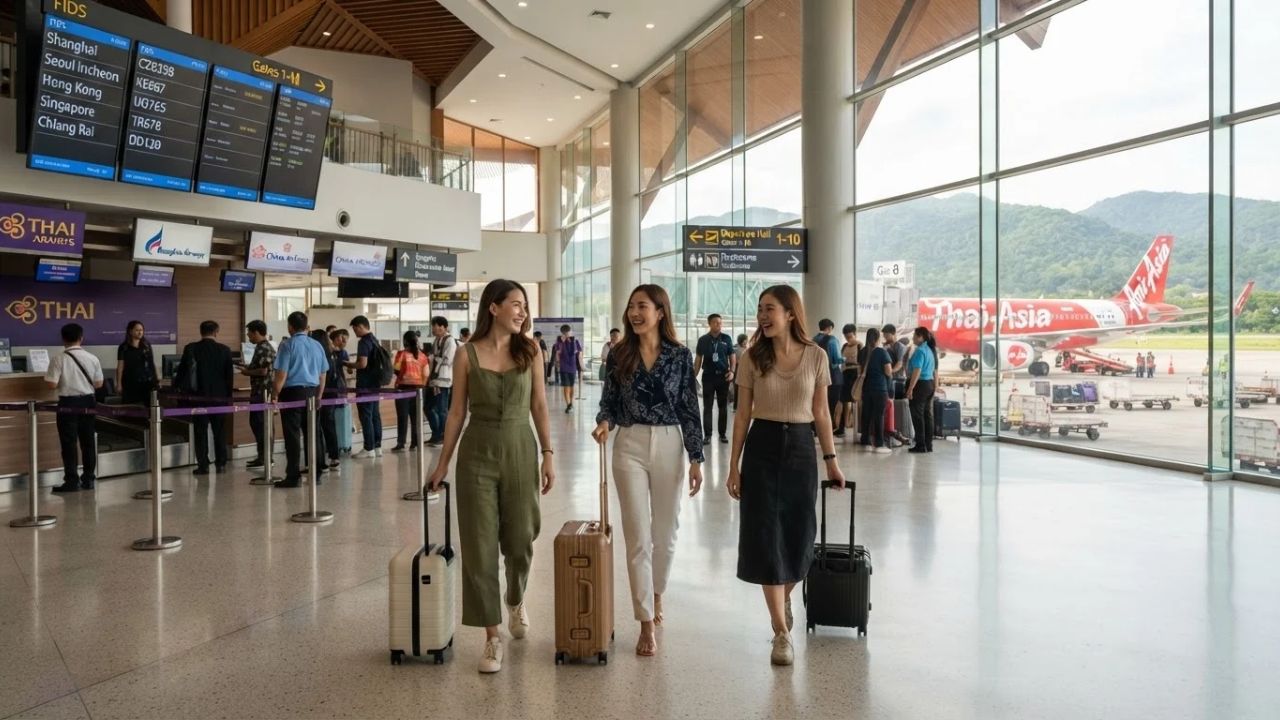
Processing 6.53 million passengers across 43,544 flight movements during the first eight months of 2026, Chiang Mai International Airport has solidified its transformation from a domestic regional airfield into Northern Thailand's primary international aviation hub. Spurred by a 14% year-on-year surge in international travelers, the airport’s overseas traffic now accounts for nearly 30% of total passenger throughput and 13,232 international flights, positioning the ancient Lanna capital for an expansive winter travel season that is projected to reach approximately 9.97 million passengers by the end of the year.
The robust international performance reflects sustained demand from East Asian powerhouses—with visitors from China and South Korea contributing more than half of all international arrivals—alongside the strategic restoration of long-haul Middle Eastern air links. Under the stewardship of Airports of Thailand (AOT), ongoing terminal modernizations, including the deployment of six replacement passenger boarding bridges on August 21, demonstrate how aviation infrastructure is evolving to support eco-conscious, heritage-driven tourism across the forested valleys of the North.
The Local Trend Revealed: Chiang Mai’s Emergence as an Independent Global Gateway
Historically, travelers heading to Northern Thailand were forced to route through Bangkok’s Suvarnabhumi or Don Mueang airports, transferring onto domestic flights to reach the highlands. Today, Chiang Mai International Airport (CNX) functions as a sovereign international hub, allowing visitors from across Asia and the Middle East to touch down directly in the cultural heart of the ancient Lanna Kingdom.
The operational metrics from the first eight months of 2026 illustrate this structural realignment:
- International Passenger Surge: While overall flight volumes stabilized amidst global jet fuel volatility and airline network adjustments, international travel expanded by 14% year-on-year, proving that high-yield international travelers are prioritizing Northern Thailand's distinctive cultural identity.
- East Asian Dominance: Travelers from mainland China and South Korea remain the backbone of direct arrivals, making up over 50% of the airport’s overseas passenger base. This flow is anchored by direct air bridges from tier-one Chinese cities such as Shanghai, regional links to Jinghong in Yunnan's Xishuangbanna Dai Autonomous Prefecture, and high-frequency connections to Seoul Incheon.
- Restoration of the Abu Dhabi Air Corridor: A major strategic development for the upcoming winter schedule is the planned return of the non-stop Abu Dhabi–Chiang Mai service. Temporarily paused during the low-demand summer months, the route's reactivation restores direct transit access for European, Middle Eastern, and North American travelers seeking winter wellness and spiritual retreats without entering Bangkok airspace.
Airfield Modernization: Upgrading Infrastructure for 9.97 Million Flyers
To accommodate the winter peak season that begins in late October, Airports of Thailand has completed several key technical milestones across CNX’s terminal and ramp operations:
- Six New Passenger Boarding Bridges: On August 21, the airport brought six newly installed, modern aircraft boarding bridges into full commercial service. Replacing aging units, these bridges accelerate aircraft turnaround times, enhance passenger boarding comfort during monsoon rains, and accommodate larger narrow-body and wide-body aircraft types.
- Airfield Safety and Logistics Projects: Active development continues across the airport perimeter, including construction of a modernized airport rescue and firefighting station, a dedicated cargo building to manage perishable agricultural exports, a new Control Post 2 facility, and an expanded parking area dedicated to ground support equipment (GSE).
- Terminal Flow and Security Optimization: AOT has overhauled interior passenger screening zones, deploying upgraded baggage scanning lanes and automated passport verification gates to reduce international arrival wait times during dense bank arrival windows.
Cultural & Environmental Value: Slow Tourism and Lanna Heritage Stewardship
Chiang Mai’s expanding air connectivity creates profound opportunities—and heightened environmental responsibilities—for Northern Thailand’s fragile natural and cultural habitats. Unlike the resort-heavy coastal islands, tourism in Chiang Mai is anchored in mindful exploration, artisan craftsmanship, and reverence for centuries-old spiritual traditions.
Fostering Ethical and Community-Based Tourism
As visitor numbers climb toward 9.97 million, local tourism authorities and conservation bodies emphasize responsible travel practices:
- The Transition to Ethical Elephant Sanctuaries: Chiang Mai has pioneered the global shift away from exploitative wildlife entertainment. Travelers arriving at CNX increasingly seek out hands-off, observation-only sanctuaries where rescued Asian elephants roam freely across forested valleys without carrying riding saddles or performing in shows.
- Supporting Indigenous Hill Tribe Craft Communities: Direct international flights funnel economic benefits directly to traditional artisan villages in San Kamphaeng, Bo Sang, and the surrounding Mae Rim highlands, supporting multi-generational woodcarvers, celadon ceramicists, and natural indigo weavers.
- Watershed and Air Quality Protection: The surrounding Doi Suthep-Pui National Park forms the vital ecological lung and watershed for the Chiang Mai basin. Sustainable tour operators coordinate with the Department of National Parks to promote low-impact trekking, mountain trail cycling, and reforestation volunteering that safeguard native flora.
Visitor Insider Tips: Navigating Chiang Mai International Airport and the City
One of Chiang Mai International Airport’s greatest travel advantages is its exceptional proximity to the city center. Located merely three kilometers southwest of the historic Old City moat, CNX allows passengers to reach their hotels within 10 to 15 minutes of clearing customs.
Airport Transit and Arrival Logistics
- Fixed-Rate Airport Taxis: Upon exiting the baggage claim area into the arrivals hall, bypass unofficial street solicitations and head to the official Airport Taxi service desks located near Exit 1 and Exit 2. Taxis operate on a regulated flat-rate system: 150 to 200 THB ($4.50 to $6.00 USD) will take you directly to any hotel within the Old City or the Nimmanhaemin district.
- RTC Chiang Mai Smart Bus: For solo budget travelers, the RTC Smart Bus operates air-conditioned public routes connecting the airport to the Old City, Thapae Gate, and the Chang Khlan Night Bazaar for just 20 to 50 THB. Payment can be completed using contactless cards, Rabbit cards, or local digital prompts.
- Rideshare Pickup Zones: Grab and local rideshare apps operate efficiently in Chiang Mai. Designated rideshare pickup areas are clearly signposted outside Door 1 on the ground level.
Best Timing and Flight Planning
- Peak Congestion Hours: International arrivals peak during two distinct waves: late morning (10:30 AM to 1:00 PM) when regional Asian flights touch down, and late evening (7:30 PM to 10:30 PM). If arriving during these windows, prepare for slightly longer queues at passport control.
- Winter Season Weather Comfort: Northern Thailand’s dry, cool season spans from November through February. Daytime temperatures hover around a pleasant 75°F to 82°F (24°C to 28°C), while early mornings and mountain evenings can drop into the crisp 50s°F (10°C to 15°C). Pack light sweaters and fleece jackets for morning temple visits or scooter trips up Doi Suthep.
Local Cultural Etiquette
- Temple Dress Codes: When visiting revered sacred sites such as Wat Phra Singh, Wat Chedi Luang, or Wat Umong, dress modestly. Ensure shoulders and knees are fully covered. Remove shoes before stepping over the raised wooden thresholds of temple viharns.
- Monk Courtesy: Buddhist monks are deeply venerated in Northern Thai culture. Maintain respectful physical distance, never sit higher than an ordained monk, and remember that women must not touch a monk or hand items directly to them.
Authentic Flavors of Northern Thailand: Essential Lanna Gastronomy
Chiang Mai’s culinary culture is completely distinct from southern Thai or central Bangkok cuisine. Characterized by complex bitter herbs, earthy aromatics, fermented ingredients, and mild heat without heavy palm sugar, Lanna food is an extraordinary sensory adventure:
Signature Lanna Delicacies
- Khao Soi: The undisputed culinary king of Northern Thailand. A comforting bowl of springy egg noodles bathed in a rich, slow-simmered golden curry broth made with coconut milk, aromatic spices, and tender braised chicken or beef. The dish is crowned with a nest of crispy fried egg noodles and served with a side platter of sour pickled mustard greens (phak kat dong), sliced purple shallots, fresh lime wedges, and roasted chili oil.
- Sai Oua (Herbal Northern Sausage): Coarsely ground pork infused with fiery fresh lemongrass, kaffir lime leaves, fresh galangal, cilantro roots, garlic, and red chili paste, stuffed into natural casings and grilled slowly over smoking charcoal. Crisp, smoky, and intensely herbaceous, it is best eaten warm alongside balls of sticky rice (khao niao).
- Nam Prik Ong and Nam Prik Noom: Traditional dipping pastes that anchor Lanna family meals. Nam Prik Ong features minced pork and tart cherry tomatoes simmered with fermented soybeans, while Nam Prik Noom is made by pounding fire-roasted green spur chilies, shallots, and garlic in a granite mortar. Both are served with crispy pork cracklings (kab moo) and steamed local garden greens.
- Gaeng Hang Lay: A rich, Burmese-influenced pork belly curry slow-cooked with tamarind pulp, julienned fresh ginger, pickled garlic cloves, and toasted dried spices until the meat is fork-tender.
Tourism Outlook: Northern Thailand’s Expanding Aviation Footprint
With annual passenger numbers on track to reach approximately 9.97 million by the close of 2026, Chiang Mai International Airport stands at the center of Thailand’s broader strategy to distribute tourism wealth evenly across regional economies. By establishing direct air links with major international transit hubs like Incheon, Shanghai, Jinghong, and Abu Dhabi, Chiang Mai reduces tourism pressure on Bangkok while empowering regional hoteliers, guides, artisans, and family farmers.
As long-term plans progress for the future construction of a secondary international terminal and expanded parallel taxiways, Chiang Mai continues to strike an inspiring balance between state-of-the-art aviation efficiency and timeless cultural preservation. For global travelers seeking misty mountain mornings, sacred golden spires, and authentic community connections, Northern Thailand’s welcoming gateway has never been more accessible.
Related Travel Guides
Disclaimer
This article is for informational and educational purposes only. It does not constitute legal, financial, or professional advice. While we strive to provide accurate and up-to-date information, travel policies, regulations, and conditions change rapidly. Always verify information with official sources before making travel decisions. Nomad Lawyer makes no representations about the accuracy, reliability, completeness, or suitability of the information provided. Readers should consult qualified professionals for advice specific to their circumstances. The views expressed in this article are those of the author and do not necessarily reflect the views of Nomad Lawyer.
Raushan Kumar
Founder & Lead Developer
Full-stack developer with 11+ years of experience and a passionate traveller. Raushan built Nomad Lawyer from the ground up with a vision to create the best travel and law experience on the web.
Learn more about our team →