
Chetumal Mexico Reveals Oxtankah the Hidden Maya Port Where Ancient Canoes Met the Caribbean
Chetumal Mexico Reveals Oxtankah the Hidden Maya Port Where Ancient Canoes Met the Caribbean

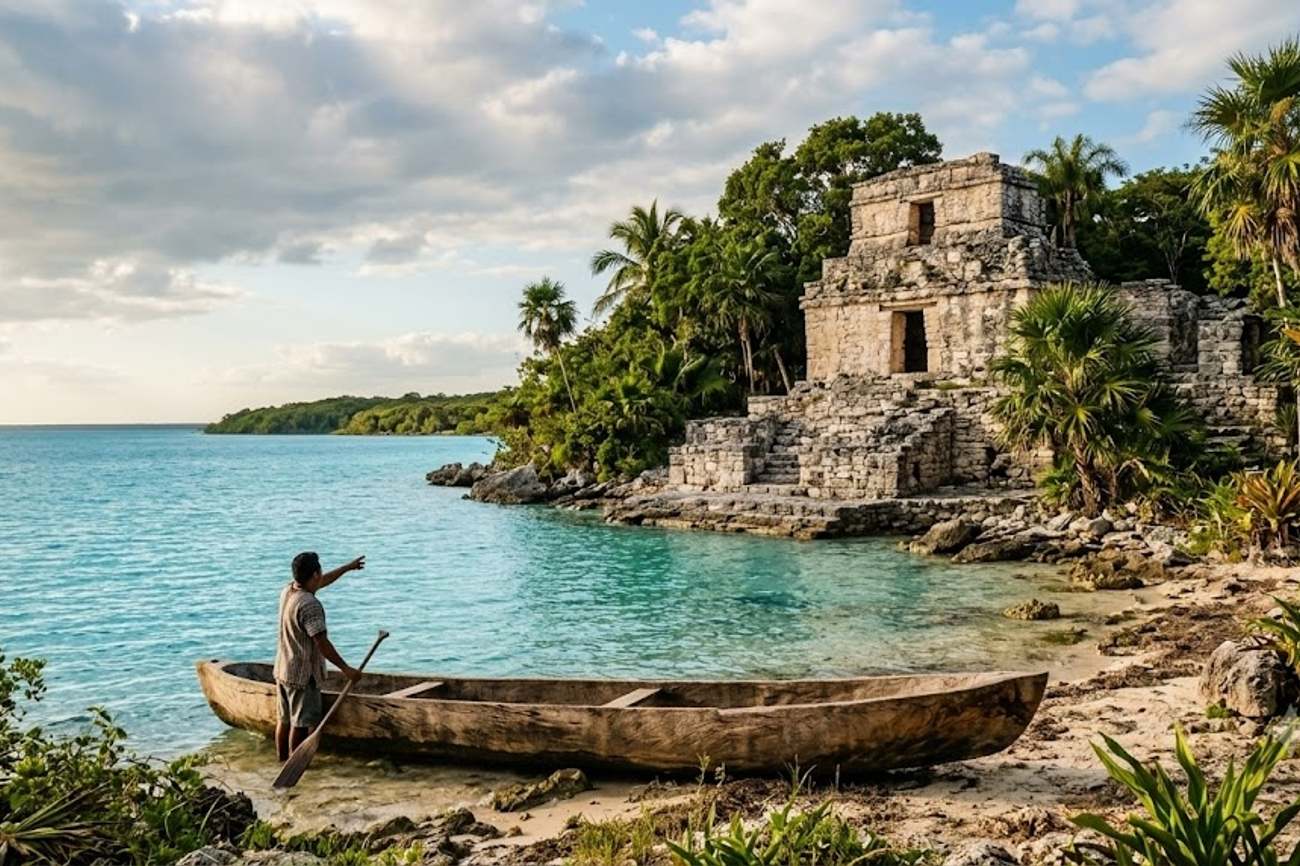
Image generated by AI
While the Riviera Maya continues to process millions of arrivals annually, the southern corridor of Quintana Roo has historically functioned as a transit zone rather than a destination, with Chetumal serving primarily as a gateway to Belize or Bacalar. However, the emergence of Oxtankah as a viable cultural anchor signals a strategic shift toward "de-concentration"—a movement to redistribute tourist footprints from saturated hubs like Cancún to underutilized heritage sites.
The Oxtankah Data Set: Ancient Infrastructure and Trade
The archaeological profile of Oxtankah reveals a sophisticated urban center that functioned as a primary maritime hub for the Maya civilization. Unlike the inland ceremonial centers, Oxtankah was engineered specifically for bay-life integration.
The site reached its peak development between AD 250 and 600, placing its zenith firmly within the Early Classic period of Maya history. The data from the site's layout indicates a high level of environmental engineering, specifically regarding water security. Because the coastal proximity makes potable water scarce, the inhabitants constructed chultunes—specialized underground cisterns—to store fresh water.
From a trade perspective, Oxtankah was the most significant Maya city on Chetumal Bay. The city functioned as a logistical node where canoe-based transport connected the interior of the Yucatán Peninsula to the wider Caribbean Sea. This indicates that southern Quintana Roo was not a peripheral wilderness but a connected economic zone long before the establishment of modern borders or the hotel infrastructure of the Mexican Caribbean.
Comparative Heritage Analysis: Saturated vs. Emerging Sites
To understand the market position of Oxtankah, one must compare it to the "Big Three" of the region: Chichén Itzá, Tulum, and Cobá. While the latter three are global benchmarks for Maya tourism, they suffer from extreme seasonal volatility and overcrowding, which often degrades the visitor experience.
Oxtankah represents a "Low-Density Alternative." Located approximately 10 miles north of Chetumal, it offers a scale of interaction that is impossible at Tulum. The site is unique in its layering of history; it is not purely a Maya site but includes a colonial-era chapel, providing a chronological record of the Spanish arrival and the subsequent cultural synthesis.
The following table illustrates the shift in visitor profiles and site characteristics between the northern tourism corridor and the southern heritage emerging zone.
| Metric | Northern Corridor (Tulum/Cancún) | Southern Corridor (Oxtankah/Chetumal) | Trend Shift |
|---|---|---|---|
| Primary Driver | All-Inclusive Resorts / Mass Tourism | Cultural Heritage / Slow Travel | Diversification |
| Visitor Density | High (Saturated) | Low (Emerging) | De-concentration |
| Historical Layering | Primarily Maya / Modern | Maya $\rightarrow$ Colonial $\rightarrow$ Modern | Multi-era Narrative |
| Infrastructure | High-capacity roads / International Airports | Local roads / Regional hubs | Organic Growth |
| Primary Water Focus | Beachfront / Recreational | Chultunes / Maritime Trade | Functional History |
This movement toward the south aligns with broader global trends reported by the World Tourism Organization (UNWTO), which emphasizes the need for sustainable tourism distribution to prevent "overtourism" in primary hubs while stimulating economic growth in secondary cities.
Practical Traveler Advisory and Strategic Insights
For the modern traveler, the data suggests that the "standard" Quintana Roo itinerary—which typically ends at Tulum—is becoming obsolete. The value proposition has shifted toward the south.
If you are planning a trip to the Mexican Caribbean, integrating a stop in Chetumal to visit Oxtankah is now a strategic move for three reasons:
- Avoidance of Peak Crowds: By pivoting to Oxtankah, travelers bypass the queue-heavy environments of the northern ruins. This allows for a more authentic engagement with the site's terraces and decorated surfaces.
- Logistical Synergy: Oxtankah should be paired with a visit to Calderitas. This allows travelers to combine archaeological exploration with the local seafood economy of the coastal community, creating a diversified day-trip itinerary that supports local SMEs (Small and Medium Enterprises).
Chetumal, Mexico is home to the ancient Maya port of Oxtankah, a hidden gem that showcases the region's rich history and cultural significance. To plan a visit, travelers can check the official Mexican Ministry of Tourism website for information on tourist attractions, accommodations, and transportation options. The city's strategic location on the Caribbean coast makes it an ideal destination for those interested in exploring the Maya civilization. 3. Borderland Efficiency: Because Chetumal is a border city, visiting Oxtankah provides a cultural anchor before or after crossing into Belize, turning a logistical necessity (the border crossing) into a curated cultural experience.
Travelers should verify current opening hours and access protocols via official channels, as smaller sites often have more fluid schedules than the massive complexes managed by federal entities.
Forward Projection: The "Slow South" Trajectory
Based on current patterns of travel diversification, Oxtankah is positioned to become a key asset in the "Slow Travel" movement. As the World Travel & Tourism Council (WTTC) highlights the rise of experiential travel, sites that offer "human stories"—such as the survival of Gonzalo Guerrero or the daily struggle for fresh water via chultunes—will outperform sites that offer only aesthetic ruins.
We project that the tourism value of Chetumal will increase as the state of Quintana Roo seeks to balance its economic dependence on the Riviera Maya. The trajectory suggests a shift from "transit-city" to "destination-city." As infrastructure improves north of Chetumal, we expect a rise in boutique heritage lodging and specialized Maya trade tours that utilize the bay's waterways, mirroring the ancient canoe routes that once made Oxtankah a regional power.
The integration of the colonial chapel with the Maya ruins also suggests that Oxtankah will attract a more academic and history-focused demographic, potentially increasing the average length of stay in Chetumal from a 12-hour transit stop to a 2-3 day cultural residency.
FAQ: Oxtankah and Southern Quintana Roo 2025
Is Oxtankah more expensive to visit than Tulum or Chichén Itzá? Generally, no. Because it lacks the massive commercial infrastructure of the northern sites, costs related to local transport and surrounding dining (such as in Calderitas) tend to be lower and more reflective of local market rates.
When is the best time to visit Oxtankah to avoid crowds? While the site is rarely "crowded" by international standards, visiting during the shoulder seasons (late spring or autumn) provides the best balance of weather and solitude, avoiding the peak winter migration of North American travelers.
Which transport options are best for reaching the site from Chetumal? The site is located 10 miles north of the city. Rental cars or licensed local taxis are the most efficient options. Travelers should arrange return transport in advance, as ride-share availability is lower in the rural areas north of the city.
Is Oxtankah suitable for families with children? Yes. Unlike the highly restricted areas of some major ruins, the combination of nature, the bay view, and the tangible history of the water systems makes it an engaging, less stressful environment for families.
The shift from the resort-heavy north to the heritage-rich south is not just a change in geography—it is a change in the very definition of the Mexican Caribbean experience.
Related Travel Guides
- Waterbury United States Unveils a Hidden Brass City Escape of Art Flavours and Living History
- Thailand Steps Up With Sri Lanka And Others As Autumn Travel Season Unlocks Asia’s Most Affordable Escape Destinations
- ArtPrize 2026 Insider Guide: How Grand Rapids Transforms into the World's Largest Free Open-Air Art Exhibition
Disclaimer
This article is for informational and educational purposes only. It does not constitute legal, financial, or professional advice. While we strive to provide accurate and up-to-date information, travel policies, regulations, and conditions change rapidly. Always verify information with official sources before making travel decisions. Nomad Lawyer makes no representations about the accuracy, reliability, completeness, or suitability of the information provided. Readers should consult qualified professionals for advice specific to their circumstances. The views expressed in this article are those of the author and do not necessarily reflect the views of Nomad Lawyer.
Raushan Kumar
Founder & Lead Developer
Full-stack developer with 11+ years of experience and a passionate traveller. Raushan built Nomad Lawyer from the ground up with a vision to create the best travel and law experience on the web.
Learn more about our team →