
Cayman Islands Records Historic Tourism Surge with 10% Jump in Stayover Arrivals
Cayman Islands reports a 10% surge in July stayover arrivals, marking a historic nine-month growth streak and total visitation exceeding 1 million in 2026.
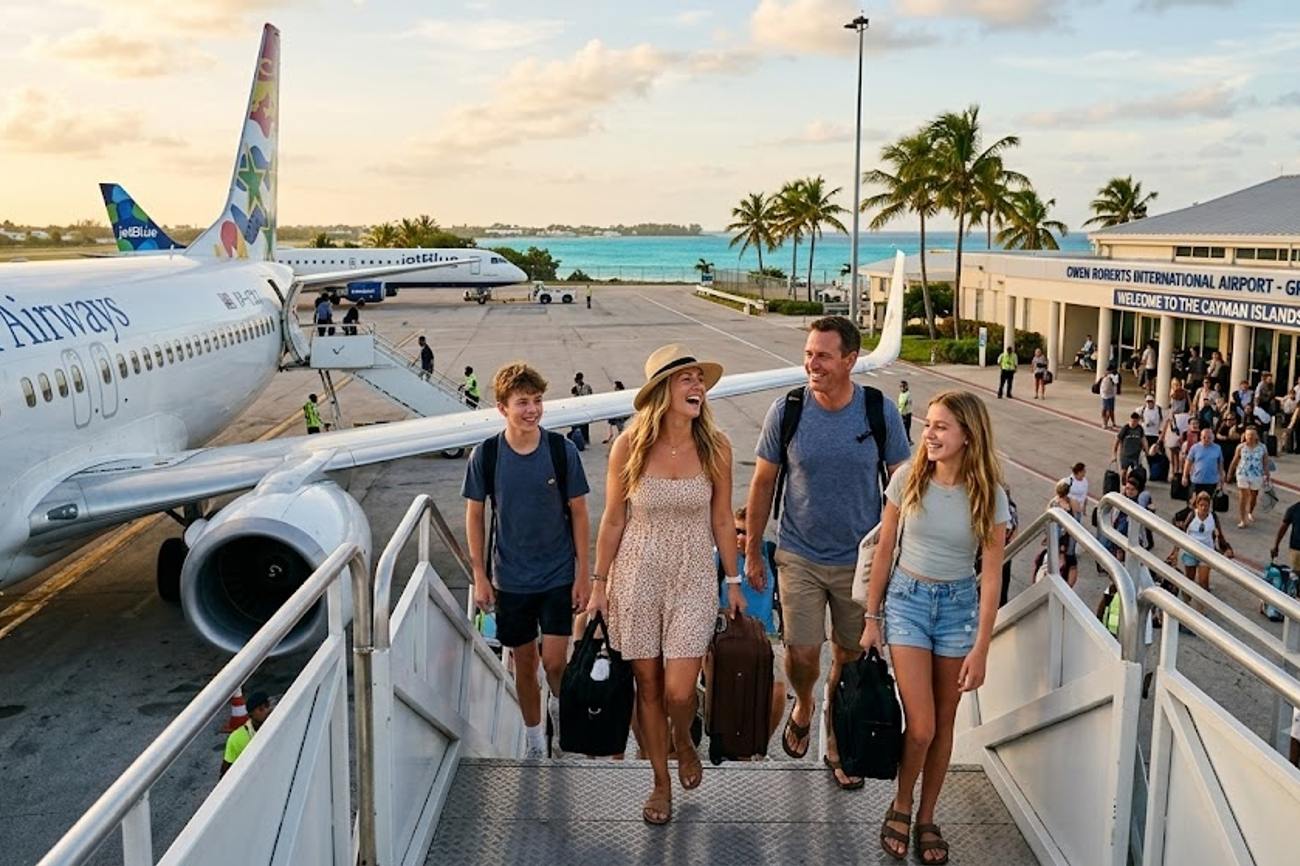
Image generated by AI
[George Town, September 7, 2026] — The tourism sector in the Cayman Islands is shattering historical benchmarks, with official 2026 data revealing a significant 10% spike in stayover arrivals for July. This surge marks the first time since 2013 that the British Overseas Territory has maintained an uninterrupted growth streak for nine consecutive months, signaling a profound shift in the region's economic trajectory.
The growth is being driven by a combination of aggressive marketing in emerging North American territories and a strategic pivot toward year-round accessibility. This influx of high-spending visitors is providing a substantial stimulus to local hospitality businesses, luxury resorts, and the broader domestic economy, positioning the islands as a primary competitor among luxury Caribbean destinations.
Strategic Shift in Caribbean Tourism Dynamics
While many Caribbean nations traditionally experience a sharp decline in visitor numbers during the summer months—often referred to as the "low season"—the Cayman Islands is successfully flattening this seasonal curve. By transforming the visitor economy into a year-round operation, the Ministry of Tourism has ensured a steady flow of capital into the local market.
This stability is particularly beneficial for the thousands of Caymanians employed in the hospitality sector. Rather than facing the precarious margins and staffing reductions typical of a seasonal economy, businesses in Grand Cayman, Cayman Brac, and Little Cayman are reporting record occupancies. This shift suggests that the territory is no longer merely recovering from previous global volatility but is actively expanding its market share of the luxury travel segment.
Analysis of 2026 Statistical Milestones
Data provided by the Economics and Statistics Office (ESO) and the Department of Tourism offers a clear empirical look at the current expansion. In July 2026 alone, the islands welcomed 45,053 overnight visitors, representing a 10% increase compared to the previous year.
The year-to-date figures illustrate an even more aggressive growth trajectory. From January through July 2026, total stayover arrivals reached 333,747, an 11% rise over the same period in 2025. When the cruise sector is integrated into the data, the scale of visitation becomes even more apparent.
| Visitation Category | Jan - July 2026 Figures | Year-Over-Year Growth |
|---|---|---|
| Stayover Arrivals (July Only) | 45,053 | 10% |
| Stayover Arrivals (Jan - July) | 333,747 | 11% |
| Combined Stayover & Cruise | 1,058,781 | 6.2% |
This total visitation of over 1.05 million people in just seven months underscores the robustness of the territory's borders and its ability to manage high volumes of traffic without compromising the luxury experience.
Economic Impact of the Nine-Month Growth Cycle
The ability to sustain growth for nine consecutive months is a rare achievement in the volatile Caribbean travel market. This consistency provides a predictable revenue stream that is essential for long-term corporate investment.
Industry observers note that when hotel brands and independent tour operators can rely on consistent monthly growth, they are more likely to commit to capital expenditures. This includes upgrading facilities, expanding service menus, and increasing permanent staff headcounts. By attracting a steady stream of high-net-worth individuals, the Cayman Islands has created an environment where luxury infrastructure can expand in lockstep with demand.
Aviation Expansion and Airlift Capacity
The surge in arrivals is not accidental; it is the result of a targeted aviation strategy designed to eliminate travel friction. The government has focused on increasing "airlift"—the total number of seats available on flights into the islands.
Throughout the first half of 2026, airlift capacity from the United Kingdom, Canada, and the United States saw double-digit increases. This was achieved through expanded flight schedules from major legacy carriers operating out of critical hubs, including:
- Miami
- Atlanta
- Dallas-Fort Worth
- Chicago
To further diversify the visitor base, new direct routes were established from Austin, Fort Lauderdale, and Ottawa. These additions have removed the need for arduous multi-stop itineraries, making the islands more accessible to a wider array of North American travelers.
Strengthening Global Travel Trade Alliances
Beyond the physical availability of flights, the Department of Tourism has focused on the "demand side" of the equation. Director of Tourism Rosa Harris has spearheaded an initiative to deepen relationships with luxury travel consortiums and international agents.
The strategy relies on high-touch engagement, including specialized familiarization trips for travel agents and targeted digital campaigns. By ensuring the Cayman Islands remains a top-of-mind recommendation for luxury travel advisors, the territory is maintaining a high occupancy rate even as other Caribbean destinations compete for the same demographic.
Dominance of the North American Market
The United States continues to be the primary engine of growth for the islands. While the Northeast—specifically financial hubs like Boston and New York—remains a reliable source of high-yielding visitors, there has been a notable shift in growth patterns.
Reports indicate that the most aggressive proportional growth is now emanating from the Southern and Midwestern United States. This geographic diversification reduces the islands' reliance on any single regional economy and opens new avenues for targeted marketing.
Why This Matters: The Traveler's Perspective
For the traveler, this surge in arrivals and infrastructure investment means a significantly upgraded experience. The transition to a year-round economy typically leads to higher service standards and a wider variety of open attractions during months that were previously dormant.
From a logistical standpoint, the expansion of direct flights from cities like Austin and Ottawa means shorter travel times and fewer connection risks. However, the record occupancy rates also imply that "last-minute" luxury bookings are becoming more difficult. Travelers seeking premium accommodations in the Cayman Islands now face a more competitive booking environment, necessitating earlier planning than in previous years.
Related Travel Guides
Disclaimer
This article is for informational and educational purposes only. It does not constitute legal, financial, or professional advice. While we strive to provide accurate and up-to-date information, travel policies, regulations, and conditions change rapidly. Always verify information with official sources before making travel decisions. Nomad Lawyer makes no representations about the accuracy, reliability, completeness, or suitability of the information provided. Readers should consult qualified professionals for advice specific to their circumstances. The views expressed in this article are those of the author and do not necessarily reflect the views of Nomad Lawyer.