
Cathay Pacific Apologizes After 72-Hour Baggage Failure During Complex Melbourne-to-Paris Reroute
A high-profile baggage loss involving a journey from Melbourne to Paris has sparked a wider industry debate over the fra

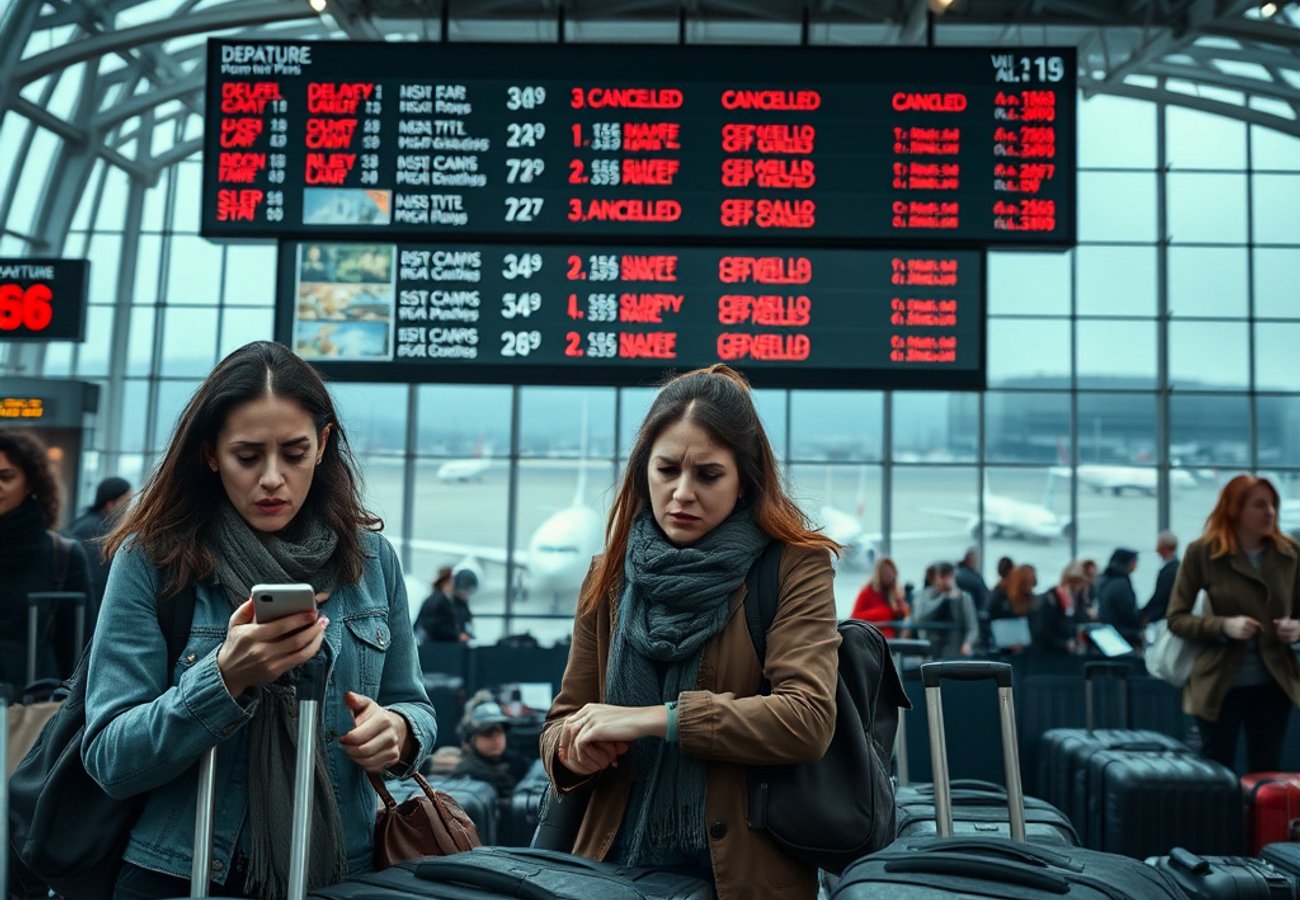
Image generated by AI
Interline System Failures Exposed by Multi-Hub Disruption
A 72-hour baggage delay in Paris has brought renewed attention to the systemic risks associated with global airline transfer protocols. The incident occurred during a complex itinerary from Melbourne to Paris, involving Cathay Pacific and Air France, which saw a passenger's luggage vanish despite the airline's assurances of a seamless transfer.
The disruption began with a nearly three-hour departure delay in Melbourne, which caused the passenger to miss their scheduled connection at Hong Kong International Airport. To rectify the delay, the passenger was rerouted through Manchester Airport before finally arriving at Paris Charles de Gaulle.
While the passenger reached their destination, their luggage did not, exposing a critical breakdown in the "interline" process—the agreement between two airlines to handle each other's passengers and baggage.
The Manchester Bottleneck: Where the Chain Broke
Investigation into the incident revealed that the baggage successfully reached Manchester Airport. However, it failed to transition from the Cathay Pacific handling system to the Air France flight bound for Paris.
This specific failure highlights a recurring vulnerability in aviation logistics: the handoff. When a passenger is rerouted mid-journey, baggage must be reassigned across different carrier systems and ground handling contractors. In this instance, despite following standard procedures, the luggage was not loaded onto the final aircraft in time.
The breakdown can be attributed to several operational pressures:
- Compressed Connection Windows: Rerouted itineraries often leave minimal time for ground crews to locate and move bags.
- System Fragmentation: Different airlines use varying tracking software that may not sync in real-time.
- Ground Handler Dependency: Airlines rely on third-party airport contractors whose efficiency varies by hub.
Cathay Pacific Response and Recovery
Following significant social media traction—particularly within Chinese-speaking travel communities—Cathay Pacific issued a formal apology. The airline acknowledged the inconvenience and confirmed that the luggage had eventually been located and delivered to Paris.
The carrier maintained that the original delay in Melbourne triggered the chain of events, but the subsequent failure occurred during the interline transfer in Manchester. The incident has shifted public discourse from a single complaint to a broader critique of how airlines manage accountability during complex disruptions.
The Hidden Risks of Mid-Journey Rerouting
For most travelers, a flight reroute is viewed as a solution to a delay. However, from a logistics perspective, rerouting significantly increases the probability of baggage loss.
When a journey is altered, the original "routing logic" is overridden. Priority tags can be lost, and the responsibility for the bag shifts multiple times between different legal entities and airlines. This fragmentation often creates a "communication gap" where the passenger is left without real-time updates while the airline struggles to coordinate with a partner carrier in a different country.
Critical Implications for International Travelers
This case serves as a warning that automatic baggage transfers are not infallible, especially during irregular operations. Passengers traveling on multi-hub, multi-carrier itineraries should consider the following:
- Continuous Tracking: Do not assume baggage is "safe" once checked; use airline apps to monitor bag status.
- Documentation: Always retain physical and digital copies of baggage claim tags and rerouting references.
- Proactive Inquiry: Request a confirmation that baggage has been scanned onto the new aircraft during a reroute.
- Rights Awareness: Familiarize yourself with compensation frameworks, such as EU261 or UK261, which provide protections for baggage delays.
Breakdown of the Journey Failure
| Stage | Event | Outcome |
|---|---|---|
| Departure | Melbourne Flight | $\approx$ 3-hour delay |
| Transit 1 | Hong Kong International | Missed connection window |
| Transit 2 | Manchester Airport | Baggage arrived but failed to load onto onward flight |
| Arrival | Paris Charles de Gaulle | Passenger arrived; baggage delayed 72 hours |
| Resolution | Recovery Operation | Baggage located and delivered via airline coordination |
Key Takeaways
- Interline Vulnerability: The handoff between different airlines (e.g., Cathay Pacific to Air France) is the weakest point in baggage logistics.
- Reroute Risks: Changing a flight path mid-journey overrides original routing logic, increasing the chance of luggage separation.
- Transparency Gap: There is a significant lack of real-time, cross-airline baggage visibility for passengers.
- Systemic Stress: Hubs like Manchester can become pressure points when handling non-standard, rerouted international transfers.
FAQ
What is an interline baggage transfer? It is an agreement between airlines to transfer a passenger's luggage from one carrier to another, allowing the traveler to check their bags through to the final destination.
Why does rerouting increase the risk of losing luggage? Rerouting requires the bag to be manually or systematically reassigned to a new flight and often a new airline, increasing the number of touchpoints and potential for human or system error.
What should I do if my bag is delayed during a reroute? Immediately file a Property Irregularity Report (PIR) at the arrival airport and keep all receipts for essential items purchased during the delay for compensation claims.
Related Travel Guides
Disclaimer
This article is for informational and educational purposes only. It does not constitute legal, financial, or professional advice. While we strive to provide accurate and up-to-date information, travel policies, regulations, and conditions change rapidly. Always verify information with official sources before making travel decisions. Nomad Lawyer makes no representations about the accuracy, reliability, completeness, or suitability of the information provided. Readers should consult qualified professionals for advice specific to their circumstances. The views expressed in this article are those of the author and do not necessarily reflect the views of Nomad Lawyer.
Preeti Gunjan
Contributor & Community Manager
A passionate traveller and community builder. Preeti helps grow the Nomad Lawyer community, fostering engagement and bringing the reader experience to life.
Learn more about our team →