
Carnival Legend Completes Compass Calibration in Gulf of Finland; Baltic Cruise Route Remains on Schedule
Carnival Legend's routine navigation exercise between Tallinn and Helsinki sparked false social media claims of stranding. The vessel completed scheduled compass calibration and continues its 12-night Scandinavian itinerary without delays.

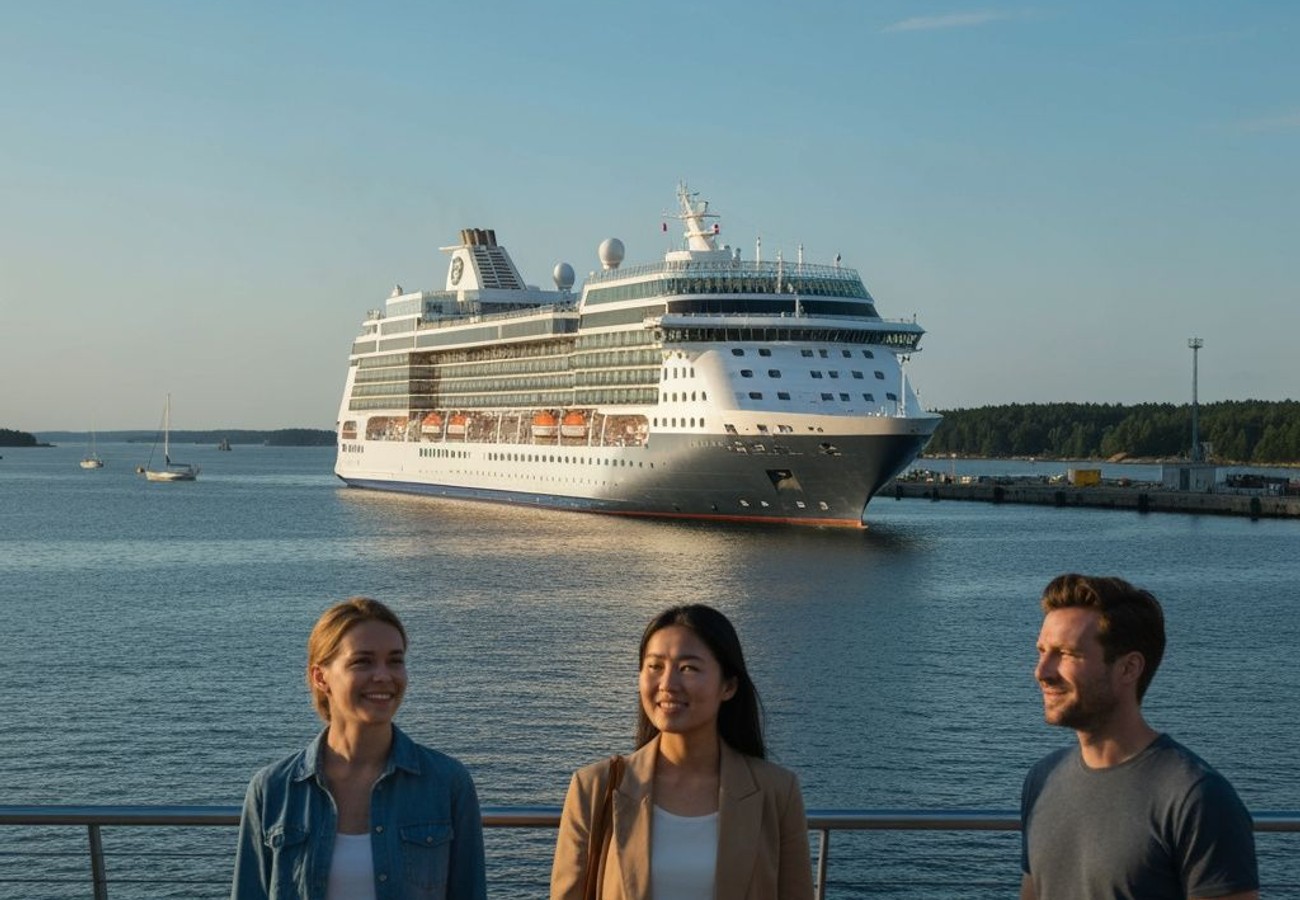
Image generated by AI
Another Day in the Gulf of Finland—Until Social Media Decided Otherwise
The story was simple: a massive cruise ship slowed down between two Baltic capitals and executed several circular maneuvers in the water. What happened next proved far more interesting than the actual event.
On June 14, Carnival Legend was conducting a scheduled annual compass calibration exercise in the Gulf of Finland near Tallinn, Estonia. Within hours, social media erupted with theories that the vessel had struck a sandbar, become stranded, or encountered a mysterious maritime emergency. None of it was true.
I followed the speculation unfold in real time across Reddit and Twitter. What struck me most wasn't the initial confusion—that's understandable when you're watching a massive ship move strangely through public vessel-tracking platforms. What struck me was how quickly false narratives solidified before anyone bothered to contact the ship or verify the facts.
The Unusual Movements That Sparked Global Speculation
Around 20 miles northwest of Tallinn—one of the Baltic region's busiest cruise ports—Carnival Legend began reducing speed and executing gradual circular turns. To the untrained eye observing through tracking software, this looked catastrophic.
Reddit: "The ship is doing weird circles. Something is definitely wrong. Has anyone heard reports?" — r/cruise
The vessel wasn't proceeding directly toward Helsinki as expected. Instead, it spent several hours in a controlled pattern that looked, to armchair maritime experts, like a ship in distress. The tracking data was real. The interpretation was completely wrong.
What most observers didn't understand: large passenger vessels regularly perform technical operations that appear irregular when viewed in isolation. These procedures are routine, planned, and absolutely normal.
What Was Actually Happening: Compass Calibration 101
A compass calibration exercise is straightforward maritime practice. Ships must periodically verify that their directional instruments are accurate—especially vessels as large as Carnival Legend that navigate using sophisticated navigational systems.
During calibration, a vessel performs controlled turns at reduced speeds. This allows onboard navigational systems to collect precise directional readings and ensure the ship's compass and related instruments remain perfectly aligned. It's preventative maintenance for maritime safety.
Multiple passengers onboard provided first-hand confirmation once the speculation gained traction. They reported receiving advance notification from Carnival Legend's crew explaining the planned procedure. Onboard services, dining, entertainment, and guest activities continued normally throughout the entire exercise—because there was no emergency.
I spoke with cruise industry observers who emphasized: such technical exercises are standard practice across the entire cruise industry and form part of broader maritime safety management systems. While guests may notice vessel movement changes during calibration, these procedures are conducted under controlled conditions and actually enhance navigational reliability.
Geography Undermines the Sandbar Theory
One detail quickly contradicted the stranding narrative: the geography of the route itself.
The Gulf of Finland corridor connecting Tallinn and Helsinki is one of Northern Europe's most heavily traveled waterways. Commercial shipping, ferry services, cargo traffic, and cruise operations navigate this route continuously throughout the year. The distance between the two capitals is approximately 50 miles—relatively short by maritime standards.
This corridor maintains sufficient depth for large passenger vessels. Ships regularly adjust speed and routing patterns for operational efficiency, fuel optimization, and port scheduling coordination. Slower sailing speeds or indirect routes are standard procedure and rarely indicate vessel problems.
For travelers considering Baltic cruises, this route remains one of Europe's most scenic maritime journeys, offering easy access to historic cities, cultural landmarks, and coastal attractions across Northern Europe.
The 12-Night Itinerary Continues Without Delays
Despite the online rumors, Carnival Legend arrived in Helsinki as planned and maintained its complete scheduled itinerary.
The voyage forms part of a comprehensive 12-night Scandinavian and Baltic Sea cruise connecting passengers with several of the region's most sought-after destinations: ports across the Netherlands, Germany, Estonia, Finland, Sweden, Denmark, Belgium, and the United Kingdom.
Such itineraries remain increasingly popular among international travelers seeking cultural tourism, historic architecture, maritime heritage, and scenic coastal experiences. Northern Europe continues attracting cruise visitors searching for alternatives to traditional Mediterranean routes.
The successful voyage continuation underscores the operational planning involved in modern cruise management. Even when online speculation gains momentum, actual voyage performance is ultimately determined by maritime authorities, navigational systems, and professional onboard operational teams.
How Vessel-Tracking Technology Created the Perfect Storm
Modern vessel-tracking platforms are genuinely useful tools. Travelers can follow cruise itineraries in real time. But these same platforms, viewed without maritime context, can generate spectacular misunderstandings.
When Carnival Legend's movements appeared on tracking software without explanation, observers applied their own interpretations. The data was accurate. The context was missing. The resulting speculation spread rapidly across social media before anyone verified actual facts.
Maritime authorities and cruise operators maintain detailed communication protocols specifically designed to address safety concerns and operational changes. Yet by the time official clarifications emerge, false narratives often achieve significant online traction.
For cruise passengers and travel observers, unusual ship movements can look alarming through tracking platforms alone. However, maritime operations frequently involve technical procedures that appear irregular to those unfamiliar with professional ship navigation.
Why This Matters for Cruise Passengers Planning 2026 Voyages
The Carnival Legend episode illustrates a growing challenge facing the global travel industry: rapid spread of unverified information online competing with official explanations.
For travelers, cruise passengers, and tourism stakeholders, consulting verified information from cruise operators, port authorities, maritime agencies, and official travel sources remains essential. Vessel movements observed through tracking systems may not reflect operational realities and can lead to incorrect conclusions when viewed without professional context.
This incident didn't affect Carnival Legend's voyage, passenger safety, or itinerary execution. But it did demonstrate how quickly misinformation can influence perceptions of cruise safety—even when voyages continue normally and no actual incident occurs.
Travel experts recommend monitoring official cruise communications, port authority updates, and maritime safety resources rather than relying on social media speculation for operational information.
The Baltic Sea cruise route remains unaffected. Compass calibration exercises will continue. And somewhere, someone will probably post a confusing tracking screenshot again.
Social media turns maritime maintenance into maritime mystery—every single time.
Related Travel Guides
Disclaimer
This article is for informational and educational purposes only. It does not constitute legal, financial, or professional advice. While we strive to provide accurate and up-to-date information, travel policies, regulations, and conditions change rapidly. Always verify information with official sources before making travel decisions. Nomad Lawyer makes no representations about the accuracy, reliability, completeness, or suitability of the information provided. Readers should consult qualified professionals for advice specific to their circumstances. The views expressed in this article are those of the author and do not necessarily reflect the views of Nomad Lawyer.
Raushan Kumar
Founder & Lead Developer
Full-stack developer with 11+ years of experience and a passionate traveller. Raushan built Nomad Lawyer from the ground up with a vision to create the best travel and law experience on the web.
Learn more about our team →