
Caribbean Travel Guide Reveals Shocking Cruise Mistakes Passengers Must Avoid for Safer Voyages
Caribbean Travel Guide Reveals Shocking Cruise Mistakes Passengers Must Avoid for Safer Voyages

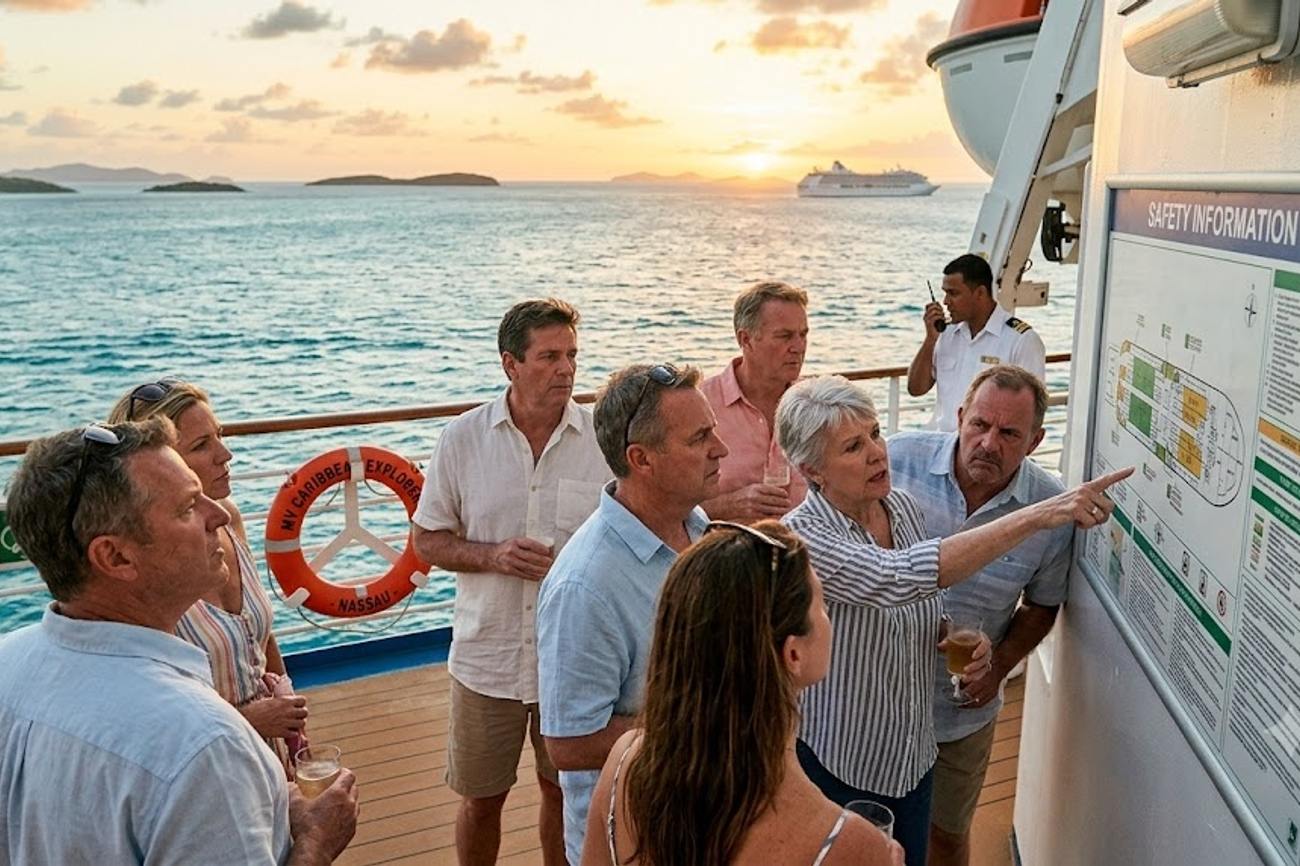
Image generated by AI
Imagine a family arriving at a Caribbean port of call, only to be detained by local authorities because a parent is wearing camouflage clothing—a direct violation of national security laws in that specific jurisdiction. This scenario is becoming increasingly common as millions of holidaymakers return to the oceans, often unaware that their conduct on land and at sea carries legal and social consequences.
The Shift Toward Mandatory Cruise Etiquette and Compliance
The global cruise industry is experiencing a surge in first-time passengers, leading to a critical push from maritime authorities and operators to formalize passenger responsibilities. Cruise travel is no longer viewed as a purely leisure-based activity; it is now framed as a shared community experience governed by strict international maritime laws and local destination regulations.
The core of this shift is the transition from "suggested guidelines" to "mandatory compliance." Maritime authorities are emphasizing that the safety of thousands of passengers depends on the cooperation of every single individual on board. When passengers ignore safety protocols or disregard local laws at ports, they do not just disrupt their own holiday—they potentially jeopardize the operational safety of the vessel and the diplomatic relationship between the cruise line and the host nation.
Regulatory Frameworks and Safety Mandates
The operational backbone of every modern cruise is the Safety of Life at Sea (SOLAS) Convention. This international treaty establishes the global minimum standards for the construction, equipment, and operation of ships. For the passenger, this translates into mandatory safety drills and briefings that are not optional.
The International Maritime Organization (IMO) oversees these standards to ensure that life-saving equipment and emergency procedures are uniform across international waters. Failure to participate in these drills or ignoring onboard safety announcements is a breach of maritime protocol. Passengers are legally required to:
- Identify and locate the nearest emergency exits relative to their cabin.
- Recognize and respond correctly to various alarm signals.
- Adhere strictly to crew instructions during emergency simulations.
For those tracking their voyage or checking for ship-wide alerts, utilizing tools like Flightradar24 (which tracks many large cruise vessels via AIS) or the specific airline/cruise status pages can provide real-time data on delays that might affect shore excursion timings.
Destination Compliance and Legal Risks at Port
Etiquette extends beyond the gangway. Passengers often visit multiple sovereign nations in a single itinerary, each with distinct legal codes. A failure to research these can lead to fines or detention.
In several Caribbean destinations, for instance, the wearing of camouflage clothing is strictly prohibited for civilians due to national security laws. Travelers who ignore these dress codes risk legal penalties. Beyond clothing, passengers are urged to:
- Research local customs and laws regarding public behavior and photography.
- Support local economies by engaging with registered businesses.
- Adhere to the strict punctuality of shore excursions, as ship departure times are non-negotiable.
For comprehensive guidance on international travel rights and consumer protection, passengers should consult the U.S. Department of Transportation or the UK Civil Aviation Authority for overlapping rights when cruises are bundled with flights.
Shared Space Management and Onboard Conduct
The physical architecture of a cruise ship—thousands of people in a confined environment—necessitates a high level of social cooperation. Cruise operators are now actively addressing "space hoarding," where passengers occupy loungers or dining areas without actively using them, thereby restricting access for others.
Noise pollution is another primary concern. Because ship corridors and cabin walls are designed for efficiency rather than soundproofing, loud music or late-night gatherings are frequently reported as disruptions. The current industry standard for "responsible travel" includes:
- Respecting designated quiet hours in residential corridors.
- Fair usage of swimming pools, theaters, and lounges.
- Maintaining strict personal hygiene and reporting illnesses immediately to the onboard medical team to prevent ship-wide outbreaks.
Crew Relations and Financial Obligations
The relationship between passengers and the crew is a pillar of the cruise experience. Crew members work under high-pressure conditions, and the industry is pushing for a culture of mutual respect to maintain service quality.
A significant point of friction often arises from gratuity policies. To avoid disputes, passengers must verify their specific cruise line's payment structure before boarding. Some operators utilize automatic service charges billed to the onboard account, while others rely on traditional tipping. Understanding these financial obligations prevents awkward confrontations and ensures fair compensation for the workforce.
Rebooking and Itinerary Strategy
When disruptions occur—whether due to weather, mechanical failure, or port closures—passengers must have a strategy for recovery.
- Refund vs. Credit: If a port is skipped, cruise lines typically offer a partial credit or a discount on a future cruise. Always document the missed destination and request a written explanation for the change.
- Alternative Excursions: If a scheduled tour is cancelled, look for certified local operators rather than unverified street vendors to ensure your travel insurance remains valid.
- Logistics Coordination: Use FlightAware to monitor your return flight if the ship is delayed arriving at the final port, allowing you to proactively rebook flights before arriving at the terminal.
FAQ: Cruise Etiquette and Rights 2024
Am I legally required to attend the safety drill? Yes. Under the SOLAS Convention, safety briefings are mandatory. Failure to attend can lead to crew intervention and, in extreme cases, may affect your ability to sail.
Can I be fined for my clothing at a cruise port? Yes. In certain Caribbean and international ports, specific attire (such as camouflage) is illegal for civilians. You should check the destination's laws via the cruise line's pre-departure guide.
What happens if my cruise misses a scheduled port? You are generally entitled to a pro-rated refund or onboard credit for the missed port fees. Check your cruise contract for the "Force Majeure" clause regarding weather-related changes.
How do I handle disputes with crew members? Always report issues to the Guest Services desk or the onboard Purser. Avoid direct confrontations and ensure all complaints are logged in writing for potential post-cruise claims.
Navigate your next voyage with a map of the laws, not just a map of the islands.
Tags: SOLAS-Convention, IMO-Safety, Caribbean-Cruise-Laws, Maritime-Etiquette, Passenger-Rights-2024
Related Travel Guides
- Travelmarvel Sirius Nile River Cruise Begins New Egypt Journey Connecting Ancient History With Modern Luxury Travel
- Margaritaville at Sea Beachcomber Launches New Caribbean Cruise Era After Costa Fortuna Transformation
- Genting Dream Returns From Singapore Drydock With New Southeast Asia Cruise Experiences for Travellers
Disclaimer
This article is for informational and educational purposes only. It does not constitute legal, financial, or professional advice. While we strive to provide accurate and up-to-date information, travel policies, regulations, and conditions change rapidly. Always verify information with official sources before making travel decisions. Nomad Lawyer makes no representations about the accuracy, reliability, completeness, or suitability of the information provided. Readers should consult qualified professionals for advice specific to their circumstances. The views expressed in this article are those of the author and do not necessarily reflect the views of Nomad Lawyer.
Naina Thakur
Contributor & Travel Specialist
Travel enthusiast and legal writer covering visa regulations, responsible tourism, and cultural journeys across global destinations.
Learn more about our team →