
Caribbean Tourism Pivots to African Eco-Lodge Model to Combat Mass Tourism Decay
The Caribbean is shifting from mass coastal resorts to high-value, low-impact eco-retreats inspired by sustainable luxury models in Kenya and South Africa.

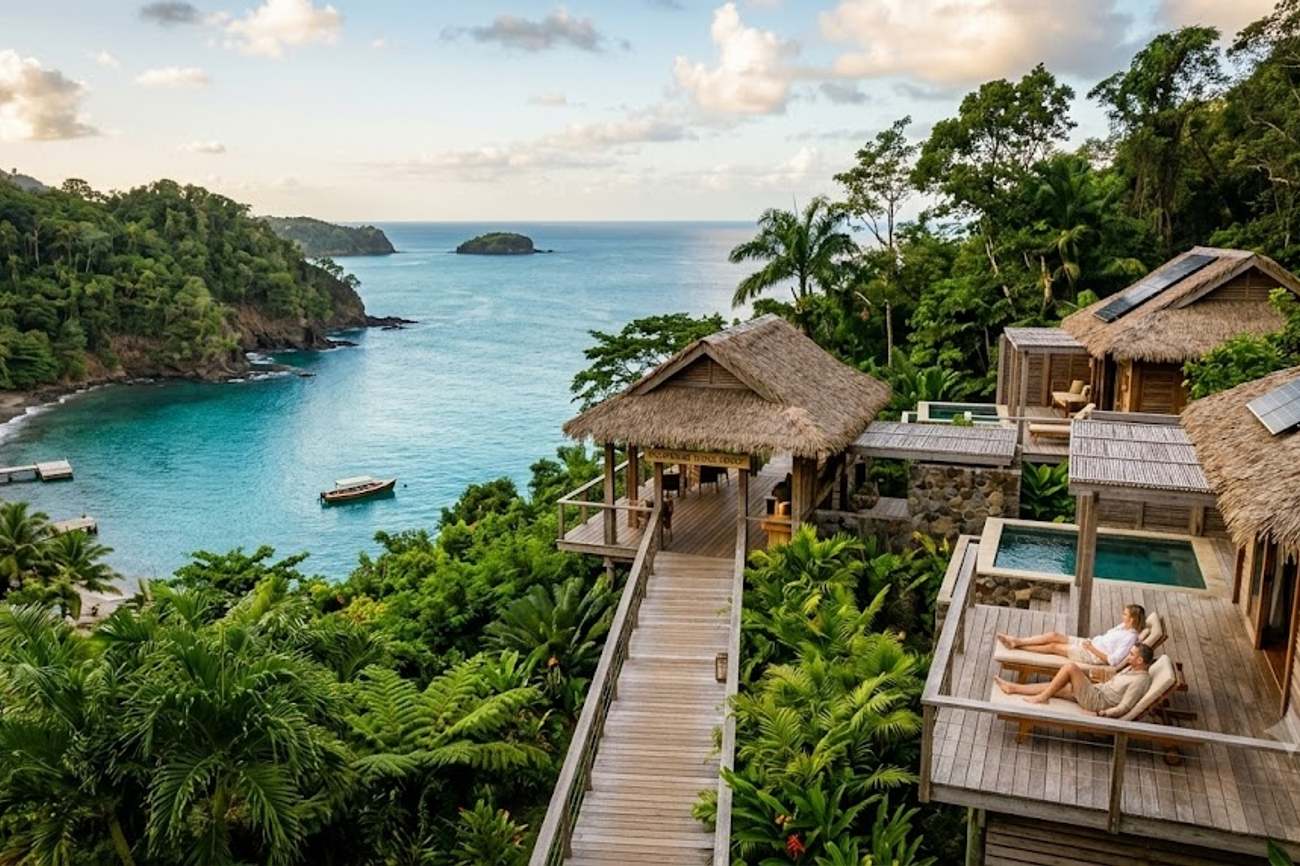
Image generated by AI
The Shift Toward Alternative Caribbean Tourism
The Caribbean hospitality sector is undergoing a fundamental transition. While all-inclusive beach resorts historically defined the region, a new movement toward "alternative" tourism is emerging. This shift prioritizes low-impact luxury eco-lodges, drawing direct inspiration from the sustainable conservation models perfected in Kenya and South Africa.
Rather than expanding coastal footprints, new developments are moving into unspoiled jungles and volcanic interiors. These retreats integrate biodiversity conservation, renewable energy, and deep community involvement to challenge the traditional definition of luxury.
The Failure of the Mass Coastal Model
For decades, the Caribbean relied on high-capacity cruise terminals and sprawling beachfront complexes. While this established the region as a global powerhouse, the systemic costs have become unsustainable.
Environmental degradation—specifically mangrove deforestation and coral reef loss—has reached a critical point. Furthermore, the economic structure of mass tourism has proven inefficient for local populations. Data indicates that conventional all-inclusive models yield a local economic retention rate of only 20% to 40%, with the majority of profits returning to international corporate headquarters.
In response, the Caribbean Tourism Organization (CTO) and the Caribbean Alliance for Sustainable Tourism (CAST), supported by UN Tourism and the UNEP, are pushing for a transition toward lower-density, higher-yield tourism.
The African Blueprint: Lessons from Kenya and South Africa
The emerging Caribbean model is based on the "high value, low impact" philosophy utilized by luxury safari lodges in Africa. In regions such as South Africa’s Sabi Sands and Kenya’s Lewa Conservancy, the environment is treated as the primary asset, making its preservation a business necessity.
Sustainable Infrastructure
African eco-lodges have set the global standard by operating entirely off-grid. Key technical implementations include:
- Energy: Large-scale solar arrays.
- Water: Gravity-fed mountain spring systems.
- Waste: Advanced bio-box wastewater treatment to prevent environmental contamination.
Economic and Social Integration
Unlike the traditional resort model, the African approach ensures local communities are primary stakeholders. This is achieved by:
- Sourcing all produce from local organic farms.
- Funding education through bursaries.
- Investing in critical infrastructure, such as schools and clean water projects.
By proving that a preserved ecosystem is more profitable than a depleted one, this model creates a natural defense against poaching and deforestation.
Adapting the Safari Model to the Tropics
Caribbean developers are now translating these savannah-based principles to tropical topographies. The goal remains the same: limit the physical footprint while maximizing the financial yield per guest.
The most significant change is the geographical migration of luxury real estate. The industry is moving away from the crowded beachfront and shifting inland. New exclusive developments are being situated within ancient rainforests, near volcanic craters, and along untamed rivers, transforming the Caribbean interior into the new frontier of high-end travel.
Data Comparison: Tourism Models
| Feature | Traditional Coastal Model | African-Inspired Eco-Model |
|---|---|---|
| Primary Location | Beachfront / Coastal | Inland / Rainforest / Volcanic |
| Guest Density | High-Capacity / Mass Market | Low-Density / Exclusive |
| Local Economic Retention | 20% to 40% | High (via direct community integration) |
| Energy Source | Grid-dependent | Off-grid / Solar |
| Environmental Impact | High (Reef/Mangrove degradation) | Low (Biodiversity conservation) |
| Economic Goal | Volume-based revenue | High-yield, low-impact revenue |
Key Takeaways
- Economic Leakage: Traditional Caribbean resorts lose 60% to 80% of potential local revenue to international corporations.
- Strategic Pivot: The region is moving from "Sun, Sea, and Sand" to nature-based, inland luxury.
- African Influence: Kenya and South Africa provide the operational blueprint for off-grid luxury and community-funded conservation.
- Sustainability: New models prioritize bio-box waste treatment and solar energy to protect fragile island ecosystems.
FAQ
What is "alternative tourism" in the Caribbean? It is a shift away from mass-market all-inclusive resorts toward low-impact, nature-based experiences that prioritize ecological preservation and local economic empowerment.
Why are African safari lodges being used as a model? Kenya and South Africa have successfully proven that luxury hospitality can fund conservation and provide significant wealth to local communities without destroying the natural environment.
How does the new model benefit local residents? By integrating locals as stakeholders—through organic farming contracts, education bursaries, and infrastructure funding—rather than just providing entry-level employment.
Related Travel Guides
Disclaimer
This article is for informational and educational purposes only. It does not constitute legal, financial, or professional advice. While we strive to provide accurate and up-to-date information, travel policies, regulations, and conditions change rapidly. Always verify information with official sources before making travel decisions. Nomad Lawyer makes no representations about the accuracy, reliability, completeness, or suitability of the information provided. Readers should consult qualified professionals for advice specific to their circumstances. The views expressed in this article are those of the author and do not necessarily reflect the views of Nomad Lawyer.
Preeti Gunjan
Contributor & Community Manager
A passionate traveller and community builder. Preeti helps grow the Nomad Lawyer community, fostering engagement and bringing the reader experience to life.
Learn more about our team →