
Canary Islands Holiday Rentals Reach €90.28 Million in Revenue with 95.5% Occupancy Across 39,678 Homes

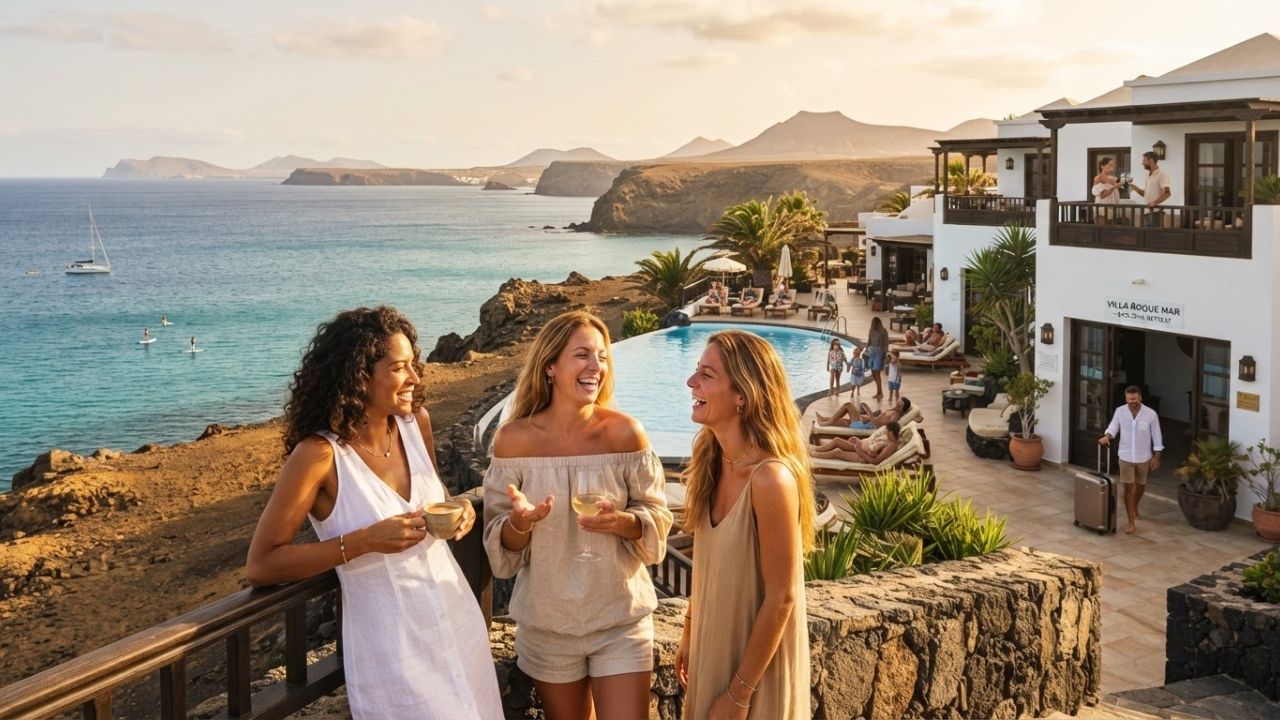
Holiday rental properties across the Canary Islands generated €90.28 million in revenue during July 2026, recording an archipelago-wide occupancy rate of 95.51% across 39,678 registered properties and 162,426 available bed spaces. Spearheaded by Fuerteventura’s chart-topping 96.98% occupancy rate and Lanzarote’s market-leading €183.90 average daily rate, the sector supported an accommodation workforce that expanded 6.1% year-on-year to 76,719 workers across the Atlantic archipelago.
The official data, compiled by Promotur Turismo de Canarias and the Observatorio Turístico de Canarias, highlights a fundamental structural shift in Spanish island travel. Rather than relying exclusively on package-tour hotel complexes, independent international travelers—drawn heavily from key European source markets including Italy, Ireland, and the Netherlands—are increasingly prioritizing self-catering villas and apartment stays.
With visitors averaging 5.65 days per stay and paying an average daily rate of €140.21, the holiday rental segment has established itself as an indispensable economic driver that decentralizes visitor spending across island communities.
The Local Trend Revealed: July 2026 Accommodation Performance Across the Archipelago
The July 2026 results illustrate that holiday home performance is not uniform across the archipelago, but characterized by distinct island-level commercial strengths.
Fuerteventura achieved the highest occupancy rate across all islands at 96.98%, accompanied by the longest average length of stay at 5.89 days. The island's combination of expansive Atlantic surf beaches, volcanic hiking circuits, and rural eco-lodges attracted longer-stay travelers seeking self-sufficient retreats.
Lanzarote followed closely with a 96.14% occupancy rate and an average stay of 5.70 days, while achieving the archipelago's highest average daily rate at €183.90. This premium pricing generated €21.45 million in total rental revenue for Lanzarote, demonstrating how architectural conservation and strict height limits inspired by artist César Manrique translate into high-yield boutique accommodation.
Tenerife, the largest island economy, generated the highest total holiday home revenue at €35.59 million, while Gran Canaria recorded €15.83 million in rental earnings.
| Island Market | July 2026 Rental Revenue | Rental Occupancy Rate | Average Stay Duration | Average Daily Rate (ADR) | Accommodation Workforce | Workforce YoY Growth |
|---|---|---|---|---|---|---|
| Tenerife | €35.59 million | Comprehensive Baseline | Island Standard | Island Baseline | 28,218 workers | +6.0% (+1,602 jobs) |
| Lanzarote | €21.45 million | 96.14% | 5.70 days | €183.90 (Archipelago High) | 13,631 workers | +10.7% (+1,313 jobs) |
| Fuerteventura | Regional Share | 96.98% (Archipelago High) | 5.89 days | Regional Average | 12,243 workers | +7.4% (+844 jobs) |
| Gran Canaria | €15.83 million | Comprehensive Baseline | Island Standard | Island Baseline | 20,554 workers | +2.3% |
| La Gomera | Niche Volume | Niche Eco-Stay | Niche Duration | Island Baseline | 827 workers | +19.5% (Fastest Growth) |
| Canary Islands Total | €90.28 million | 95.51% | 5.65 days | €140.21 | 76,719 workers | +6.1% (+4,383 jobs) |
Archipelago-wide, over 3,000 accommodation operators managed the 39,678 properties in operation, confirming that the sector provides significant entrepreneurial participation for local property owners, cleaning cooperatives, and property management firms.
Cultural & Environmental Value: Slow Tourism and Community Economic Support
The rise of independent holiday home stays is altering how international travelers interact with the Canary Islands' delicate island ecosystems and traditional culture.
When visitors choose self-catering apartments and rural fincas over all-inclusive hotel enclaves, discretionary travel expenditures disperse directly into local neighborhood economies. Guests purchase fresh produce from municipal farmers' markets (mercadillos del agricultor), dine at family-run guachinches (traditional home-kitchen taverns in Tenerife serving local wine and roasted pork), and buy fresh fish directly from coastal fishermen's guilds (cofradías de pescadores).
From an environmental stewardship perspective, the island cabildos are increasingly integrating holiday homes into sustainability frameworks. In Lanzarote and Fuerteventura, where freshwater is produced almost entirely through energy-intensive seawater reverse-osmosis desalination, holiday home operators are installing smart aerated faucets, rainwater cisterns for garden irrigation, and solar photovoltaic panels that capitalize on year-round Atlantic sun.
Culturally, vacation rentals encourage travelers to venture inland from tourist strips, discovering historic villages such as Betancuria in Fuerteventura (the island’s 15th-century capital), Teguise in Lanzarote, and San Cristóbal de La Laguna in Tenerife—a UNESCO World Heritage city with intact colonial mudéjar architecture.
Visitor Insider Tips: Responsible Stays Across Fuerteventura and Lanzarote
Travelers planning an independent villa or apartment holiday in the Canary Islands can use these practical local insights to enrich their stay:
- Navigating Local Noise Ordinances: Municipalities across the Canary Islands strictly enforce residential peace regulations. In residential developments and rural settlements, quiet hours run from 11:00 PM to 8:00 AM. Parties, amplified outdoor music, and poolside disturbances are subject to municipal fines up to €3,000.
- Lanzarote’s Volcanic Wine Experience: If staying in Lanzarote, drive inland to the La Geria wine valley. Vintners dig conical hollows (hoyos) into deep volcanic lapilli ash (picón) and build curved volcanic stone walls (chocos) to shield vines from drying trade winds. Visit family-run bodegas like El Grifo or Bodega La Geria to taste crisp, mineral-forward dry white wine made from ungrafted Malvasía Volcánica grapes.
- Fuerteventura Artisan Majorero Cheese: Head to the central plains of Fuerteventura around Antigua and Betancuria to sample authentic Queso Majorero (DOP). Produced from the rich milk of indigenous Majorera goats, this cheese is traditionally rubbed in red paprika or toasted gofio grain flour and aged into buttery, semi-cured wheels.
- Authentic Canarian Gastronomy: Make your own traditional meal in your holiday kitchen by preparing Papas Arrugadas con Mojo—small local potatoes boiled in heavily salted water until their skins wrinkle, served with tangy red pepper sauce (mojo picón) and fresh coriander sauce (mojo verde). For a coastal dinner, order fresh grilled Cherne (Atlantic wreckfish) or delicate Vieja (parrotfish) at harbor fish cooperatives.
- Optimal Seasonal Travel Windows: While July and August bring peak occupancy and maximum daily rates, the shoulder months of October to November and April to early June offer comfortable daytime temperatures (22°C to 26°C), warm ocean swimming, and lower rental rates without summer crowds.
Tourism Outlook: Sustainable Governance and Independent Island Living
The July 2026 performance confirms that the holiday rental sector has matured into a core pillar of the Canary Islands’ visitor economy. Generating over €90 million in monthly revenue and sustaining 76,719 accommodation workers, the model demonstrates strong European demand for flexible, autonomous island living.
As the Autonomous Government of the Canary Islands advances new legislative frameworks to regulate viviendas vacacionales—ensuring quality standards while preserving affordable housing for resident workers—the archipelago is positioning itself as a leader in balancing high-value independent tourism with community welfare and ecological conservation.
Related Travel Guides
Disclaimer
This article is for informational and educational purposes only. It does not constitute legal, financial, or professional advice. While we strive to provide accurate and up-to-date information, travel policies, regulations, and conditions change rapidly. Always verify information with official sources before making travel decisions. Nomad Lawyer makes no representations about the accuracy, reliability, completeness, or suitability of the information provided. Readers should consult qualified professionals for advice specific to their circumstances. The views expressed in this article are those of the author and do not necessarily reflect the views of Nomad Lawyer.
Raushan Kumar
Founder & Lead Developer
Full-stack developer with 11+ years of experience and a passionate traveller. Raushan built Nomad Lawyer from the ground up with a vision to create the best travel and law experience on the web.
Learn more about our team →