
Canada Issues High-Level Travel Advisory for Costa Rica, Mexico, Bahamas, Brazil Amid Surging Crime and Border Instability 2026
Canada expands travel warnings across the Americas and Caribbean as organised crime, tourist-targeted scams, and border tensions reshape safety across popular holiday destinations in 2026.

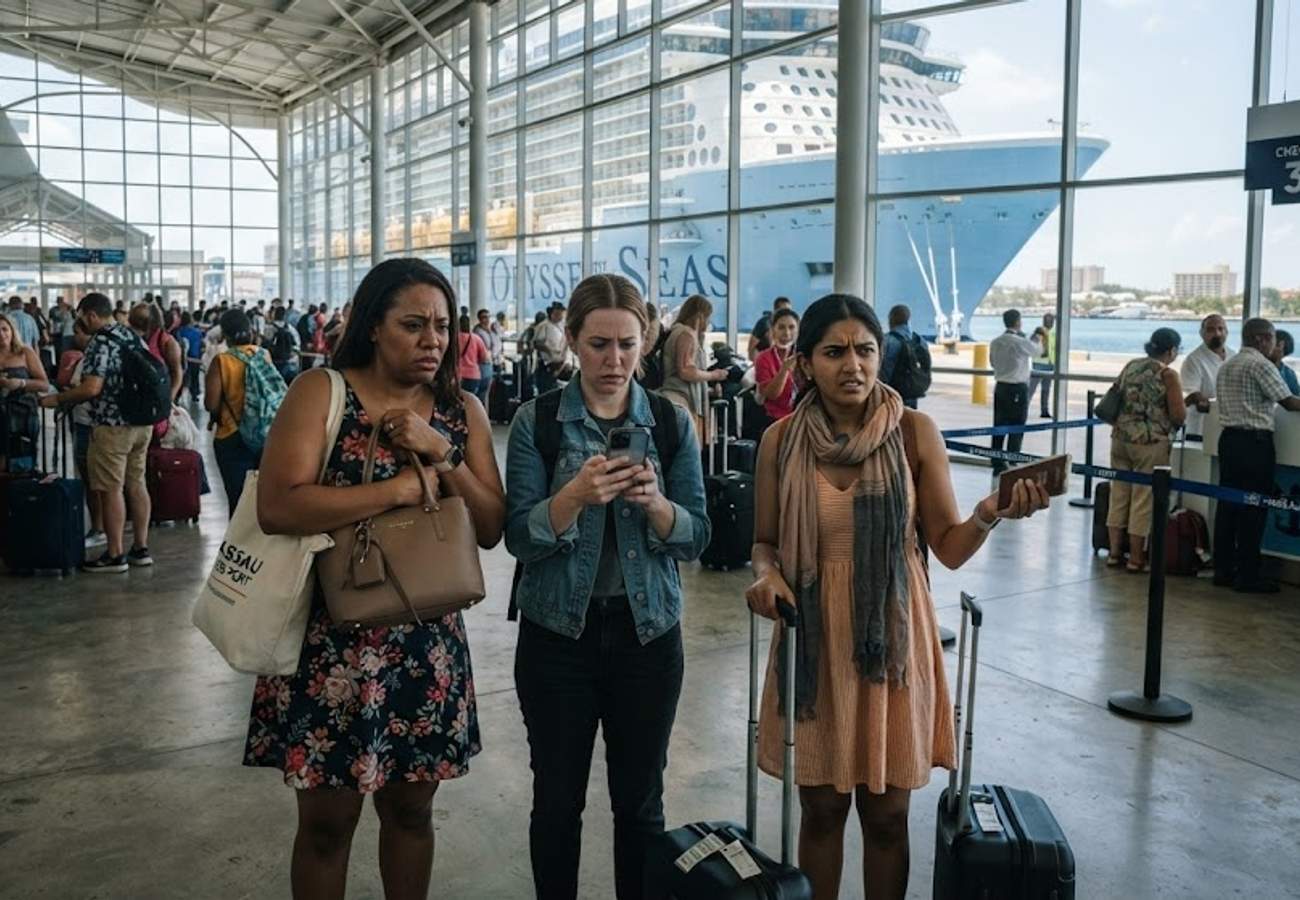
Image generated by AI
Canada Expands Travel Warnings Across Critical Americas and Caribbean Destinations
The Canadian government has issued a sweeping high-level travel advisory affecting multiple destinations across the Americas and Caribbean, signalling a dramatic shift in international travel safety expectations. The warnings stem from a complex mix of escalating organised crime, tourist-targeted fraud schemes, border instability, and violent incidents concentrated in urban centres, resort zones, and transport corridors.
What was once predictable leisure travel has become a calculation of calculated risk. Governments are no longer simply suggesting caution—they're actively reshaping how citizens should approach trips to some of the world's most popular destinations.
The Bahamas: Resort Zones Under Pressure From Coordinated Theft Networks
The Bahamas continues attracting cruise passengers and luxury travellers, yet the advisory documents a worrying acceleration in both petty and violent crime targeting visitors in Nassau and Freeport.
Pickpocketing, bag snatching, and opportunistic theft are now frequently reported in cruise terminals, shopping districts, and beachfront areas. Robberies are occurring even during daylight hours near resort corridors—a significant shift from historical patterns.
Gang-linked violent crime has expanded into non-tourist neighbourhoods, with incidents increasingly reported after dark. Financial fraud through ATM manipulation and card skimming has intensified across payment systems.
Reddit: "The Bahamas used to feel completely safe in tourist areas. Now friends are reporting stolen bags in broad daylight near resorts. Something has definitely changed." — r/travel
Visitors are advised to avoid isolated beaches, remain constantly alert in crowded areas, and refrain from carrying visible valuables or electronics.
Mexico: Cartel Violence Reshapes Highway Safety and Regional Travel
Mexico remains one of the highest-risk destinations in the advisory due to ongoing cartel activity and territorial instability spanning multiple states. According to Mexico's security reports, regions including Sinaloa, Guerrero, Michoacán, Chihuahua, and Zacatecas are flagged for severe caution.
Armed confrontations, illegal roadblocks, and territorial clashes between organised groups create unpredictable highway conditions. Some key transport routes are now considered dangerously unstable due to sudden security disruptions.
Even established tourist regions face persistent petty theft, armed robbery, and ATM fraud. Urban centres risk rapid escalation of demonstrations that can disrupt transport systems without warning.
The advisory explicitly discourages non-essential land travel in high-risk regions, recommending air routes wherever possible—a practice now standard among informed travellers.
Jamaica: Tourism Infrastructure Tested by Gang-Influenced Crime Patterns
Jamaica's robust tourism sector masks persistent underlying security challenges, particularly in Kingston, Montego Bay, and surrounding high-risk communities where gang control remains concentrated.
Violent crime is geographically contained in specific gang-controlled zones where firearms accessibility is widespread. Resorts maintain relatively safer conditions, yet robbery and assault incidents continue outside protected perimeters.
Petty theft remains endemic in crowded markets, beaches, and public transport hubs. Fraud involving ATMs and credit cards is accelerating, alongside a surge in online romance scams specifically targeting travellers before arrival.
Visitors face strong advisory warnings to avoid isolated areas, travel exclusively in groups, and exercise heightened caution when exploring beyond resort boundaries.
Costa Rica: The "Safe Destination" Experiencing Rapid Crime Evolution
Costa Rica, long marketed as a secure eco-tourism destination, is experiencing a steady and documented rise in theft-related incidents affecting both urban and coastal regions. This shift contradicts the country's international safety reputation.
San José is identified as a primary risk zone, particularly around bus terminals, downtown areas, and public transport hubs. Coastal hotspots including Jacó, Manuel Antonio, Puerto Viejo, and Limón report frequent car break-ins and coordinated property theft operations.
Criminals increasingly operate in coordinated pairs, using distraction techniques in crowded areas to target tourists systematically. Rental vehicles are frequent targets, especially in parking areas adjacent to beaches and hotels where security monitoring is inconsistent.
The advisory warns travellers to avoid isolated areas at night and maintain constant vigilance over personal belongings.
Guatemala: High-Risk Conditions and Enforcement Gaps Create Compounding Dangers
Guatemala presents one of the most serious risk profiles in the advisory due to widespread violent crime and limited enforcement capacity across several regions. The combination creates a uniquely volatile environment.
Armed robbery, assault, and express kidnappings are documented across major cities and transport corridors. Victims are sometimes coerced to withdraw cash from ATMs under direct threat—a tactic becoming increasingly common.
Certain zones within Guatemala City are classified as particularly dangerous, while border areas face additional risks tied to drug trafficking routes and organised criminal networks. Criminals impersonating police officers have been reported, creating unpredictability in routine encounters.
Travellers are advised to utilise only verified transport services and avoid unnecessary movement in high-risk districts.
Dominican Republic: Resort Theft and Cybercrime Converge in Caribbean Paradise
The Dominican Republic, one of the Caribbean's most visited destinations, continues attracting significant tourism despite advisory concerns over theft and fraud patterns.
Petty crime is common in resorts, beaches, airports, and public transport stations. Motorcycle drive-by thefts are a frequent issue in urban areas, where criminals snatch bags and mobile phones from pedestrians and vehicles with coordinated precision.
Violent incidents typically occur after dark in major cities, while resorts maintain comparatively safer conditions but remain vulnerable to theft operations. Fraud represents a growing concern, with ATM tampering, card skimming, and online scams increasingly targeting tourists before and during stays.
Brazil: Urban Crime, Favelas, and Coordinated Theft Operations Create Complex Risk Environment
Brazil presents one of the highest-risk environments in the advisory due to widespread urban crime in major cities including Rio de Janeiro, São Paulo, Salvador, and Recife. According to Brazilian government crime statistics, incidents continue escalating.
Armed robberies, carjackings, and coordinated theft operations known as "arrastões" target beaches, traffic congestion zones, and public events. These incidents frequently involve simultaneous group targeting of crowds.
Favelas and informal settlements are strictly designated as no-go zones due to gang control and limited emergency response access. Motorcycle drive-by thefts and violent street robberies remain persistent risks in urban centres, particularly in tourist-heavy districts.
Travellers are advised to avoid displaying valuables and remain exclusively in secure, well-monitored zones.
The Emerging Pattern: Crime, Fraud, and Disruption Converge Across Regions
Across all highlighted destinations, a consistent pattern emerges—increasing opportunistic theft, expanding organised crime influence, and rising financial fraud specifically targeting international travellers.
Urban centres and transport hubs remain most affected, while resort areas, though comparatively safer, lack full insulation from risk. Border instability and road security issues add additional complexity, particularly in Mexico and Guatemala.
Cybercrime and ATM fraud are becoming increasingly common across all regions, reflecting a global shift in tourism-related criminal activity. The advisory signals a fundamental restructuring of travel safety expectations across the Americas and Caribbean.
The golden age of predictable Caribbean and Central American travel has shifted—caution is now the currency of smart tourism.
Related Travel Guides
Disclaimer
This article is for informational and educational purposes only. It does not constitute legal, financial, or professional advice. While we strive to provide accurate and up-to-date information, travel policies, regulations, and conditions change rapidly. Always verify information with official sources before making travel decisions. Nomad Lawyer makes no representations about the accuracy, reliability, completeness, or suitability of the information provided. Readers should consult qualified professionals for advice specific to their circumstances. The views expressed in this article are those of the author and do not necessarily reflect the views of Nomad Lawyer.
Kunal K Choudhary
Co-Founder & Contributor
A passionate traveller and tech enthusiast. Kunal contributes to the vision and growth of Nomad Lawyer, bringing fresh perspectives and driving the community forward.
Learn more about our team →