
Canada Travel Chaos: Thousands Stranded as Air Canada and WestJet Trigger 88 Flight Cancellations and 518 Delays Amid Severe Storms
As severe weather and 100km/h winds paralyze Canadian aviation hubs, desperate passengers face terrifying travel chaos and massive flight cancellations from Air Canada and WestJet.

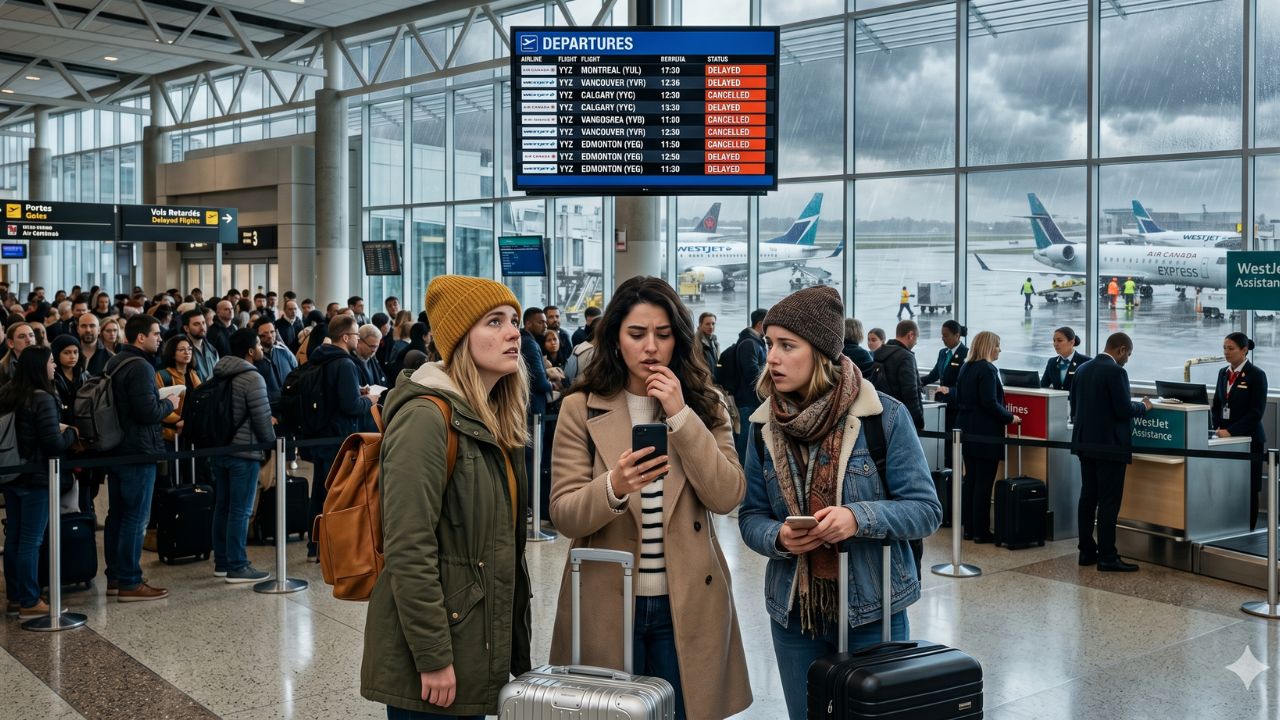
Image generated by AI
A Massive Meteorological Crisis Plunges Canada into Gridlock
While massive sectors of the global passenger network frequently battle highly unpredictable operational bottlenecks, synchronized extreme weather events at major North American transit hubs remain the absolute most terrifying catalyst for sudden, unmanageable terminal congestion. Delivering highly urgent, breaking airline news, verified Canadian aviation trackers confirm that a catastrophic meteorological crisis is actively generating severe, cascading travel chaos across the country. Today, June 1, 2026, severe travel distress forcefully emerged as hazardous weather in Alberta aggressively forced massive legacy and regional carriers—including WestJet, Air Canada, Air Inuit, and Jazz—to abruptly trigger 88 severe flight cancellations and an astonishing 518 brutal delays, violently paralyzing the nation's critical aviation gateways.
While desperate travelers already attempt to navigate sudden, terrifying airport disruptions caused by massive summer volumes, these exclusive aviation updates reveal that this localized Canadian crisis is aggressively rippling across the entire continent. Thousands of highly vulnerable passengers have been brutally stranded, creating massive disruption for commuters travelling through Edmonton, Calgary, Toronto, Vancouver, Montreal, and Kelowna. The widespread issues highlight exactly how quickly extreme weather and network congestion can severely cripple an incredibly fragile interconnected air network, forcing major carriers to violently ground aircraft and completely destroying the itineraries of thousands of domestic and international tourists navigating the Canadian airspace.
Expanded Overview: The Scale of the Aviation Crisis
The sudden, highly publicized execution of this massive operational shutdown serves as an undeniable example of how rapidly the world's most critical transit hubs can completely disintegrate under extreme weather threats. The situation has brutally left passengers frantically waiting in massive, hours-long lines, with terrifying uncertainty over rescheduled flights and severed onward connections.
The catastrophic root cause of this massive disruption is highly severe, hazardous weather violently concentrated in Alberta. Environment Canada has issued desperate rain and wind warnings for Red Deer and Mountain View counties, which are severely impacting both road and air travel. Heavy rainfall is aggressively causing massive water pooling on roads, while terrifying wind gusts are reaching up to 100 km/h. These brutal conditions create incredibly unsafe approaches and departures at massive hubs like Edmonton and Calgary. In addition to the weather, terrifying network congestion at major Eastern hubs like Toronto Pearson and Montreal has violently compounded the problem, leaving thousands of travelers hopelessly trapped.
Section-Wise Breakdown of the Connectivity Crisis
The absolute scale of this terrifying disruption is explicitly detailed in the following data tables, which aggressively map the exact metrics for the nation's heavily disrupted airports and highly stressed airlines.
The Airport Meltdown: Alberta and Beyond
Alberta has been particularly hard hit by the terrifying winds, with Edmonton International (YEG) brutally suffering the absolute highest proportion of cancellations at 33 grounded flights and 35 delays. Calgary International (YYC) violently reported 9 cancellations and 86 severe delays as the storm system battered the provincial infrastructure.
Simultaneously, the massive Eastern hubs are facing widespread delays reflective of the busy travel season compounding the weather effects. Toronto Pearson (YYZ) horribly logged 11 cancellations and a staggering 130 massive delays, while Montreal-Trudeau (YUL) triggered 14 cancellations and 133 terrifying delays. Even western and regional airports could not escape the cascading travel chaos; Vancouver (YVR) suffered 11 cancellations and 101 delays, while Kelowna (YLW) and Quebec City (YQB) suffered notable operational hits.
Verified Airport Disruption Data
| Airport | Code | Cancelled Flights | Delayed Flights |
|---|---|---|---|
| Edmonton International | YEG | 33 | 35 |
| Montreal-Trudeau | YUL | 14 | 133 |
| Vancouver International | YVR | 11 | 101 |
| Calgary International | YYC | 9 | 86 |
| Toronto Pearson International | YYZ | 11 | 130 |
| Kelowna International | YLW | 6 | 19 |
| Quebec/Jean Lesage International | YQB | 4 | 14 |
The Airline Collapse: WestJet and Air Canada Severed
Airline operations are completely buckling under the terrifying pressure of both severe weather and massive scheduling challenges. WestJet Encore aggressively led the cancellations with 16 suspended flights and 22 delays, while the mainline Air Canada network brutally suffered 14 cancellations and a massive 95 delays.
Furthermore, Jazz (ACA) horribly experienced 14 cancellations and 86 severe delays. Mainline WestJet violently recorded 10 absolute cancellations and 83 delays, particularly devastating interprovincial routes linking major hubs. Smaller regional carriers like PAL Airlines, Pacific Coastal Airlines, Air Canada Rouge, and Air Inuit were also violently dragged into the operational collapse.
Verified Airline Disruption Data
| Affected Airline | Cancelled Flights | Delayed Flights |
|---|---|---|
| WestJet Encore | 16 | 22 |
| Air Canada | 14 | 95 |
| Jazz (ACA) | 14 | 86 |
| WestJet | 10 | 83 |
| PAL Airlines | 7 | 15 |
| Pacific Coastal Airlines | 3 | 16 |
| Air Canada Rouge (ACA) | 2 | 24 |
| Air Inuit | 2 | 16 |
Passenger Impact: Navigating the Weather Emergency
For the modern domestic and international commuter attempting to navigate this highly volatile Canadian network, the passenger impact of this massive meteorological meltdown is completely exhausting. Massive flight cancellations are incredibly frustrating, but knowing the strict logistical steps to take can heavily minimize terminal stress.
- Avoid Airport Congestion: Check flight status frequently via airline websites or apps to definitively confirm the current status of your flight. Do not blindly travel to heavily congested hubs like Toronto or Montreal without verifying your departure time.
- Contact Airlines Early and Prepare: Aggressively call or message your airline for alternative flight options or rebooking. Thoroughly pack essential survival items, snacks, and water in case of prolonged, agonizing waiting times at the airport.
- Consider Alternate Transport: Because road conditions in Alberta are highly hazardous due to 100km/h winds, allow massive extra travel time. In some cases, flying through less impacted airports such as Kelowna or Quebec City may heavily help avoid severe delays.
Industry Analysis: The Fragility of Interconnected Networks
From a macroeconomic and industry operations perspective, the localized cancellations highlight a massive, terrifying truth: the Canadian aviation system continues to face severe operational vulnerabilities when exposed to heavy storms. The incredibly severe wind gusts and massive water pooling have brutally slowed airport ground operations and baggage handling. Combined with heavy air traffic, these terrifying factors indicate that the North American network remains completely susceptible to massive cascades of delays when a single province like Alberta suffers a severe weather strike.
Conclusion: A Highly Volatile Canadian Crisis
The massive, highly publicized operational failure of the Canadian network represents a severe, terrifying crisis for the North American travel sector. By actively forcing thousands of passengers to endure 88 flight cancellations and 518 severe delays amidst brutal 100km/h winds, the airline industry guarantees an incredibly stressful, highly exhausting journey. As the operational teams frantically battle this massive terminal gridlock, passengers are heavily urged to aggressively monitor their bookings, strictly remain indoors during severe storms, and fully expect massive, cascading flight disruptions amidst unprecedented Canadian travel chaos.
Key Takeaways
- Massive Network Meltdown: Severe weather triggered 88 complete flight cancellations and 518 massive delays nationwide.
- Edmonton Airport Severed: Edmonton (YEG) violently suffered the highest cancellation total with 33 grounded flights.
- Toronto Hub Gridlock: Toronto Pearson (YYZ) aggressively recorded a massive 130 delayed aircraft.
- Carrier Operations Crippled: WestJet Encore and Air Canada completely led the cancellation boards, severing critical routes.
- Passenger Survival Tactics: Travelers are aggressively urged to constantly monitor Environment Canada updates, avoid hazardous roads, and rapidly demand rebooking assistance.
Disclaimer: The specific cancellation metrics, delayed flight volumes, and airline operational failures presented in this report are based on verified flight tracking data from FlightAware regarding the Canadian network disruption on June 1, 2026. Official airline routing, terminal congestion levels, and final ticket rebooking options are highly volatile and subject to continuous, real-time update based on active carrier operational directives and federal weather emergency mandates. Prospective passengers are urgently advised to fiercely monitor their specific booking status and verify active flight schedules directly via the airline's official portal prior to airport arrival.
Disclaimer
This article is for informational and educational purposes only. It does not constitute legal, financial, or professional advice. While we strive to provide accurate and up-to-date information, travel policies, regulations, and conditions change rapidly. Always verify information with official sources before making travel decisions. Nomad Lawyer makes no representations about the accuracy, reliability, completeness, or suitability of the information provided. Readers should consult qualified professionals for advice specific to their circumstances. The views expressed in this article are those of the author and do not necessarily reflect the views of Nomad Lawyer.
Kunal K Choudhary
Co-Founder & Contributor
A passionate traveller and tech enthusiast. Kunal contributes to the vision and growth of Nomad Lawyer, bringing fresh perspectives and driving the community forward.
Learn more about our team →