
Canada Airbus A321XLR Brings Lie-Flat Business Class to Narrowbody Aircraft
Air Canada's Airbus A321XLR introduces lie-flat Signature Class suites to single-aisle jets in 2026, reshaping transatlantic premium travel economics and unlocking secondary markets previously requiring widebody deployment.

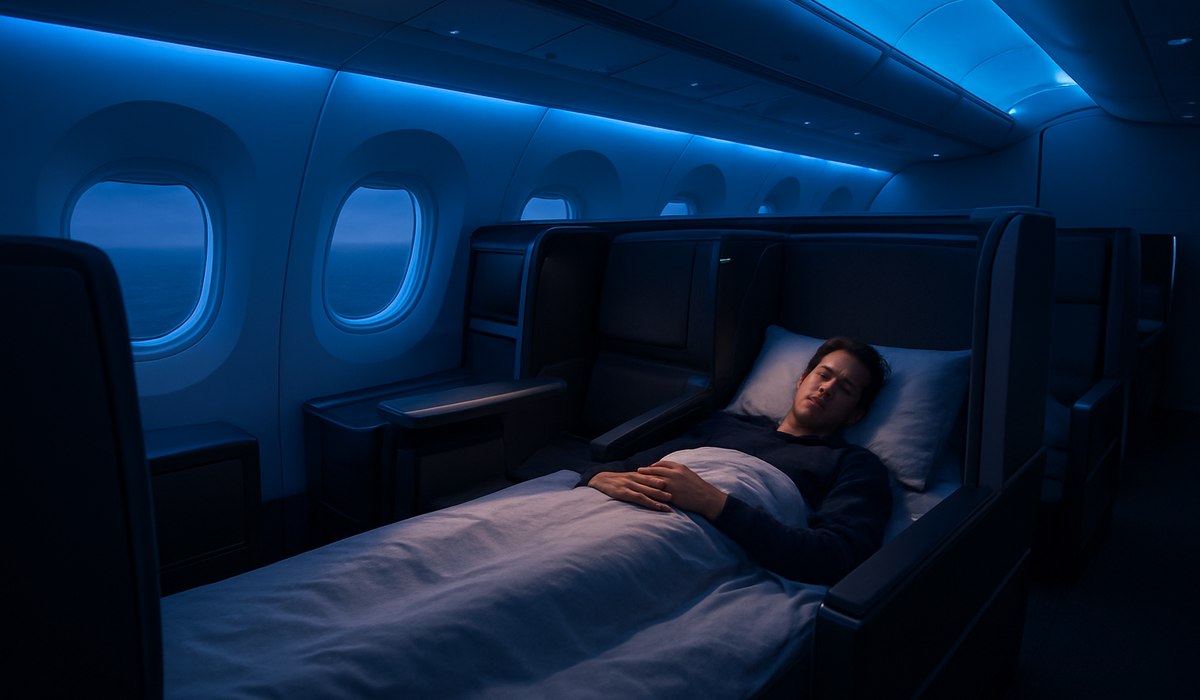
Image generated by AI
Air Canada's A321XLR Redefines Narrowbody Premium Travel
Air Canada has fundamentally disrupted transatlantic aviation economics by deploying the Airbus A321XLR with a revolutionary offering: lie-flat business class suites aboard a single-aisle aircraft. Launched in early 2026, this configuration combines the operational efficiency of narrowbody aircraft with premium long-range capabilities previously exclusive to widebody jets like the Boeing 787 Dreamliner. The deployment opens transcontinental routes to secondary North American and European markets that could never justify the 300+ seat capacity of traditional wide-body equipment, transforming both airline profitability and passenger premium travel access.
What Makes the A321XLR's Business Class Different
The Canada Airbus A321XLR features Air Canada's Signature Class configured in a groundbreaking 1-1 seat layout within the narrowbody fuselage. Each lie-flat suite measures significantly wider than conventional business seats while maintaining structural integrity within the single-aisle cabin. The configuration delivers direct-aisle access for every passenger—a feature standard on widebody business cabins but revolutionary for narrowbody operators.
The cabin prioritizes premium comfort through fully enclosed suites with sliding doors, individual IFE screens, and direct aisle access from every seat. Storage compartments eliminate overhead bin congestion, while the lie-flat beds extend to 76 inches, matching industry-standard widebody specifications. Power outlets, USB-C connections, and wireless connectivity remain available throughout the transatlantic journey. Air Canada estimates the configuration carries 76 business passengers, with premium economy and economy sections filling the remaining fuselage length.
This hybrid approach demonstrates that narrowbody economics combined with premium product specifications can unlock profitable routes previously requiring widebody deployment capacity.
How It Compares to Traditional Widebody Cabins
Traditional widebody business class typically features 1-2 or 2-2 aisle configurations across wider cabins accommodating 40-80 premium passengers per aircraft. The Boeing 787 Dreamliner offers comparable lie-flat comfort but requires approximately 300 total seats to achieve route profitability on thinner transatlantic markets.
The A321XLR narrowbody lie-flat strategy differs fundamentally in route economics. Where a 787 demands approximately 100-120 daily premium passengers to justify deployment, the A321XLR requires only 60-75 premium passengers combined with stronger economy demand. This efficiency unlocks secondary markets like Quebec City-London, Toronto-Madrid, or Montreal-Zurich—routes that couldn't support widebody frequency or capacity.
Both products deliver similar suite specifications: fully lie-flat beds, direct aisle access, and comparable in-flight amenities. However, the narrowbody's single-aisle configuration creates inherent cabin width constraints. IFE screens measure slightly smaller (approximately 15.4 inches versus 18 inches on widebodies), and amenity kits reflect tighter storage optimization. Despite these minor adjustments, passenger comfort metrics remain competitive with premium widebody offerings.
The fundamental distinction lies in market accessibility rather than product quality. Air Canada's A321XLR enables premium service deployment to markets previously reserved for economy-focused narrowbody operations.
Route Expansion Opportunities for Air Canada
Air Canada's A321XLR deployment strategy targets underserved transatlantic markets representing 15-25% premium demand—insufficient for widebody economics but viable within narrowbody profitability parameters. Secondary markets including Manchester, Shannon, Edinburgh, and Lisbon now qualify for Signature Class frequency that capital constraints previously prohibited.
Domestic-to-international connectivity strengthens through this equipment. Regional hubs like Calgary and Montreal can now offer premium transcontinental service with A321XLR equipment, feeding premium passengers into transatlantic connections without widebody repositioning costs.
Air Canada's initial A321XLR deployment emphasizes high-yield routes including Toronto-London, Montreal-Paris, and Vancouver-London, establishing premium service benchmarks before expanding into secondary markets. The aircraft's 4,700-nautical-mile range permits flights from eastern North America to Iberia, the Mediterranean, and western Scandinavia—regions previously dependent on seasonal widebody charter capacity or premium economy-only configurations.
This capability essentially creates a third category between narrowbody economy and widebody premium, enabling sustainable premium growth across Air Canada's transatlantic network.
The Economics Behind Narrowbody Lie-Flat Service
The financial case for narrowbody lie-flat premium service rests on several operational advantages unavailable to traditional widebody deployments. Direct operating costs for A321XLR flights run approximately 25-30% lower per available seat mile compared to 787 operations, despite premium cabin investment.
Fuel efficiency represents the primary advantage: the Airbus A321XLR burns approximately 120 tons of fuel on a 3,500-nautical-mile transatlantic crossing versus 160-180 tons for widebody equivalents. Crew requirements remain identical (same flight time, comparable fatigue regulations), while maintenance intervals align with narrowbody standards rather than expensive widebody procedures.
Premium yield economics improve through selective market deployment. Rather than forcing 50-60% premium capacity across entire networks (widebody requirements), Air Canada deploys A321XLR premium selectively on 20-30 routes where premium demand justifies investment but widebody capacity would represent oversupply.
The configuration achieves profitability breakeven at approximately 65-70% premium cabin load factors combined with 75%+ economy load factors—metrics easily achievable on transatlantic routes with premium-focused revenue management.
Key Data: A321XLR Premium Travel Metrics
| Specification | A321XLR Lie-Flat | 787 Dreamliner | Advantage |
|---|---|---|---|
| Business Seat Count | 76 (1-1 aisle) | 54-70 (varies) | A321XLR |
| Bed Length | 76 inches | 76+ inches | Comparable |
| Operating Cost/ASM | $0.065 | $0.085-0.090 | A321XLR |
| Range (Transatlantic) | 4,700 nm | 7,650 nm | 787 |
| Premium Capacity Ratio | 22-24% | 16-20% | A321XLR |
| Break-Even Premium LF | 65-70% | 55-65% | Comparable |
| Total Seat Capacity | 300-320 | 242-330 | Variable |
| Maintenance Hours/Flight Hour | 0.62 | 0.89 | A321XLR |
What This Means for Travelers
Air Canada's A321XLR deployment directly impacts premium passenger options across transatlantic routes. Travelers should understand both benefits and considerations when booking Signature Class on this equipment.
-
Premium Access Expansion: Secondary market routes previously offering economy-only service now provide lie-flat business options. Montreal-Dublin, Toronto-Lisbon, and Calgary-London transitions now include premium service availability.
-
Competitive Premium Pricing: Increased premium capacity on established routes (Toronto-London, Montreal-Paris) may moderate business class fares through supply expansion, improving value for premium passengers.
-
Cabin Space Trade-offs: Single-aisle configuration means slightly narrower cabin width compared to widebody precedents. Passengers with mobility requirements or preference for maximum personal space may prefer widebody equipment on specific routes.
-
Reliability Advantages: Narrowbody operations generate lower maintenance requirements and higher on-time performance metrics, benefiting schedule reliability for time-sensitive business travelers.
-
**
Disclaimer
This article is for informational and educational purposes only. It does not constitute legal, financial, or professional advice. While we strive to provide accurate and up-to-date information, travel policies, regulations, and conditions change rapidly. Always verify information with official sources before making travel decisions. Nomad Lawyer makes no representations about the accuracy, reliability, completeness, or suitability of the information provided. Readers should consult qualified professionals for advice specific to their circumstances. The views expressed in this article are those of the author and do not necessarily reflect the views of Nomad Lawyer.
Raushan Kumar
Founder & Lead Developer
Full-stack developer with 11+ years of experience and a passionate traveller. Raushan built Nomad Lawyer from the ground up with a vision to create the best travel and law experience on the web.
Learn more about our team →