
California Highway 1 Returns With Stunning New Film Showcasing Coastal Beauty Nature and Responsible Travel
California Highway 1 Returns With Stunning New Film Showcasing Coastal Beauty Nature and Responsible Travel

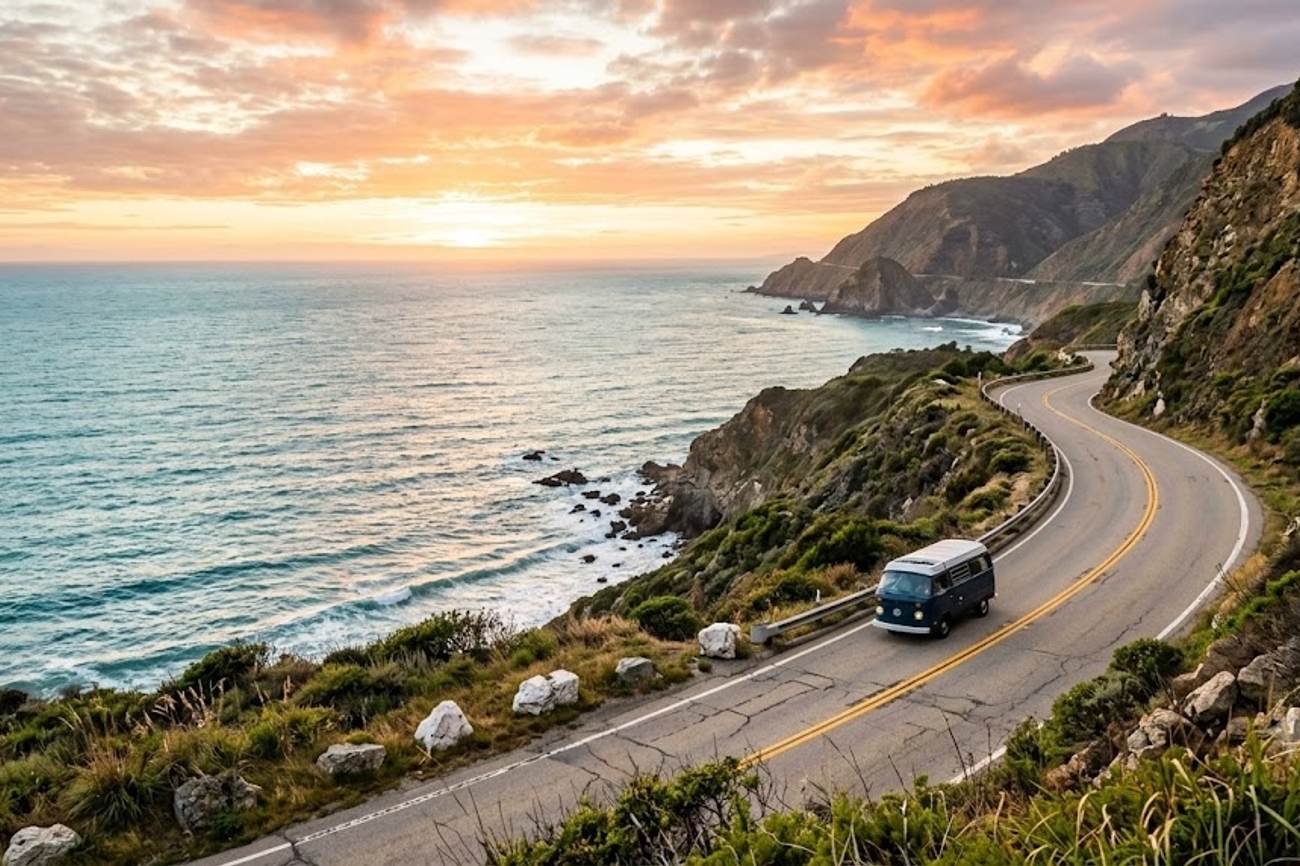
Image generated by AI
[Sacramento, May 2024] — California has launched a high-profile cinematic campaign to revitalize tourism along Highway 1 following the restoration of a critical coastal artery that remained closed for three years. The initiative, centered on a 30-minute documentary produced by Moving Art and commissioned by Visit California, seeks to pivot the region's tourism model toward sustainable, low-impact travel as the state grapples with increasing environmental volatility.
The film, directed by time-lapse pioneer Louie Schwartzberg, was captured immediately after the reopening of a major section of the highway located at the boundary of Monterey and San Luis Obispo counties. This specific reopening ends a prolonged period of restricted access to the Central Coast, effectively reconnecting one of the most significant road-trip corridors in the United States. By utilizing advanced cinematography, the production aims to shift the traveler's perspective from a "checklist" mentality to an awareness of the highway as a fragile, living ecosystem.
The Catalyst for the Campaign
The primary trigger for this strategic push is the successful engineering recovery of the Highway 1 corridor. For three years, landslides and geological instability severed the route between Monterey and San Luis Obispo, cutting off vital tourism revenue for coastal municipalities and disrupting the flow of international and domestic visitors.
The reopening of this segment represents more than just a logistical victory; it is an economic necessity for the Central Coast. However, state officials and tourism boards recognize that the very forces that closed the road—extreme weather and geological shifts—continue to threaten the infrastructure. The documentary serves as a soft-launch for a new era of "responsible exploration," urging visitors to acknowledge the vulnerability of the coastline while celebrating its restoration.
Affected Travelers, Key Stakeholders and Regional Positioning
The restoration of the route and the subsequent promotional campaign impact several distinct groups across the California coastal economy:
- Central Coast Municipalities: Towns within Monterey and San Luis Obispo counties that suffered significant revenue losses during the three-year closure.
- Local Business Operators: Independent restaurants, boutique hotels, and outdoor adventure guides who rely on the consistent flow of "drive-through" tourism.
- International Travelers: Global tourists who traditionally include the Highway 1 drive as a primary pillar of their California itinerary.
- Environmental Agencies: Organizations tasked with managing the delicate marine habitats and redwood forests that border the highway.
- Regional Infrastructure Teams: Caltrans and other agencies managing the ongoing stability of the cliffs and road surfaces.
Practical Traveler Advisory and Strategic Insights
For the average traveler, this news signals a transition in how the state manages its most famous road. The "checklist" style of tourism—where drivers race from one famous viewpoint to the next—is being actively discouraged in favor of a slower, more intentional pace.
Practical Impact Assessment:
- Route Availability: The primary blockage between Monterey and San Luis Obispo is clear, meaning the full coastal loop is once again accessible. Travelers should verify current conditions via the California Department of Transportation (Caltrans) before departing.
- Shift in Travel Timing: There is a concerted effort to push visitors away from "peak periods." Travelers who book during shoulder seasons may find a more welcoming environment and less congestion at key sites.
- Enforcement of Restrictions: With the emphasis on "sensitive ecosystems," travelers can expect stricter enforcement of safety restrictions and designated viewpoint usage. Entering closed areas or venturing off-road into protected habitats will likely be met with increased scrutiny.
- Economic Pivot: There is a strong push for visitors to spend money within local communities rather than staying in large-scale corporate hubs, encouraging the use of locally owned lodges and eateries.
California Highway 1 has officially reopened, and to celebrate, a stunning new film has been released showcasing the coastal beauty and nature of the area, highlighting the importance of responsible travel. For the most up-to-date information on road conditions and travel advisories, visitors can check the official California Department of Transportation website. This resource provides valuable insights and tips for navigating the highway and exploring the surrounding areas.
The Future of Coastal Tourism
The launch of this documentary marks a broader shift in California's tourism strategy. Rather than simply promoting the "beauty" of the coast, the state is now promoting the "responsibility" of visiting it. This is a direct response to the increasing frequency of landslides and weather-related closures that have plagued the region.
The distribution of the film across digital platforms and international film festivals is designed to attract a new demographic of "conscious travelers"—those who prioritize sustainability and authentic cultural connection over traditional sightseeing. The long-term goal is to create a symbiotic relationship where tourism revenue funds the continued preservation and repair of the highway.
Moving forward, the state is expected to integrate more real-time data and sustainable travel guides into its tourism portals. The focus will remain on reducing the environmental footprint of millions of annual visitors while ensuring that the economic benefits of the Highway 1 corridor are distributed evenly among the small towns of the Central Coast.
FAQ: Highway 1 Travel 2024
Is Highway 1 fully open between Monterey and San Luis Obispo? Yes, the key section that was closed for three years has officially reopened. However, travelers should always check the official Caltrans website for real-time updates on temporary closures or maintenance work.
What is the "responsible tourism" approach mentioned by Visit California? It encourages travelers to avoid peak-season crowds, stay in locally owned businesses, use only designated viewpoints, and respect all environmental safety barriers to protect the coastline's fragile ecosystems.
How can I avoid the heaviest crowds on the coast? The state recommends traveling during shoulder seasons (spring and autumn) and exploring lesser-known local communities rather than focusing solely on the most famous landmarks.
Are there specific environmental rules for visiting the Central Coast? Visitors are urged to stay on marked paths, dispose of all waste properly, and strictly avoid entering restricted areas, as these zones are often closed to prevent further erosion or protect wildlife.
The road is open, but the rules of the journey have changed.
Related Travel Guides
Disclaimer
This article is for informational and educational purposes only. It does not constitute legal, financial, or professional advice. While we strive to provide accurate and up-to-date information, travel policies, regulations, and conditions change rapidly. Always verify information with official sources before making travel decisions. Nomad Lawyer makes no representations about the accuracy, reliability, completeness, or suitability of the information provided. Readers should consult qualified professionals for advice specific to their circumstances. The views expressed in this article are those of the author and do not necessarily reflect the views of Nomad Lawyer.
Naina Thakur
Contributor & Travel Specialist
Travel enthusiast and legal writer covering visa regulations, responsible tourism, and cultural journeys across global destinations.
Learn more about our team →