
Revolutionary Two-Tier Seating System Could Democratize Premium Comfort Across Economy Cabins
Breaking airline news and aviation industry updates for 2026.

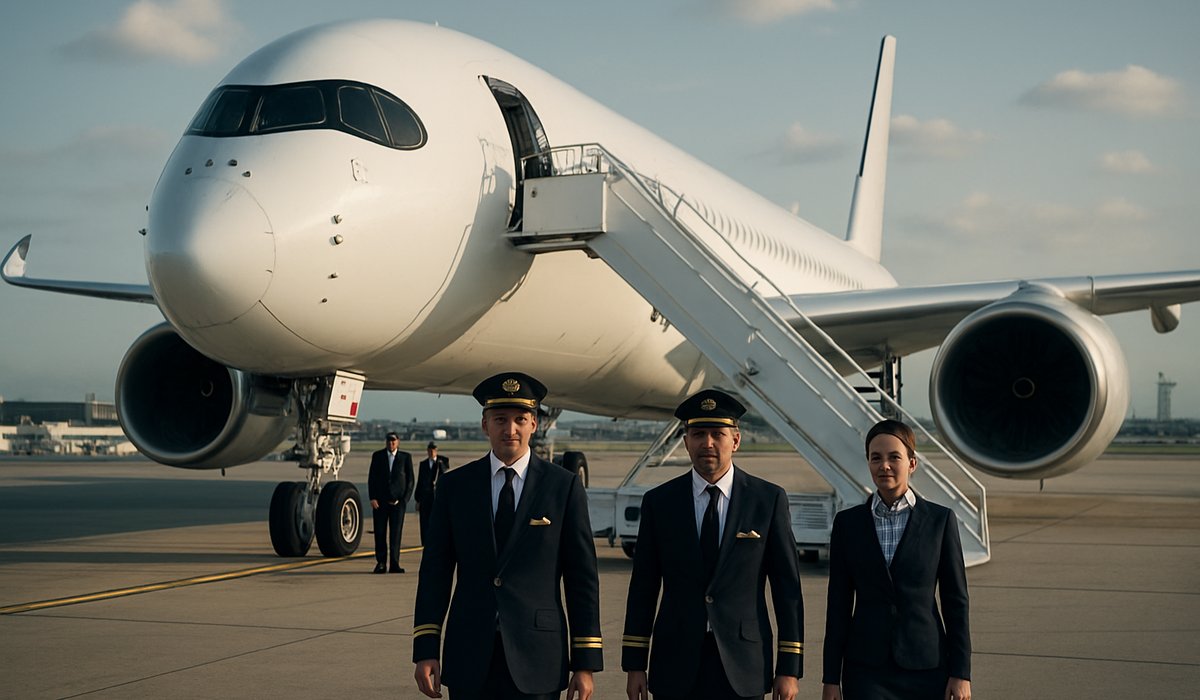
Image generated by AI
Revolutionary Two-Tier Seating System Could Democratize Premium Comfort Across Economy Cabins
Spanish aerospace innovator develops stacked seat configuration for Airbus A350, potentially reshaping cabin economics and passenger experience standards
Game-Changing Seating Innovation Targets Economy Class Transformation
A Spanish aerospace startup is pushing the boundaries of aircraft cabin design with an ambitious dual-level seating concept that could fundamentally alter how airlines package comfort and affordability. Chaise Longue, led by entrepreneur Alejandro Nuñez Vicente, has engineered a stacked seating arrangement specifically designed for the Airbus A350 widebody aircraft—one that promises economy travelers the recline capabilities and spaciousness traditionally reserved for premium cabin passengers.
The innovation arrives at a critical juncture for the aviation industry, where carriers face mounting pressure to offset volatile jet fuel prices and operational costs by maximizing revenue per available seat. Rather than squeezing more rows into cabins through reduced pitch, this architectural approach offers a compelling alternative: layering seats vertically to create a dual-tier economy configuration that maintains both passenger density and comfort standards.
How the Two-Level System Works
The concept leverages the A350's exceptional fuselage dimensions and height to position one row of fully reclinable seats directly above another. This configuration would theoretically allow lower-deck economy passengers to experience lie-flat capabilities—a feature currently exclusive to business and premium economy fares on most long-haul networks. The engineering challenge has centered on maintaining safety protocols, emergency egress requirements, and structural integrity while implementing such an unconventional layout.
For airlines grappling with rising jet fuel surcharges and the need to justify baggage charges and ancillary fees, the system presents an intriguing revenue opportunity: premium economy passengers willing to pay supplementary charges could access the enhanced comfort without crossing into full business class pricing.
Industry Context: Rethinking Cabin Economics
The timing of this innovation reflects broader industry disruption. Over the past five years, carriers worldwide have aggressively implemented baggage fees, seat selection charges, and tiered pricing models to compensate for fuel cost volatility and margin compression. Airlines have simultaneously faced criticism for cramped economy conditions, creating a market gap between standard coach and expensive business class offerings.
Vicente's startup positions this dual-level design as a middle-ground solution that satisfies both passenger comfort expectations and airline profitability metrics—particularly relevant as carriers evaluate fleet modernization strategies for their Airbus A350 networks.
What's Next for Aviation Seating
Chaise Longue's concept remains in development, with regulatory certification and airline partnerships critical to real-world deployment. If successful, the innovation could influence how manufacturers and operators redesign cabin configurations across future aircraft programs, potentially setting new industry standards for economy comfort without sacrificing seat counts.
FAQ: Two-Tier Seating and Modern Aviation Economics
1. When could double-decker seating be available on commercial flights? Regulatory certification and airline partnerships must be finalized before deployment. Current timeline estimates suggest initial implementation within 3-5 years, pending airworthiness approvals.
2. How would two-level seating affect airline baggage fees and ancillary pricing? Airlines could potentially differentiate pricing tiers within economy, with upper-deck passengers paying premiums similar to current extra-legroom offerings, allowing carriers to adjust baggage policies and fees accordingly.
3. Would this design increase aircraft capacity and lower ticket prices? While seat density remains comparable, airlines could shift revenue models from volume-based fares to comfort-based ancillary charges, potentially affecting overall ticket pricing structures.
4. Is the Airbus A350 the only aircraft suitable for this design? The A350's dimensions make it ideal for initial implementation, though similar concepts could theoretically adapt to other widebody platforms once design parameters are proven.
5. How does this innovation relate to jet fuel prices and aviation costs? Rising fuel surcharges have forced airlines to optimize cabin revenue per seat; two-tier seating offers an operational solution that maximizes profitability without expanding physical aircraft size.
Related Travel Guides
Flight Delay Compensation Guide 2026
Understanding Airline Route Changes
Airport Security Process Updated (2026)
External Resources
Disclaimer
This article is for informational and educational purposes only. It does not constitute legal, financial, or professional advice. While we strive to provide accurate and up-to-date information, travel policies, regulations, and conditions change rapidly. Always verify information with official sources before making travel decisions. Nomad Lawyer makes no representations about the accuracy, reliability, completeness, or suitability of the information provided. Readers should consult qualified professionals for advice specific to their circumstances. The views expressed in this article are those of the author and do not necessarily reflect the views of Nomad Lawyer.
Kunal K Choudhary
Co-Founder & Contributor
A passionate traveller and tech enthusiast. Kunal contributes to the vision and growth of Nomad Lawyer, bringing fresh perspectives and driving the community forward.
Learn more about our team →