
Balkan Travel Crossroads: Why 1.1 Million Bulgarians Headed Abroad in August 2026

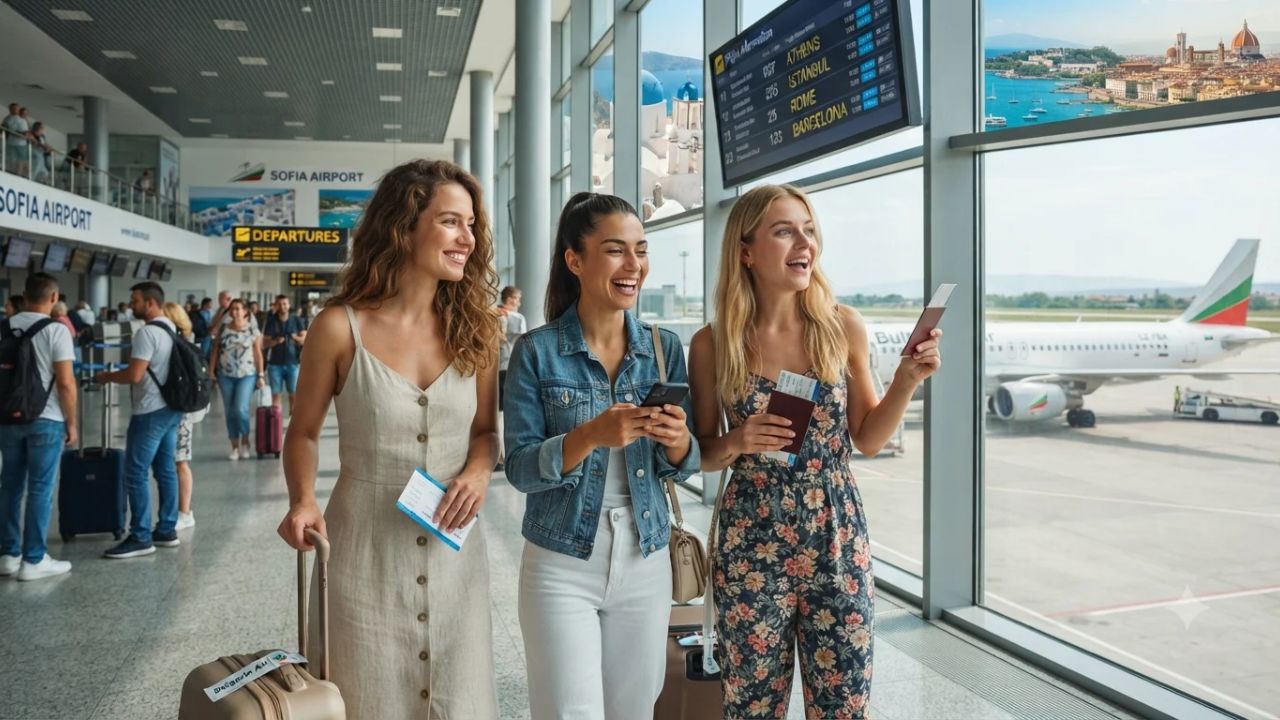
Bulgarian citizens completed over 1.1 million international trips during August 2026, with neighboring Greece and Türkiye capturing more than 610,000 combined visits as regional road travel reached peak summer intensity. Official records published by the National Statistical Institute of Bulgaria reveal a 3.5% annual increase in overseas journeys, underscoring how accessible highway links and cross-border affinity continue to drive Southeast European holiday flows.
While outbound vacation departures set high seasonal benchmarks, inbound foreign visits to Bulgaria saw a moderate 2.1% contraction, totaling 2.22 million arrivals. Notably, transit travel accounted for nearly 38% of all international movement through Bulgarian territory, highlighting the nation’s strategic role as the primary overland transit bridge linking Central Europe with Istanbul and the Aegean.
The Balkan Regional Dynamic: Why Greece and Türkiye Dominate
Geographic proximity and well-maintained highway arteries make short-haul international travel an effortless choice for Bulgarian residents. In August 2026, Visit Greece retained its standing as the top outbound choice, welcoming approximately 321,600 visits from Bulgaria. Travelers from Sofia and Plovdiv routinely drive three to four hours to reach Mediterranean coastal villages across Chalkidiki, Thassos, Kavala, and the Olympic Riviera, drawn by clear coastal waters and family-run tavernas.
Go Türkiye secured second place with roughly 288,500 trips. The demand was driven by a combination of Aegean resort holidays in Bodrum and Antalya, weekend cultural exploration in Istanbul, and shopping excursions to the border city of Edirne, where favorable exchange rates make textiles, culinary goods, and artisan crafts attractive to cross-border shoppers.
Beyond the two Mediterranean neighbors, intra-European connectivity remained strong. Romania ranked third among outbound destinations with 78,900 trips, followed by Serbia with 72,400 trips and Germany with 67,300 visits. The remainder of the top ten outbound destinations included Italy, France, Austria, North Macedonia, and Spain.
Statistical Breakdown: Outbound Departures and Inbound Inflows
The table below outlines the full scope of Bulgarian outbound travel preferences and international visitor arrivals recorded in August 2026.
| Category & Direction | Country / Route | Recorded Volume (August 2026) | Annual Change / Trend | Core Travel Driver |
|---|---|---|---|---|
| Top Outbound Destination #1 | Greece | 321,600 trips | Leading overall outbound market | Aegean & Ionian beach vacations, family resorts |
| Top Outbound Destination #2 | Türkiye | 288,500 trips | Close second in total volume | Coastal resorts, Edirne retail, Istanbul heritage |
| Outbound Destination #3 | Romania | 78,900 trips | High cross-border movement | Danube bridge crossings, Bucharest city breaks |
| Outbound Destination #4 | Serbia | 72,400 trips | Steady regional transit | Gastronomic weekends in Niš and Belgrade |
| Outbound Destination #5 | Germany | 67,300 trips | Major diaspora & corporate market | Business travel, European family visits |
| Total Outbound Travel | All International | Over 1.1 million trips | +3.5% YoY increase | High consumer demand for summer getaways |
| Total Inbound Foreign Visits | Bulgaria (All entries) | 2.22 million visits | -2.1% YoY decrease | Inbound summer tourism and transit volume |
| Top Inbound Source Market #1 | Romania | 419,200 visits | Largest foreign arrival group | Northern Black Sea coast resorts (Albena, Varna) |
| Top Inbound Source Market #2 | Türkiye | 346,500 visits | Major inbound corridor | Cross-border trade, transit, and cultural visits |
| Top Inbound Source Market #3 | Germany | 212,400 visits | Primary Western European feeder | Black Sea package holidays and cultural tours |
| Top Inbound Source Market #4 | Ukraine | 174,600 visits | Significant regional presence | Leisure, transit, and extended regional stays |
| Transit Share of Inbound | Bulgaria transit routes | Nearly 38% of total | Dominant overland flow | Trakia & Maritsa highway transit to/from Türkiye |
Inbound Contraction and the Surge in Overland Transit
The 2.1% decline in overall foreign visits to Bulgaria reflected shifts in visitor purpose. Business-related travel contracted 5.5% year-on-year, while international leisure holidays dropped by 3.9%.
Despite these slight drops, the Black Sea resorts around Varna, Burgas, and Albena maintained strong patronage from Romanian motorists, who generated 419,200 visits. However, the defining characteristic of August international movement was transit traffic. Nearly 38% of all foreign travelers entered Bulgarian territory strictly to transit between Western Europe, the Western Balkans, and Türkiye along the Hemus, Trakia, and Maritsa motorways.
Visitor Insider Tips for Navigating Balkan Border Corridors
Independent road travelers crossing between Bulgaria, Greece, and Türkiye can avoid peak border delays with tactical planning.
- Time the Kulata–Promachonas Border Crossing: The primary highway crossing into Greece at Kulata experiences multi-kilometer queues on Friday mornings and Saturday middays. Cross before 07:00 or after 20:00, or consider alternative secondary border checkpoints like Ilinden–Exochi near Gotse Delchev.
- Purchase Electronic Vignettes (BGTOLL) in Advance: Driving in Bulgaria requires an electronic vignette for all national highways. Buy your e-vignette online through the official BGTOLL portal before reaching the border to avoid terminal vending machine lines.
- Plan Edirne Day Trips on Weekdays: If traveling from Bulgaria into Türkiye via the Kapitan Andreevo–Kapıkule border post for retail shopping in Edirne, visit on Tuesdays or Wednesdays to avoid massive Friday market queues.
- Carry Small Denomination Euro and Leva Cash: While major highway fuel stations accept contactless credit cards, small rural toll booths, fruit stalls in Northern Greece, and mountain guesthouses prefer physical cash in local currency.
Cultural Context and Sustainable Balkan Tourism
The fluidity of travel across Bulgaria, Northern Greece, and European Türkiye highlights the shared cultural heritage of Thrace and the Rhodope Mountains. Travelers moving across these borders experience connected traditions in culinary heritage—from slow-roasted meats and fresh sheep's cheeses to shared folklore and ancient archaeological routes promoted by Bulgaria Travel.
At the same time, regional authorities are focusing on managing summer highway congestion and reducing emissions along key mountain corridors. Promoting low-impact ecotourism in places like the Rila National Park and Pirin mountains helps distribute economic benefits into rural villages while protecting fragile sub-alpine habitats from seasonal overtourism.
FAQ: Balkan Cross-Border Travel in 2026
What are the most popular destinations for Bulgarians traveling abroad?
Greece and Türkiye are the leading outbound destinations, representing over 55% of all foreign trips taken by Bulgarian residents in August.
Do travelers need a visa to drive from Bulgaria to Greece?
No. Bulgaria and Greece are both European Union member states; EU citizens can travel freely between the two nations with a valid national identity card or passport.
How much does an electronic vignette cost for driving in Bulgaria?
A weekend e-vignette for passenger cars costs approximately 9 BGN (around €4.50), while a weekly pass costs 13 BGN (around €6.50), purchasable via the official BGTOLL portal.
What is the primary transit highway across Bulgaria to Türkiye?
The A1 Trakia and A4 Maritsa motorways form the primary high-speed transit artery connecting Sofia directly with the Kapitan Andreevo border crossing into Edirne, Türkiye.
Across the sunlit hills of the Balkans, open highways and shared traditions turn every summer border crossing into an extended regional homecoming.
Related Travel Guides
Disclaimer
This article is for informational and educational purposes only. It does not constitute legal, financial, or professional advice. While we strive to provide accurate and up-to-date information, travel policies, regulations, and conditions change rapidly. Always verify information with official sources before making travel decisions. Nomad Lawyer makes no representations about the accuracy, reliability, completeness, or suitability of the information provided. Readers should consult qualified professionals for advice specific to their circumstances. The views expressed in this article are those of the author and do not necessarily reflect the views of Nomad Lawyer.
Raushan Kumar
Founder & Lead Developer
Full-stack developer with 11+ years of experience and a passionate traveller. Raushan built Nomad Lawyer from the ground up with a vision to create the best travel and law experience on the web.
Learn more about our team →