
How to Hack Legroom on Ryanair and EasyJet Flights
Stop feeling cramped on budget flights. Discover the specific aircraft rows and seat letters that unlock extra legroom on Ryanair and EasyJet.

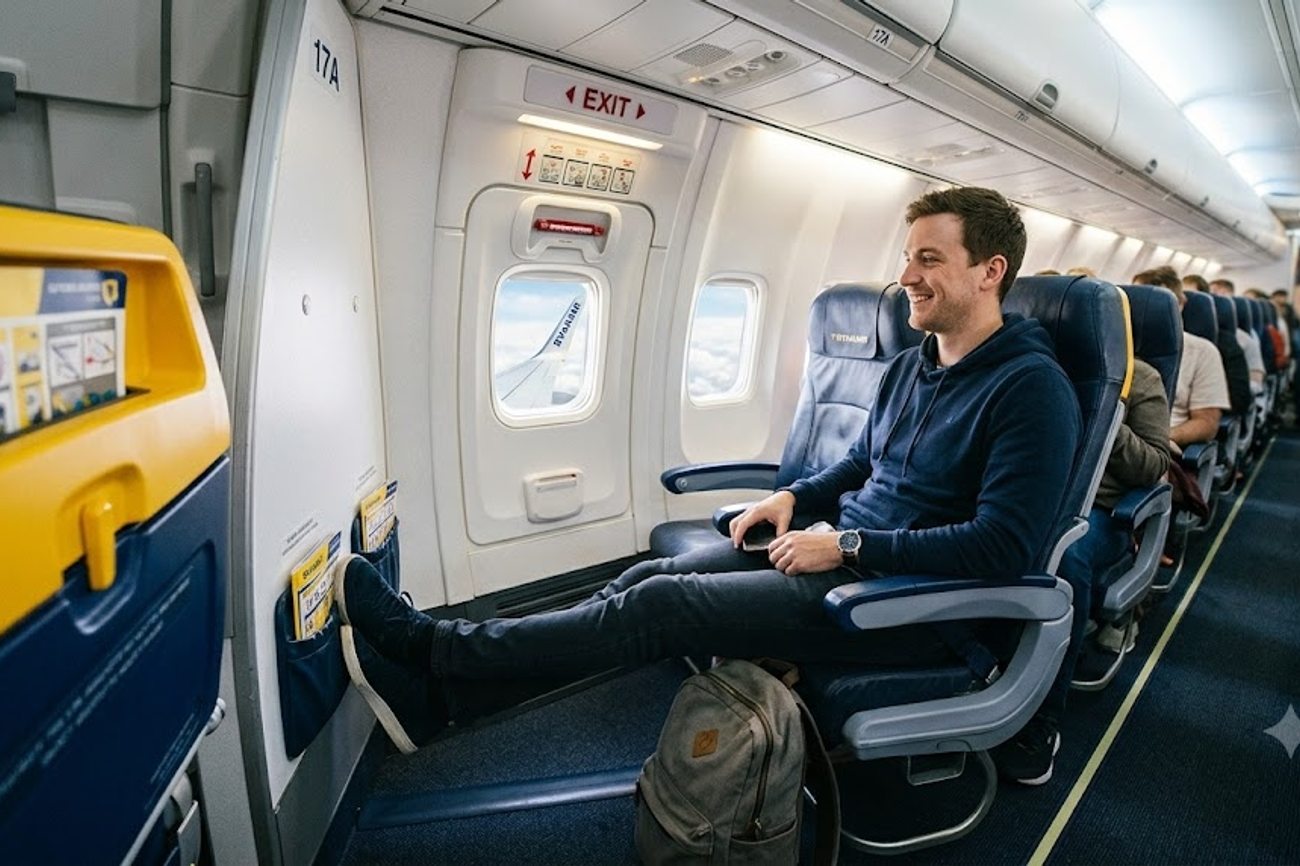
Image generated by AI
The Budget Cabin Shift
The era of the "ultra-low-cost" flight has redefined European travel, prioritizing accessibility over luxury. While this shift has democratized the skies, it has resulted in tighter cabin configurations and reduced personal space. However, a growing trend among savvy frequent flyers is "seat mapping"—using technical aircraft data to find subtle inconsistencies in cabin layouts that provide more room than the standard fare suggests.
The secret lies in the asymmetry of aircraft interiors. Because cabins must accommodate internal wiring, plumbing, and structural reinforcements, the space available to a passenger is not always identical from the left side of the plane to the right.
Engineering Comfort: The Right-Side Advantage
For the traveler, the real impact of seat selection is the difference between a cramped journey and a manageable one. By identifying the specific aircraft model, passengers can target "sweet spots" where the cabin wall or internal fixtures provide a few extra centimeters of freedom.
Ryanair (Boeing 737) On the Boeing 737 fleet, the right-hand side of the cabin often offers a slight spatial advantage. Travelers should target seats D, E, or F between rows 3 and 15. These positions frequently provide more usable legroom than the corresponding seats on the left side of the aircraft.
EasyJet (Airbus A321neo) The advantage is similarly present on the Airbus A321neo. Passengers selecting seats D, E, or F between rows 3 and 13 may find approximately one additional inch of legroom compared to rows 3 to 17 on the left side. While an inch seems negligible on paper, in a high-density cabin, it is often the difference between a knee hitting the seatback and a comfortable flight.
Visitor Insider Tips: Mastering the Booking
To successfully implement these hacks, you need more than just a booking confirmation. Follow these local expert strategies:
- Verify the Airframe: Do not assume every flight uses the same plane. Use Google Flights to identify the specific aircraft model scheduled for your route.
- Use Technical Maps: Before paying for seat selection, cross-reference your flight with AeroLopa, a specialized cabin diagram site that shows the exact physical layout of the aircraft.
- The "Last-Minute" Check: Airlines frequently swap aircraft based on operational needs. Re-check your seat assignment 24 hours before departure to ensure your "hack" seat is still on the correct aircraft model.
- Eco-Tip: To support sustainable travel, consider opting for "carbon offset" programs offered by these carriers or choosing rail alternatives for journeys under 4 hours, as suggested by regional European environmental agencies.
Tourism Outlook
As low-cost carriers continue to dominate the European short-haul market, the focus is shifting toward "micro-comforts." The ability for passengers to optimize their own experience through data—rather than relying on expensive tier-upgrades—represents a broader shift in consumer behavior. We expect to see more travelers utilizing third-party seat maps to maximize value, forcing airlines to be more transparent about cabin dimensions.
Explore more travel optimization guides:
- [Navigating European Airport Transit Hubs]
- [The Digital Nomad's Guide to EU Residency]
- [Sustainable City-Hopping in Central Europe]
Related Travel Guides
Disclaimer
This article is for informational and educational purposes only. It does not constitute legal, financial, or professional advice. While we strive to provide accurate and up-to-date information, travel policies, regulations, and conditions change rapidly. Always verify information with official sources before making travel decisions. Nomad Lawyer makes no representations about the accuracy, reliability, completeness, or suitability of the information provided. Readers should consult qualified professionals for advice specific to their circumstances. The views expressed in this article are those of the author and do not necessarily reflect the views of Nomad Lawyer.
Naina Thakur
Contributor & Travel Specialist
Travel enthusiast and legal writer covering visa regulations, responsible tourism, and cultural journeys across global destinations.
Learn more about our team →