
Brussels Airport Faces Massive Queues as EU Entry/Exit System Implementation Prompts Ryanair Alert
Brussels Airport and other major European hubs experience up to five-hour border queues due to the new EU Entry/Exit System (EES) biometric checks.

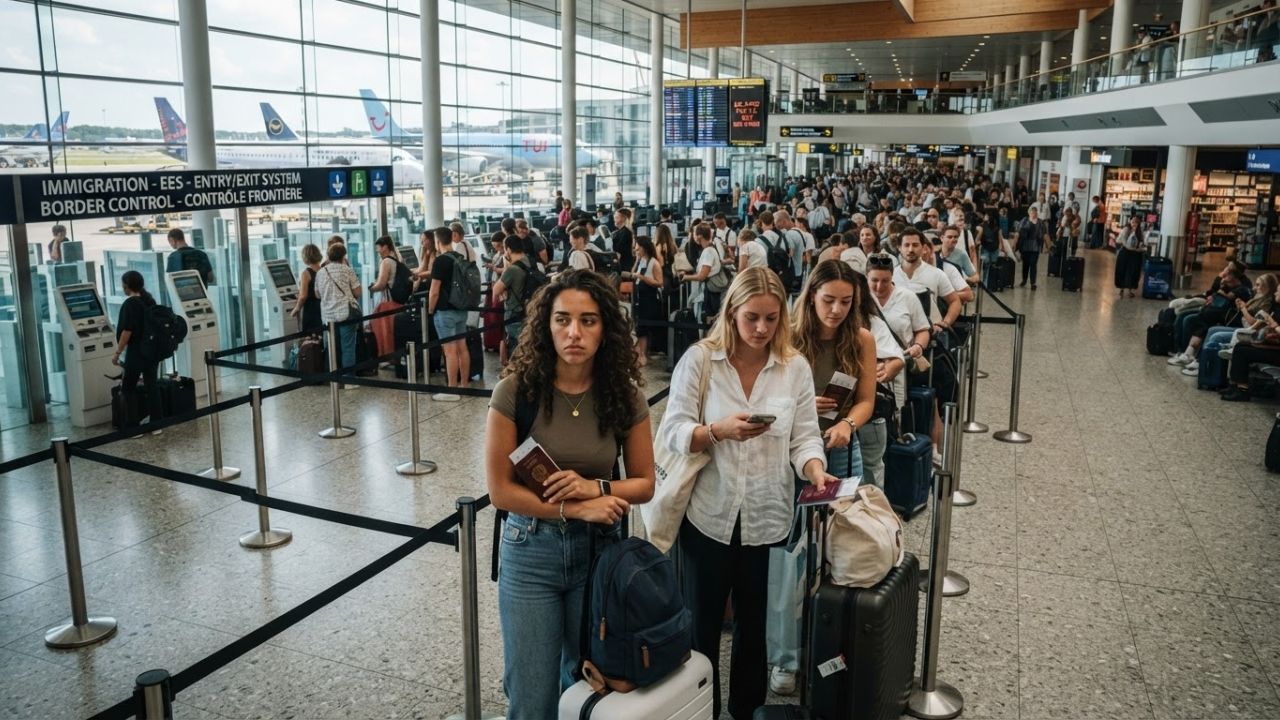
Image generated by AI
Brussels Airport immigration queues have reached up to five hours as the rollout of the EU Entry/Exit System (EES) causes widespread travel disruption. Ryanair has issued an urgent warning, calling on European authorities to suspend mandatory biometric checks to prevent terminal gridlock.
Biometric Border Verification Leads to Five-Hour Airport Queues
According to reports, flight scheduling delays are cascading across Europe as the Schengen Area implements its new digital border system. Immigration terminals operated at Brussels Airport confirm wait times of up to five hours at passport control gates.
The delays are occurring during the peak summer travel window when tourist traffic is at its annual highest.
Non-EU passport holders, including citizens from the United States, Canada, the United Kingdom, and Australia, must undergo mandatory biometric enrolment.
This digital registry replaces the legacy practice of manual ink passport stamping.
Ryanair Urges Temporary Suspension of Mandatory Checks
Passenger advisories published by Ryanair state that the current rollout speed exceeds the processing capacity of airport terminals. The carrier has requested that the European Union suspend the system until September.
Ryanair argues that processing travelers during peak periods without stable software infrastructure devalues the passenger experience.
Airline officials want border agencies to deploy more personnel to manage manual overrides.
Additionally, carriers are demanding that airports accelerate the installation of self-service biometric registration kiosks.
Border Processing Metrics and Terminal Queue Index
The tables below display the comparative processing durations and the queue index reported across major European hubs.
Schengen Airport Queue Index during EES Rollout
| Airport Hub Name | Primary Country Location | Average Peak Wait Duration | Kiosk Availability Status | Connecting Flight Risk Rating |
|---|---|---|---|---|
| Brussels Airport (BRU) | Belgium | 4 to 5 hours | Insufficient (Bottlenecks reported) | High (Missed connections rising) |
| Paris Charles de Gaulle (CDG) | France | 3 to 4 hours | Moderate (High volume pressure) | High (Transit windows missed) |
| Milan Malpensa (MXP) | Italy | 3 to 4.5 hours | Low (Manual processing overrides) | Moderate (Standard delay buffers) |
| Madrid Barajas (MAD) | Spain | 2.5 to 3.5 hours | Moderate (Staff reallocated) | Moderate (Standard delay buffers) |
Comparative Biometric vs. Manual Processing Times
| Border Control Method | Action Steps Required | Average Processing Time Per Passenger | Data Integration Requirements | System Resilience Rating |
|---|---|---|---|---|
| Legacy Manual Stamp | Passport inspection, manual ink stamp | 45 to 60 seconds | Local entry/exit database check | High (Simple physical verification) |
| New Biometric EES | Facial scan, ten-fingerprint registry | 3 to 5 minutes (First-time registration) | Schengen-wide real-time database sync | Moderate (Vulnerable to software latency) |
Digital Border Ambitions Mismatch Physical Terminal Capacities
Aviation observers note that the Entry/Exit System is designed to improve long-term border security across the Schengen Area. However, the physical space allocated for immigration check-points in older European terminals is limited.
Biometric kiosks require dedicated floor space, which restricts passenger queuing areas.
Furthermore, database syncing delays across Schengen member databases add seconds to every passenger transaction.
When multiplied by thousands of daily arrivals, these small delays quickly compile into five-hour queues.
Governments Implement Tactical Travel Flexibility Measures
To mitigate terminal overcrowding, select national border agencies have started introducing temporary flexibility policies.
These measures include suspending certain biometric checks during peak arrival banks to clear congested immigration halls.
However, these adjustments are not coordinated at the EU level, leading to varying processing experiences across different countries.
Airlines warn that a lack of standardized procedures will continue to disrupt travel schedules through the remainder of the summer season.
Why This Matters
Our analysis of the flight data indicates that the EES border delays are creating a severe operational bottleneck for point-to-point low-cost carriers. Airlines like Ryanair operate tight 25-minute aircraft turnarounds, which depend on passengers arriving at the gate on schedule.
When passengers are delayed at immigration for five hours, flight crews must choose between delaying departures or flying with empty seats.
Both options carry high financial penalties: delayed flights trigger runway slot penalties, while missing passengers reduce ancillary retail revenue.
Moreover, because Brussels Airport is a key connection node for diplomatic and corporate travel, these delays disrupt European business travel networks.
If border wait times remain high, corporate travelers may redirect their flights to non-Schengen transit points like London Heathrow or Dublin.
Industry Outlook
Market trends suggest that airport operators will increase capital expenditure on automated border technology over the next fiscal year. The European Commission is projected to review the implementation timeline to address carrier feedback.
Expect Ryanair and other regional airlines to continue adjusting check-in advisory times, recommending that passengers arrive at terminals up to four hours before departure. The European aviation network capacity is expected to remain under pressure.
Key Takeaways
- Immigration Wait Times: Wait times at Brussels Airport have peaked at five hours during the summer rollout of the EES.
- Ryanair Demand: Ryanair is calling for a temporary suspension of mandatory biometric registry checks until autumn.
- Biometric Enrolment: Non-Schengen travelers face mandatory facial scans and fingerprinting at entry points.
- Schengen Hub Delays: Hubs in France, Italy, and Spain are also experiencing significant border terminal congestion.
- Operational Friction: Extended border checks are causing missed connections and disrupting flight crew scheduling.
FAQ
What is causing the long queues at Brussels Airport?
The delays are caused by the implementation of the new EU Entry/Exit System (EES) biometric registration checks.
Which travelers are affected by the biometric checks?
All non-EU passport holders, including citizens from the US, UK, Canada, and Australia, must undergo biometric enrolment.
Why is Ryanair calling for a suspension of the system?
The carrier argues that the current border infrastructure is insufficient to process peak summer passenger volumes.
How are airlines adjusting to the EES delays?
Airlines are advising passengers to arrive at airports earlier and are adjusting flight schedules to accommodate longer queues.
Related Travel Guides
Disclaimer
This article is for informational and educational purposes only. It does not constitute legal, financial, or professional advice. While we strive to provide accurate and up-to-date information, travel policies, regulations, and conditions change rapidly. Always verify information with official sources before making travel decisions. Nomad Lawyer makes no representations about the accuracy, reliability, completeness, or suitability of the information provided. Readers should consult qualified professionals for advice specific to their circumstances. The views expressed in this article are those of the author and do not necessarily reflect the views of Nomad Lawyer.
Kunal K Choudhary
Co-Founder & Contributor
A passionate traveller and tech enthusiast. Kunal contributes to the vision and growth of Nomad Lawyer, bringing fresh perspectives and driving the community forward.
Learn more about our team →