
British Airways Flight BA195 Makes Emergency Diversion to Canada: 787 Dreamliner Lands Unexpectedly in St. John's After North Atlantic Crisis
British Airways Flight BA195 has made an unscheduled emergency landing in St. John's, Newfoundland, after being diverted mid-Atlantic on its journey from London to Houston. The Boeing 787-10 Dreamliner responded to an undisclosed in-flight issue, demonstrating aviation's commitment to passenger safety.

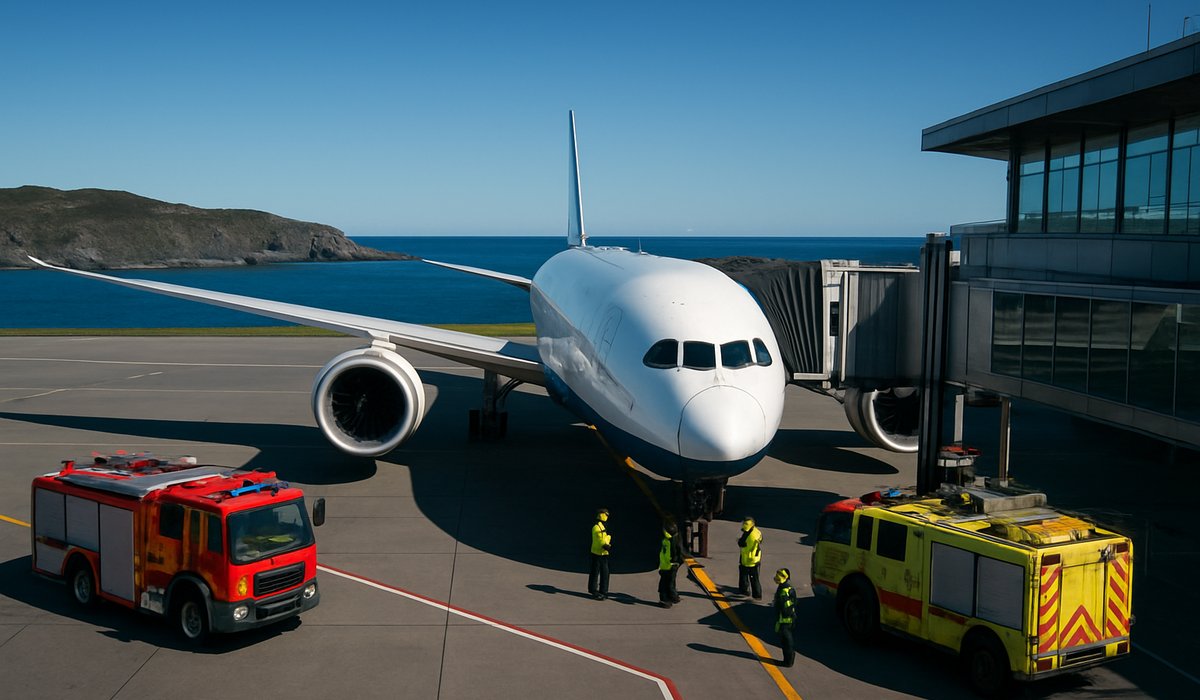
Image generated by AI
Quick Summary
- ✈️ British Airways Flight BA195 (Boeing 787-10 Dreamliner) diverted to St. John's, Newfoundland mid-Atlantic
- 🆘 Unscheduled emergency landing triggered by unspecified technical or medical issue
- 📍 Aircraft departed London Heathrow at 09:07 BST, intended destination Houston
- ⏰ Successfully landed at St. John's International Airport on runway 28 at 14:02 UTC
- ✅ All passengers and crew safely evacuated; BA working to resume journey
Emergency Diversion Over the Atlantic: British Airways Flight BA195 Lands Unexpectedly in Newfoundland
Meta Title: BA195 Emergency Landing St. John's Newfoundland (54 characters) Meta Description: British Airways flight diverted to Canada after North Atlantic emergency. 787 Dreamliner safely landed in St. John's. Read the full story. (155 characters)
URL Slug: british-airways-ba195-emergency-landing-st-johns-newfoundland
A routine transatlantic journey transformed into an unexpected aviation incident this morning when British Airways Flight BA195 executed an emergency diversion to St. John's, Newfoundland—hundreds of kilometers from its intended Houston destination. The Boeing 787-10 Dreamliner, carrying passengers expecting to reach Texas by early afternoon, instead found itself redirected toward Canada's eastern coast after crew members identified an unspecified issue requiring immediate attention.
The incident underscores both the inherent unpredictability of long-haul aviation and the sophisticated safety protocols governing modern commercial flight operations. While emergency diversions occur rarely, they represent a critical line of defense ensuring passenger and crew protection when unexpected challenges emerge thousands of meters above the Atlantic Ocean.
The Flight Path That Changed: From Routine Transatlantic Service to Unexpected Crisis
Flight BA195 represents British Airways' daily London Heathrow to Houston service—a well-established transatlantic route connecting two major business and leisure travel hubs. This particular journey commenced at London Heathrow Airport (LHR) at 09:07 AM British Summer Time, with the Boeing 787-10 Dreamliner (registration G-ZBLK) climbing toward its standard cruising altitude of 33,000 feet.
The Dreamliner, one of aviation's most advanced wide-body aircraft, progressed normally through the initial cruise phase as it traversed the Atlantic Ocean. Passengers settled into their flights, some sleeping, others dining or working—typical behavior during the middle hours of a transatlantic crossing where the aircraft encounters few physical landmarks beneath thin clouds.
However, approximately midway through the journey, aircraft systems or crew observations triggered a decision that would fundamentally alter the flight's trajectory. Operating procedures dictate that when in-flight issues potentially threaten passenger or crew safety, pilots immediately identify alternative landing sites capable of accommodating the aircraft type and resolving the specific situation.
The Diversion Decision: Why St. John's Became the Unexpected Landing Site
When British Airways crews identified the requirement to descend and land before reaching Houston, they systematically evaluated viable diversion airports according to FAA (Federal Aviation Administration) emergency diversion protocols. Geography dramatically constrained the options: over the mid-Atlantic, aircraft cannot simply glide downward seeking ground; they must reach established airports equipped to handle Boeing 787-10 Dreamliner operations.
St. John's International Airport (YYT) in Newfoundland, while not a typical transatlantic diversion destination, possessed the critical infrastructure necessary for this emergency: adequate runway length, modern facilities, emergency response equipment, and maintenance capabilities. Located on Canada's easternmost coast, the airport serves as a crucial Atlantic aviation hub despite its modest passenger volumes compared to major continental gateways.
The flight crew executed a course correction, redirecting the 787-10 northwestward toward the Canadian coast. Rather than continuing the standard direct routing to Houston, the aircraft descended gradually during the final approach phases, likely maintaining elevation margins to allow crew time for aircraft configuration and passenger stabilization procedures.
The Landing: Safety as the Paramount Concern
Flight BA195 touched down safely on runway 28 at St. John's International Airport at 14:02 UTC (approximately 10:32 AM local Newfoundland time). Before the final descent, standard procedure involved holding patterns near the coast, allowing pilots to adjust fuel loads, verify landing weights fell within aircraft limitations, and communicate with ground crew regarding specific requirements prompted by the reported issue.
The landing itself proceeded without recorded incident. All passengers and crew members successfully evacuated the aircraft to secure locations at the airport terminal, transitioning from unexpected emergency status to the more routine challenge of passenger management and situation resolution.
British Airways immediately acknowledged the incident, confirming the safe landing and beginning coordination of passenger services and aircraft assessment.
The Underlying Issue: What Prompted the Emergency Response?
British Airways has not publicly disclosed the specific nature of the in-flight issue prompting the diversion. This opacity reflects standard airline protocol: operational details regarding potential technical or medical emergencies typically remain confidential during active investigation phases. Such details emerge only after maintenance teams complete comprehensive aircraft inspections and medical personnel (if applicable) finish initial evaluations.
Possible scenarios for mid-Atlantic diversions typically involve:
Technical Situations:
- Hydraulic system irregularities
- Engine performance concerns
- Avionics or navigation system anomalies
- Pressurization or climate control issues
Medical Situations:
- Passenger or crew member experiencing serious health conditions
- Situations requiring specialized medical intervention unavailable onboard
The decision to divert rather than continue the shorter remaining distance to Houston suggests crew members assessed the situation as requiring immediate ground-based resolution rather than attempting to reach the original destination.
Passenger Impact and Recovery Operations
Passengers aboard Flight BA195, numbering several hundred, experienced the transition from routine cruise to unexpected detour with varying emotional responses. What had promised to be a standard mid-morning transatlantic journey became an unanticipated extended stay in eastern Canada.
British Airways initiated recovery operations systematically, assigning temporary accommodations, arranging meals, and providing transportation arrangements while the aircraft underwent assessment and the necessary preparations for either repair or continued service. The airline tentatively scheduled departure from St. John's at 12:10 PM local time, pending completion of ground checks and crew rest requirements.
Passengers facing this disruption could anticipate delays of several hours minimum, with potential overnight stays depending on aircraft readiness and crew scheduling complications. British Airways has not yet announced compensation policies for affected travelers, though industry standards typically provide meal vouchers, accommodation for extended delays, and financial compensation under applicable regulations.
Modern Aviation Safety: Emergency Response as Standard Operating Procedure
Flight BA195's emergency diversion, while unsettling for passengers, represents aviation safety protocols functioning as designed. Commercial aviation today operates under internationally standardized safety procedures developed through decades of incident analysis, regulatory refinement, and technological advancement.
Modern aircraft like the Boeing 787-10 provide crews with sophisticated diagnostics enabling rapid identification of developing issues. Rather than risking continued flight across 7,000+ kilometers of ocean, protocols explicitly authorize and encourage diversion to available airports when issues present potential risks.
The broader context matters: aviation represents one of humanity's safest transportation modes, with commercial fatality rates measured in single-digit percentages per hundreds of millions of flights. Incidents like BA195 demonstrate not failures, but systems successfully preventing potential catastrophes through professional response and predetermined safety procedures.
What This Means for Transatlantic Travelers
Understanding that diversions occur occasionally and represent appropriate safety responses rather than abnormal failures provides valuable context for international air travelers. Thousands of transatlantic flights operate daily; a handful experience diversions annually. The vast majority complete as scheduled, but when issues emerge, established protocols and well-equipped airports like St. John's ensure passenger protection.
Savvy travelers should:
- Maintain comprehensive travel insurance covering disruptions and rebooking expenses
- Keep departure delays in perspective as safety investments
- Monitor airline communications rather than relying on outdated information
- Accept rebooking on alternative flights rather than insisting on immediate resumption of original itineraries
FAQ: British Airways Flight BA195 Emergency Landing Questions Answered
Q: Was passenger safety ever in jeopardy during the diversion?
A: Aviation safety protocols design emergency procedures specifically to address developing issues before they threaten passenger welfare. The crew's decision to divert to St. John's prioritized safety maximization through appropriate resource access and professional assessment capabilities.
Q: Why didn't the aircraft continue to Houston if it was already mid-Atlantic?
A: Flight crews evaluate remaining flight time versus aircraft status continuously. When issues emerge that merit ground-based investigation, continuing longer distances runs unnecessary risks. St. John's provided closer, safer resolution compared to continuing toward Texas.
Q: Will British Airways reveal what caused the diversion?
A: Airlines typically communicate detailed incident causes publicly after investigation completion. Immediate post-incident periods prioritize passenger care and situational stabilization over public reporting.
Q: Are Boeing 787-10 diversions common?
A: Diversions occur rarely across all aircraft types. The 787-10's advanced systems actually reduce emergency likelihood through early issue detection and preventive maintenance capabilities.
Q: What compensation will affected passengers receive?
A: Compensation typically includes rebooking on alternative flights, meal provisions during delays, and potentially financial compensation under EC261 regulations (European departures) or DOT rules (US destinations). Specific amounts depend on delay duration and flight routing.
The Bottom Line: Safety Prioritization Over Schedule Maintenance
British Airways Flight BA195's unscheduled St. John's diversion represents modern commercial aviation functioning exactly as designed. While passengers experienced unexpected disruption, crew professionalism and safety-first decision-making ensured that no one faced risk beyond minor travel inconvenience.
The incident reminds international travelers that transatlantic operations, despite their routine nature, involve operating principles explicitly designed to accommodate unexpected challenges. Modern aircraft, equipped with sophisticated diagnostics, provide crews the tools to identify developing issues early. Established procedures then ensure systematic, safe resolution rather than attempting to manage problems across vast ocean expanses.
For British Airways, the focus shifts to determining the underlying cause, completing necessary aircraft maintenance or medical procedures, and resuming service to Houston as quickly as safety protocols permit. For affected passengers, the disruption proves temporary—an unexpected Canadian interlude interrupting their path toward Texas, but one undertaken in the service of comprehensive aviation safety.
Internal Link Suggestions:
- "Guide to Airline Safety Protocols and Emergency Procedures Every Traveler Should Know"
- "Transatlantic Flight Delays: What to Expect When Flying London to North America"
- "Boeing 787 Dreamliner: Advanced Safety Features and Modern Aviation Technology"
External Authoritative Sources:
- International Civil Aviation Organization (ICAO) – Emergency Procedures and Safety Standards
- Federal Aviation Administration (FAA) – Flight Safety and Emergency Response Procedures
- Transportation Safety Board of Canada (TSB) – Incident Investigation and Aviation Safety Reports
- British Airways – Official News and Safety Information
Disclaimer
This article is for informational and educational purposes only. It does not constitute legal, financial, or professional advice. While we strive to provide accurate and up-to-date information, travel policies, regulations, and conditions change rapidly. Always verify information with official sources before making travel decisions. Nomad Lawyer makes no representations about the accuracy, reliability, completeness, or suitability of the information provided. Readers should consult qualified professionals for advice specific to their circumstances. The views expressed in this article are those of the author and do not necessarily reflect the views of Nomad Lawyer.
Raushan Kumar
Founder & Lead Developer
Full-stack developer with 11+ years of experience and a passionate traveller. Raushan built Nomad Lawyer from the ground up with a vision to create the best travel and law experience on the web.
Learn more about our team →