
Brazil Expands Visa-Free Travel Access to 101 Nations as H1 2026 International Visitor Arrivals Reach 5.26 Million
Brazil updates its entry policy to offer visa-free travel for citizens of 101 countries, driving international arrivals to 5.26 million in the first half of 2026.

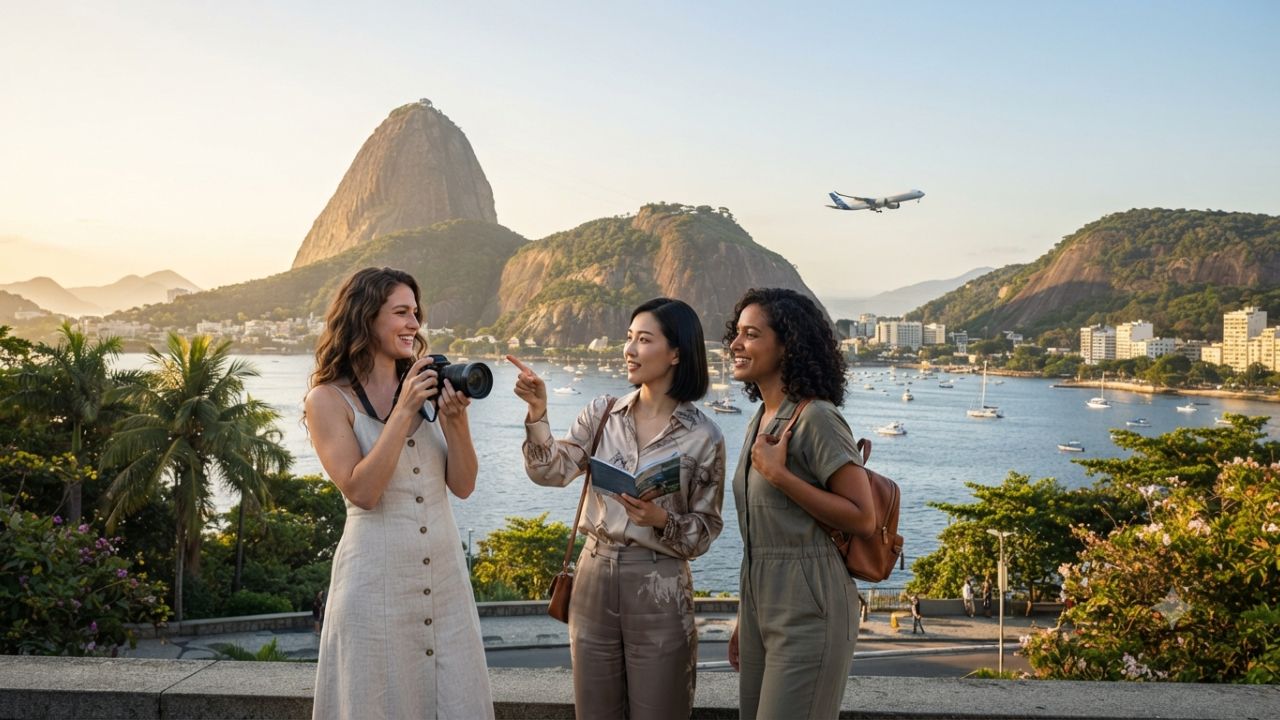
Image generated by AI
Brazil has updated its international entry framework to grant visa-free travel access to passport holders from 101 countries, driving international tourist arrivals to 5.26 million during the first half of 2026. The expanded visa exemption covers major inbound source markets including the United States, United Kingdom, Schengen Area member states, and Gulf Cooperation Council (GCC) nations, establishing one of the most accessible travel regimes in South America.
SÃO PAULO, Brazil — Ministry of Tourism performance data confirms that Brazil welcomed 5.26 million international visitors between January and June 2026, building upon 2025's record 9.3 million foreign arrivals. International travelers contributed US$5.6 billion to the national economy in 2025—a 12 percent year-on-year increase—supported by expanded long-haul flight capacity through primary hubs in São Paulo, Rio de Janeiro, and Fortaleza.
With Brazil's nominal GDP projected at approximately US$2.64 trillion in 2026—ranking as the world's 10th-largest economy—the tourism sector serves as a vital growth driver amid broader economic adjustments. Growth forecasts for 2026 range from 1.6 percent (World Bank) and 1.9 percent (IMF) to 2.0 percent (Brazilian Finance Ministry).
Key Performance Metrics and Inbound Tourism Dashboard
The operational benchmarks, tourism revenue figures, and economic indicators for Brazil's travel sector are summarized below.
| Category & Economic Benchmark | Reported Tourism & Economic Metric | Industry Impact & Market Scope | Primary Regional Hubs & Connectors |
|---|---|---|---|
| Visa-Exempt Country Access | 101 Eligible Nations | Includes US, UK, Schengen Area, GCC, & South America | Nationwide Border Inspection Points |
| H1 2026 International Arrivals | 5.26 Million Foreign Visitors | Jan 1 – Jun 30, 2026 Performance | São Paulo (GRU), Rio (GIG), Fortaleza (FOR) |
| 2025 Annual Arrivals Baseline | 9.3 Million Visitors (Record Peak) | Full-Year Historical Baseline | Key Inbound International Gateways |
| International Tourist Spending | US$5.6 Billion (2025 Total) | 12% Year-on-Year Growth | Hotels, Tour Operators, Aviation, Retail |
| Nominal GDP Projection (2026) | US$2.64 Trillion (10th Largest Global) | Economic Growth: 1.6% to 2.0% Range | Supported by Agricultural & Service Sectors |
| Primary Inbound Source Markets | North America, Europe, UK, South America | High-Yield Long-Haul & Regional Travel | Served by LATAM, GOL, Azul, International Carriers |
Countries Included in Brazil's 101-Nation Visa-Free List
Citizens holding ordinary passports from the following 101 eligible countries and territories can enter Brazil for tourism and short-term leisure stays without obtaining a consular visa:
- Americas & Caribbean: Argentina, Antigua and Barbuda, The Bahamas, Barbados, Belize, Bolivia, Chile, Colombia, Costa Rica, Dominica, Dominican Republic, Ecuador, El Salvador, Grenada, Guatemala, Guyana, Honduras, Jamaica, Mexico, Nicaragua, Panama, Paraguay, Peru, St. Kitts and Nevis, St. Lucia, St. Vincent and the Grenadines, Suriname, Trinidad and Tobago, United States, Uruguay, Venezuela.
- Europe & Schengen Area: Albania, Andorra, Austria, Belarus, Belgium, Bosnia and Herzegovina, Bulgaria, Croatia, Cyprus, Czechia, Denmark, Estonia, Finland, France, Georgia, Germany, Greece, Hungary, Iceland, Ireland, Italy, Latvia, Liechtenstein, Lithuania, Luxembourg, North Macedonia, Malta, Moldova, Monaco, Montenegro, Netherlands, Norway, Poland, Portugal, Romania, Russian Federation, San Marino, Serbia, Slovakia, Slovenia, Spain, Sweden, Switzerland, Ukraine, United Kingdom, Vatican City.
- Middle East & Asia-Pacific: Armenia, China, Hong Kong, Indonesia, Israel, Japan, Kazakhstan, Macao, Malaysia, Mongolia, New Zealand, Philippines, Qatar, Seychelles, Singapore, South Korea, Thailand, Türkiye, United Arab Emirates.
- Africa: Botswana, Morocco, Namibia, South Africa, Tunisia.
Top 5 Aviation Gateways in Brazil by Passenger Volume
Brazil's international accessibility relies on five primary hub airports handling major long-haul and regional air traffic:
Brazil's recent expansion of visa-free travel to 101 nations is expected to boost tourism, with the country's Ministry of Tourism anticipating a significant increase in international visitor arrivals. For the latest information on visa requirements and travel regulations, visitors can check the official Brazilian Government website. This move is part of a broader effort to stimulate economic growth and development in the country's tourism sector.
| Airport Hub Name & Code | 2025 Passenger Throughput | Strategic Operational Role | Primary City Served & Distance |
|---|---|---|---|
| 1. São Paulo/Guarulhos (GRU) | 47.1 Million Passengers | Latin America's Busiest International Hub | São Paulo (25 km to North/East) |
| 2. São Paulo/Congonhas (CGH) | 24.5 Million Passengers | Premier High-Frequency Domestic Business Hub | Central São Paulo Urban Core |
| 3. Rio de Janeiro/Galeão (GIG) | ~18.0 Million Passengers | Main Coastal Tourism & International Gateway | Rio de Janeiro (20 km to City Center) |
| 4. Brasília International (BSB) | Capital Hub Volume | Central Domestic Transit & Government Connection | Brasília Capital Federal District |
| 5. Belo Horizonte/Confins (CNF) | Regional Hub Volume | Regional Mining & Business Travel Gateway | Belo Horizonte, Minas Gerais |
Leading Domestic Airlines and Luxury Hospitality Destinations
Brazil's domestic flight connections are dominated by LATAM Airlines Brazil, Azul Brazilian Airlines, GOL Linhas Aéreas, Voepass Linhas Aéreas, and MAP Linhas Aéreas, providing comprehensive access to remote Amazonian and coastal destinations.
For luxury travelers, five flagship hotel properties anchor the country's high-end tourism segment:
- Copacabana Palace, A Belmond Hotel (Rio de Janeiro): Historic 1923 beachfront landmark along Copacabana Beach (25 km / 35–50 mins from Galeão International Airport GIG).
- Palácio Tangará (São Paulo): Urban parkside retreat adjacent to Burle Marx Park (45 km / 45–60+ mins from Guarulhos Airport GRU).
The increased demand for travel to Brazil has also led to improvements in passenger logistics, with major airports such as São Paulo/Guarulhos International Airport investing in new facilities and services. Travelers can visit the GRU Airport website to plan their journey and access information on flights, terminals, and amenities. Additionally, airlines such as LATAM are offering more frequent and convenient flights to and from Brazil, making it easier for visitors to explore the country. 3. Hotel Fasano Rio de Janeiro (Ipanema): Modern luxury beachfront property overlooking Ipanema Beach (25 km / 35–50 mins from GIG). 4. Rosewood São Paulo: Contemporary urban luxury blending art and architecture in central São Paulo (30 km / 35–60 mins from GRU). 5. Fasano Angra dos Reis: Secluded coastal rainforest resort outside Rio de Janeiro (160 km / 2.5–3.5 hours from GIG).
Iconic Travel Highlights and Cultural Experiences in Rio de Janeiro
Visitors taking advantage of visa-free access can explore world-famous attractions across Rio de Janeiro and beyond:
The Brazilian Tourism Board, Embratur, provides valuable insights and information on the country's tourism industry, including statistics on international visitor arrivals and trends in travel demand. According to Embratur, the first half of 2026 saw a record 5.26 million international visitor arrivals, with popular destinations such as Rio de Janeiro and the Amazon rainforest attracting large numbers of tourists. As the tourism sector continues to grow, Brazil is likely to remain a top destination for travelers from around the world.
- Sugarloaf Mountain (Pão de Açúcar): Accessible via the historic Bondinho Aerial Cable Car (operating since 1912 to a height of 396 meters) or the scenic Trilha do Morro da Urca rainforest hiking trail.
- Maracanã Football Stadium: Opened on June 16, 1950, hosting legendary FIFA World Cup matches and cultural events.
- Parque Lage: A 52-hectare rainforest park housing the School of Visual Arts beneath Christ the Redeemer.
- Copacabana & Ipanema Beaches: Featuring iconic black-and-white wave promenades, vibrant beach culture, and famous sunsets at Arpoador.
Traveler Logistics Guide: Navigating Brazil's Visa-Free Entry Framework
Travelers planning leisure or business journeys under the updated visa-free policy should follow key entry protocols.
1. Passport Validity and Entry Documentation
- Passport Validity: Passports must be valid for at least six months from the date of arrival in Brazil.
- Onward Travel Verification: Immigration officers at GRU, GIG, and FOR airports require proof of return or onward travel (confirmed airline ticket) and proof of accommodation reservations.
- Standard Stay Limit: Visa-free stays are granted for up to 90 days per visit within a 180-day period.
2. Airport Transfers and Internal Transit
- Official Airport Taxis & Rideshare: Use official pre-paid airport taxi counters inside terminal arrivals or authorized app rideshares (Uber/99) at GRU and GIG to avoid unaccredited drivers.
- Inter-City Flights: Book internal connections between São Paulo, Rio, and the Amazon (Manaus MAO) well in advance through LATAM, GOL, or Azul to secure preferred schedules.
3. Currency and Customs Regulations
- Currency Limit: Travelers carrying foreign currency exceeding 10,000 Brazilian Reais (BRL) (or foreign currency equivalent) must complete an online e-DVB electronic customs declaration prior to arrival.
- Card Acceptance: Credit and debit cards (Visa, Mastercard) are universally accepted across major cities, though small cash BRL notes are recommended for beach kiosks and local markets.
Frequently Asked Questions
Which major markets are included in Brazil's 101 visa-free countries list?
Citizens of the United States, United Kingdom, all 29 Schengen Area member states, GCC countries (Qatar, UAE), and South American nations enjoy visa-free entry to Brazil.
How long can visa-free travelers stay in Brazil?
Visa-exempt foreign tourists are typically allowed to stay up to 90 days per entry, with extensions possible through the Federal Police (Polícia Federal) up to a maximum of 180 days per year.
How many international visitors arrived in Brazil during H1 2026?
Brazil welcomed 5.26 million international visitors between January 1 and June 30, 2026.
What are the main international airport gateways in Brazil?
The primary gateways are São Paulo/Guarulhos International Airport (GRU), Rio de Janeiro/Galeão International Airport (GIG), and Fortaleza International Airport (FOR).
Related Travel Guides
- India Expands Visa-on-Arrival Framework to 180 Countries Starting October 2026 to Boost International Travel and Business Transit
- Taiwan Visa-Free Entry Rules: 90-Day Access Unlocks Extended Stays for Global Travelers
- Eswatini Ranks 8th Strongest Passport in Africa With Visa-Free Access to 78 Destinations in 2026
Disclaimer
This article is for informational and educational purposes only. It does not constitute legal, financial, or professional advice. While we strive to provide accurate and up-to-date information, travel policies, regulations, and conditions change rapidly. Always verify information with official sources before making travel decisions. Nomad Lawyer makes no representations about the accuracy, reliability, completeness, or suitability of the information provided. Readers should consult qualified professionals for advice specific to their circumstances. The views expressed in this article are those of the author and do not necessarily reflect the views of Nomad Lawyer.
Raushan Kumar
Founder & Lead Developer
Full-stack developer with 11+ years of experience and a passionate traveller. Raushan built Nomad Lawyer from the ground up with a vision to create the best travel and law experience on the web.
Learn more about our team →