
Brazil Restricts Public Access to Atol das Rocas Amid New Vessel Procurement for Scientific Research
Brazil's ICMBio issues a new vessel tender for Atol das Rocas. Learn why this UNESCO site remains closed to tourists unlike Fernando de Noronha.

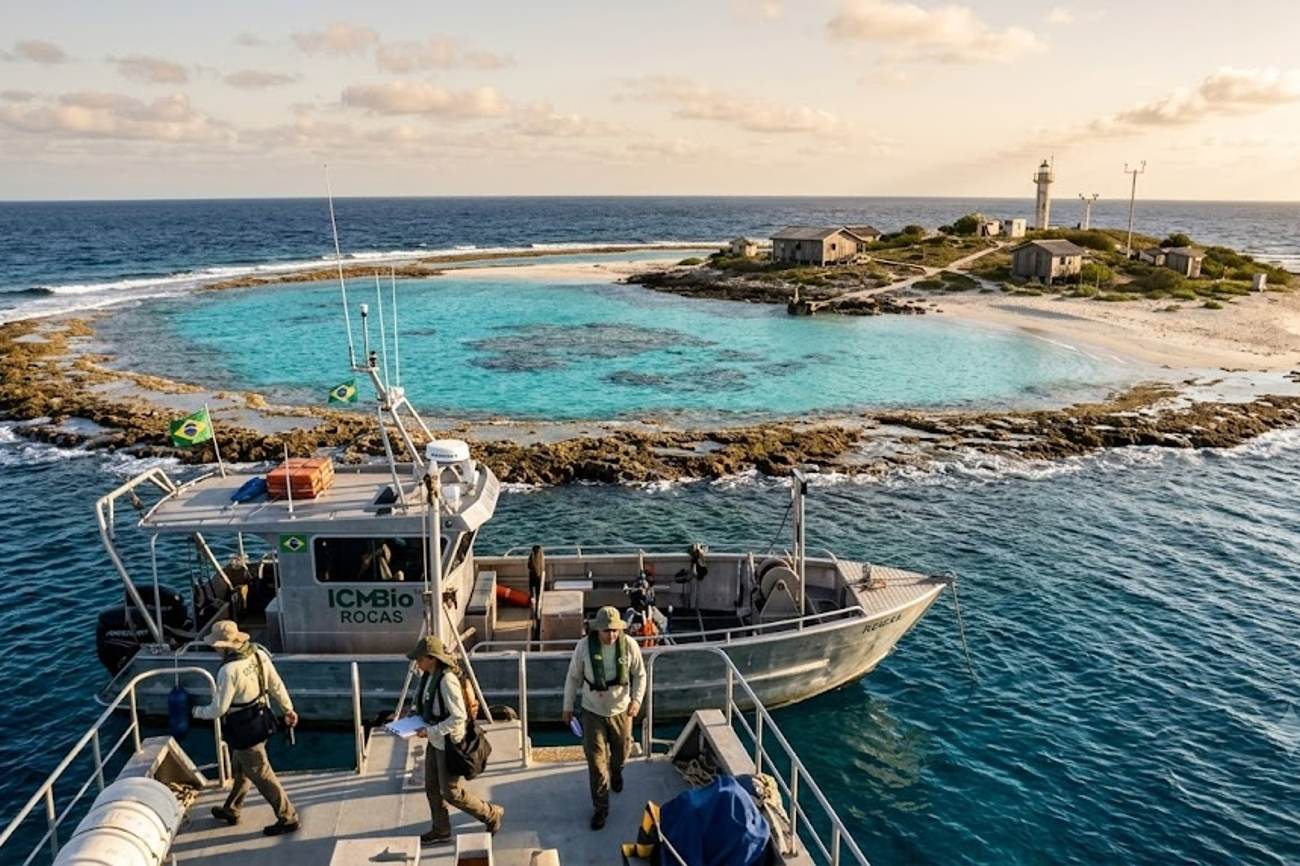
Image generated by AI
Brazil Reinforces Restricted Access to Atlantic Biological Reserve
[Natal, September 6, 2026] — The Brazilian government has launched a new procurement process to secure maritime transport for the Atol das Rocas Biological Reserve, a move that underscores the site's status as a restricted zone. The Instituto Chico Mendes de Conservação da Biodiversidade (ICMBio) republished its ocean-vessel charter requirements on July 31, 2026, following the failure of an earlier bidding process designated as Electronic Tender 90002/2026.
The current initiative, identified as Electronic Tender 03/2026, is specifically for the continuous charter of an ocean-going vessel. Industry reports clarify that this is not a purchase of a government asset, nor is it a commercial concession intended to facilitate tourism. Instead, the vessel is required to support critical environmental monitoring, biodiversity protection, law enforcement, and emergency response missions.
As of September 6, the official GR-2 procurement index—last updated on September 4, 2026—confirms the reissue of the tender. For the global travel community, this administrative update serves as a stark reminder: despite its fame and UNESCO status, Atol das Rocas is not a destination available for leisure travel.
Logistics of Isolation: The Natal Gateway
Technical documentation provided in the ICMBio 2026 Preliminary Technical Study highlights the extreme isolation of the reserve. Located approximately 144 nautical miles (roughly 267 kilometers) from the coast of Natal, the atoll is accessible exclusively by sea. The reserve possesses no permanent crew or dedicated vessel of its own, making the chartered craft essential for its survival.
The procurement specifications reveal a mission profile designed for endurance rather than comfort. Typical expeditions are structured as four-day return trips, with team rotations occurring every 20 to 25 days. Because there is no immediate medical assistance available at the reserve, the contract mandates rigorous emergency readiness, including a requirement that the vessel be available within four hours for defined emergencies.
The operational requirements for the vessel are stringent, reflecting the harsh conditions of the open Atlantic:
| Access and Operating Factor | Official 2026 Requirement | Travel Significance |
|---|---|---|
| Mainland Departure | Natal, Rio Grande do Norte | Natal serves as the sole operational gateway |
| Distance | ~144 nautical miles / ~267 km | The reserve is situated far offshore |
| Access Mode | Exclusively maritime | No tourist air-transfer infrastructure exists |
| Typical Expedition Cycle | Approximately four days return | Missions are scientific, not excursions |
| Team Rotations | Every 20 to 25 days | Transport is tied to conservation cycles |
| Vessel Size | Minimum 11 meters (~42 feet) | Requires ocean-capable architecture |
| Engine Power | Minimum 100 HP | Built for offshore operating conditions |
| Navigation Range | Minimum 300 nautical miles | Must operate well beyond the outward trip |
| Payload Capacity | Minimum 1,500 kg | Must carry water, equipment, and personnel |
| Personnel Capacity | At least six researchers + crew | Structured for authorized teams only |
| Landing Support | Inflatable boat (15–25 HP motor) | Final transfer via small craft |
| Communications | GPS, VHF, HF-SSB, EPIRB, Sat-Phone | Independent offshore comms are mandatory |
| Emergency Readiness | Availability within 4 hours | Strict medical/operational contingencies |
Legal Framework Prohibiting Public Tourism
It is a common misconception that UNESCO World Heritage status grants public access to a site. In the case of Atol das Rocas, Brazilian federal law is explicit. Under Article 10 of Law 9,985, enacted on July 18, 2000, a Biological Reserve is classified as an "Integral Protection" conservation category.
This legal designation strictly prohibits public visitation. The only exceptions are for educational purposes—subject to rigorous rules—and scientific research, which requires prior official authorization from the administering authority.
UNESCO reinforces this stance, noting that while Atol das Rocas is part of the "Brazilian Atlantic Islands: Fernando de Noronha and Atol das Rocas Reserves" World Heritage property (inscribed in 2001), the atoll itself must remain closed to protect endangered species. In fact, UNESCO has previously identified the illegal presence of tourist boats as a significant threat to the integrity of the ecosystem.
Divergent Realities: Natal vs. Recife
The contrast between the two components of the Brazilian Atlantic Islands UNESCO property illustrates two completely different models of environmental management.
Natal functions as the administrative and logistical hub for Atol das Rocas. The 2026 Term of Reference specifies that all official expeditions originate and terminate at the Port of Natal. There are no public ferries, bookable excursions, or authorized day tours connecting the city to the atoll.
Conversely, Recife serves as the primary tourism gateway for Fernando de Noronha. Travelers typically fly into Recife before taking a regular flight—approximately one hour in duration—to the archipelago. Unlike Atol das Rocas, Fernando de Noronha is a controlled tourism destination with established infrastructure for international visitors.
| Travel Factor | Atol das Rocas | Fernando de Noronha |
|---|---|---|
| UNESCO Relationship | Component of Brazilian Atlantic Islands | Component of Brazilian Atlantic Islands |
| Access Status | Closed to the public | Controlled tourist access |
| Primary Gateway | Natal (Maritime only) | Recife (Air transfer) |
| Legal Category | Biological Reserve (Integral Protection) | State Park / Environmental Protection |
| Visit Purpose | Scientific research / Education | Leisure / Eco-tourism |
Why This Matters: The Impact on Modern Travel Planning
For the modern traveler and travel agent, the distinction between these two sites is a critical piece of "information gain." In an era of "hidden gem" social media trends, there is a growing risk of tourists attempting to book unauthorized charters to restricted zones.
From a logistical standpoint, the Atol das Rocas vessel tender proves that the Brazilian government is doubling down on protection rather than opening the gates. For the traveler, this means that any offering claiming to provide "exclusive" or "private" access to Atol das Rocas is likely operating illegally and could result in severe legal penalties under Brazilian environmental law.
Furthermore, this situation highlights the tension between global recognition and local preservation. While UNESCO status brings international prestige, it does not override the biological necessity of total isolation. Travelers seeking the Atlantic island experience should focus their planning on Fernando de Noronha via Recife, recognizing that Atol das Rocas is a sanctuary for science, not a destination for leisure.
Related Travel Guides
Disclaimer
This article is for informational and educational purposes only. It does not constitute legal, financial, or professional advice. While we strive to provide accurate and up-to-date information, travel policies, regulations, and conditions change rapidly. Always verify information with official sources before making travel decisions. Nomad Lawyer makes no representations about the accuracy, reliability, completeness, or suitability of the information provided. Readers should consult qualified professionals for advice specific to their circumstances. The views expressed in this article are those of the author and do not necessarily reflect the views of Nomad Lawyer.
Kunal K Choudhary
Co-Founder & Contributor
A passionate traveller and tech enthusiast. Kunal contributes to the vision and growth of Nomad Lawyer, bringing fresh perspectives and driving the community forward.
Learn more about our team →