
Boston Logan Airport Chaos: 522 Delays, 53 Cancellations Hit American, JetBlue, Delta, Republic Airways June 19
Boston Logan International Airport descended into travel chaos on June 19 as 522 delays and 53 flight cancellations crippled major carriers including JetBlue, Delta, and American Airlines, affecting routes across the US, Canada, and Asia.

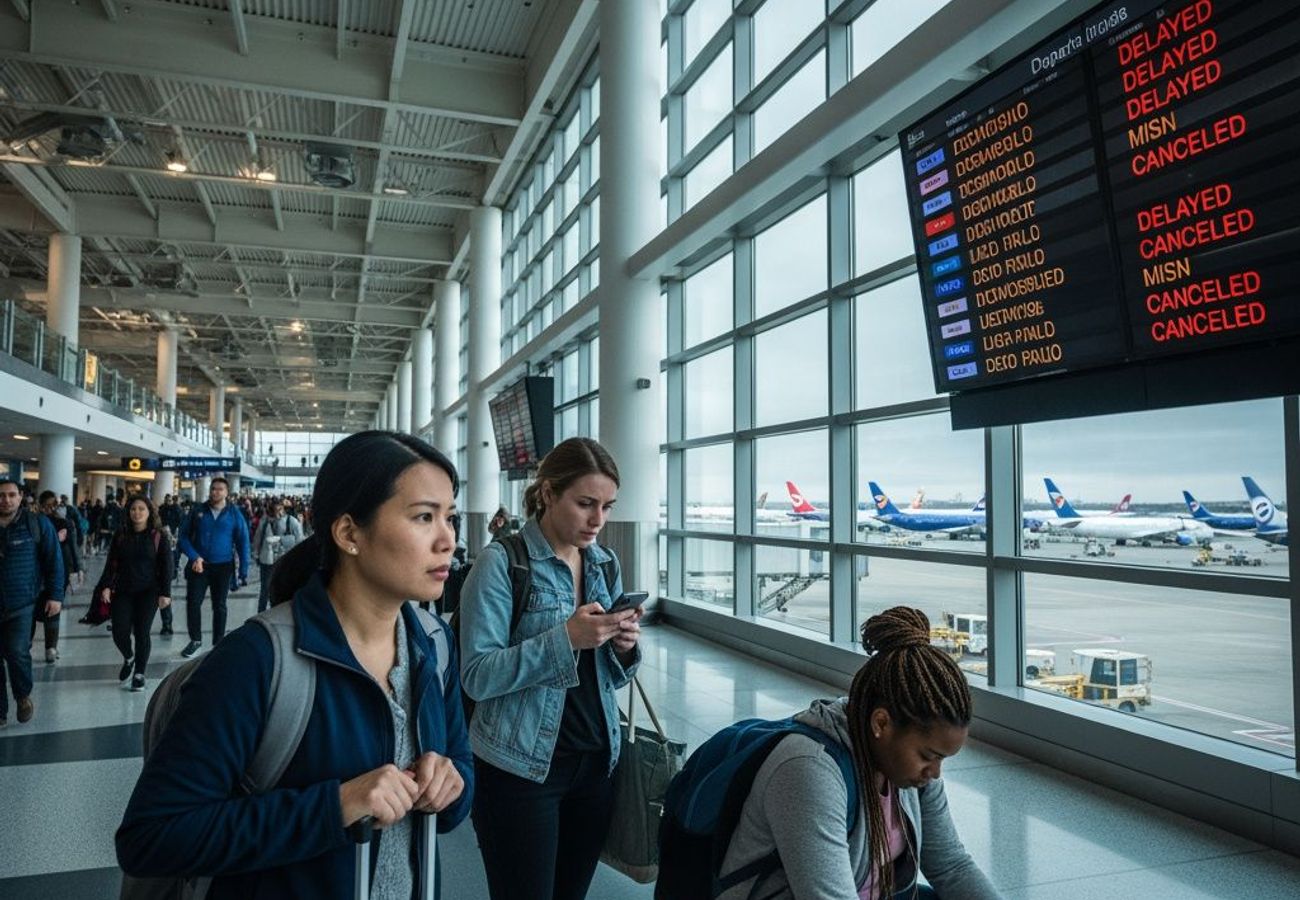
Image generated by AI
The Day Travel Ground to a Halt at Boston's Busiest Hub
Boston Logan International Airport (BOS) became a nightmare for hundreds of travelers on June 19, 2026, when operational chaos engulfed the facility. A staggering 522 flight delays and 53 cancellations rippled across the airport, creating a domino effect that disrupted services spanning from Canada to Japan, Hong Kong to Spain.
What started as a weather event became a full-scale network meltdown. Strong winds and a tornado watch across Massachusetts triggered the initial disruptions, but the real story lay in how quickly the problem metastasized across North America's interconnected airline infrastructure.
Which Airlines Took the Biggest Hit?
JetBlue registered the highest volume of delayed flights throughout the day, making it the carrier most visibly affected by Boston's operational breakdown. The airline's extensive Boston presence—the airport serves as a major operational hub—meant thousands of passengers faced cascading delays.
Republic Airways emerged as another crisis point, recording both significant cancellations and substantial delays. As a regional carrier, the airline's disruptions at Boston rippled through smaller markets that depend on connecting services.
Delta Air Lines and American Airlines followed closely, each experiencing dozens of cancellations and widespread schedule modifications. United Airlines, Southwest Airlines, Air Canada, and Porter Airlines rounded out the list of carriers caught in the disruption web.
The Ripple Effect Across North America and Beyond
Here's where the story gets serious: Boston wasn't the only airport bleeding red on flight status boards. The chaos reached John F. Kennedy International Airport (JFK), LaGuardia Airport (LGA), Hartsfield-Jackson Atlanta International Airport (ATL), Chicago O'Hare International Airport (ORD), and San Francisco International Airport (SFO).
International services connecting to Canada, Spain, France, Italy, Germany, the United Kingdom, Japan, South Korea, Hong Kong, Qatar, and the United Arab Emirates all experienced delays. A passenger booked from Boston to Tokyo faced cascading disruptions. A traveler connecting through Atlanta to London saw their timeline shredded.
Reddit: "I was stuck at Boston for 6 hours yesterday. My connection to London got cancelled, then rebooked me to the next day. JetBlue said it was weather but everything felt disorganized." — r/travel
Why Flight Delays Cascade Like Dominoes
Modern airline networks operate as intricate webs where disruption at one hub instantly affects dozens of downstream operations. When Boston Logan experienced operational challenges, aircraft that should have repositioned to other cities remained grounded. Crew members exceeded duty-time limits. Gate assignments shifted. Downstream flights inevitably suffered.
According to FlightAware's real-time data, which tracked the disruptions as they unfolded, a single cancellation at Boston could trigger three to five downstream cancellations across the network. Weather-related delays compound this exponentially—factors like wind shear don't just affect one flight; they ground aircraft for extended periods while crews wait for conditions to improve.
What Passengers Need to Know Right Now
Stay glued to your airline's official channels. Don't rely on outdated information. Download your carrier's mobile app and enable push notifications. Flight status changes minute by minute during operational events like this.
Understand your rebooking rights. Under U.S. Department of Transportation regulations, airlines must rebook passengers on the next available flight at no additional charge when cancellations or delays exceed certain thresholds. Review your airline's specific policies before contacting customer service—you'll negotiate better with facts on your side.
Build flexibility into your plans. If you're traveling through major hubs like Boston, Atlanta, or Chicago during turbulent weather seasons, add buffer time between connections. A two-hour layover becomes dangerous when delays are routine.
Keep essentials accessible. Medications, chargers, and important documents should never check with luggage during high-disruption days. Extended waits mean you'll need your phone charged and your documents within arm's reach.
Document everything. Take screenshots of cancellation notices, rebooking confirmations, and delay announcements. You'll need this for compensation claims under EU261 (if applicable) or other passenger protection schemes.
The Broader Network Paralysis
What made June 19's disruptions particularly severe was the sheer geographic scope. This wasn't a localized Boston problem contained within Massachusetts. The disruption metastasized into a continental crisis affecting seven major U.S. hubs, Canadian operations, and transatlantic/transpacific services.
When Republic Airways, JetBlue, and Delta—three carriers with different network structures and operational bases—all reported simultaneous disruptions, it signaled a systemic problem rather than an isolated incident. Each airline's cascading delays created secondary effects for competitors trying to use the same congested airspace and ground infrastructure.
What Travelers Facing Similar Disruptions Should Do
Contact your airline within 24 hours if you weren't already rebooked. Airlines handle rebooking during major operational events, but you must follow up to ensure your rebooking was logged correctly.
Document your expenses. Hotel rooms, meals, ground transportation—keep receipts for everything incurred as a result of cancellations or extended delays. Many carriers reimburse reasonable expenses, and you'll need proof.
Check your airline's compensation policies. While U.S. carriers aren't required to provide monetary compensation for weather-related delays (since weather is considered "an act of God"), international carriers operating under EU261 may owe compensation regardless of cause. Understand your specific carrier's obligations.
Consider filing complaints with your airline and the Department of Transportation if you experience severe disruptions. These complaints create a public record that regulators use to identify patterns of systemic failure.
The Bottom Line
June 19, 2026, will be remembered as a day when Boston Logan's operational failure demonstrated how fragile air travel infrastructure remains. One airport's crisis became an international travel emergency within hours. 522 delays and 53 cancellations didn't just inconvenience hundreds—they disrupted business operations, separated families, and exposed the thin margins within which airlines operate.
Weather happens. Networks fail. But passengers who understand their rights, stay informed, and build flexibility into their travel plans emerge from these crises with minimal damage to their schedules and wallets.
Stay alert, stay flexible, and never underestimate the value of a good travel insurance policy.
Related Travel Guides
Disclaimer
This article is for informational and educational purposes only. It does not constitute legal, financial, or professional advice. While we strive to provide accurate and up-to-date information, travel policies, regulations, and conditions change rapidly. Always verify information with official sources before making travel decisions. Nomad Lawyer makes no representations about the accuracy, reliability, completeness, or suitability of the information provided. Readers should consult qualified professionals for advice specific to their circumstances. The views expressed in this article are those of the author and do not necessarily reflect the views of Nomad Lawyer.
Preeti Gunjan
Contributor & Community Manager
A passionate traveller and community builder. Preeti helps grow the Nomad Lawyer community, fostering engagement and bringing the reader experience to life.
Learn more about our team →