
Biometric Corridors Airport: Queue-Free Travel Arrives Worldwide by 2026
Airports across UAE, Indonesia, and the US are deploying AI-powered biometric corridors that verify traveler identities while passengers walk, eliminating passport queues and transforming international travel by 2026.

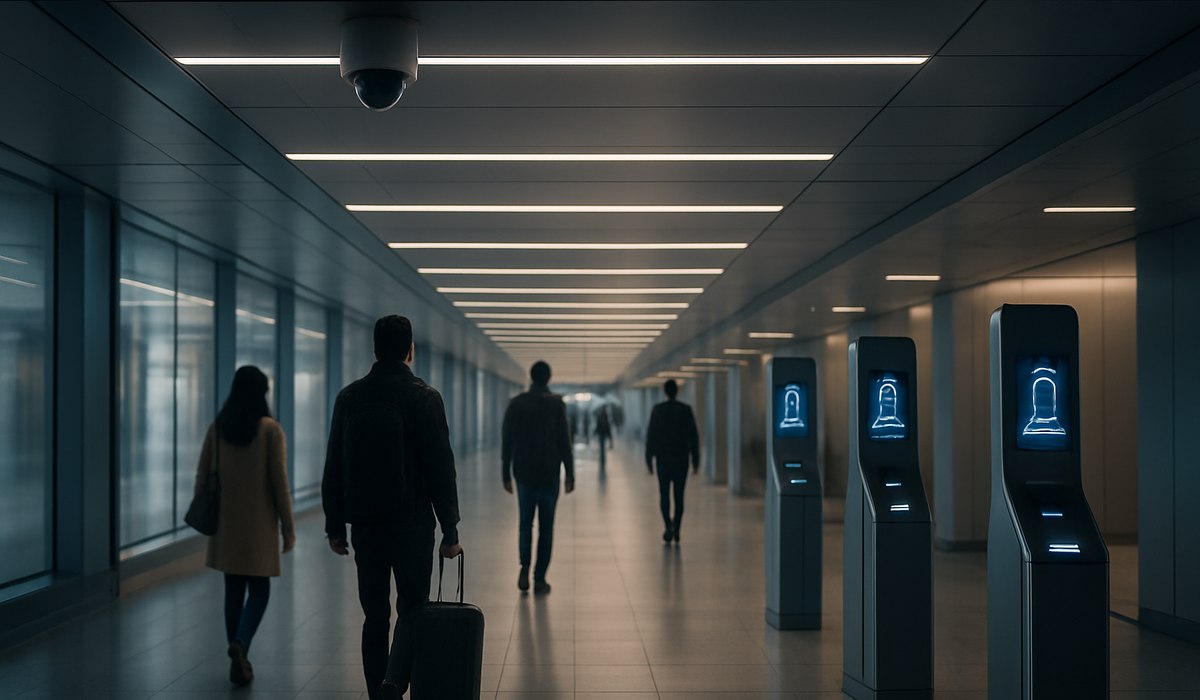
Image generated by AI
Airports Deploy Walk-Through Biometric Corridors, Eliminating Passport Queues Globally
Dubai International Airport, Jakarta's Soekarno Hatta, and major US hubs are rolling out biometric corridors that verify traveler identities through AI-powered facial recognition while passengers move seamlessly through immigration checkpoints. This transformative technology eliminates traditional passport queues, replacing manual document verification with networked cameras and background algorithms that match faces against travel records in real time. By 2026, airports worldwide are adopting this corridor-style identity verification system, fundamentally reshaping how international travelers experience border control and airport security screening.
From Smart Gates to Seamless Corridors
Biometric corridors represent the latest evolution in automated border control, building on a decade of innovation that progressed from stationary electronic gates to truly hands-free verification systems. Early smart gate technology required travelers to pause, scan passports, and face cameras at discrete kiosks, creating bottlenecks despite improved efficiency. Modern biometric corridors eliminate these stopping points entirely by embedding networked cameras throughout immigration and boarding areas, allowing passengers to walk naturally while identity verification occurs invisibly in the background.
This architectural shift reflects both technological capability and capacity necessity. As post-pandemic air traffic rebounds toward record passenger volumes, traditional passport queues cannot expand infinitely without degrading airport experience and operational efficiency. By automating identity verification and distributing checkpoint intelligence across corridor infrastructure, airports transform their facilities into smart networks where travelers become "persistent travel tokens"—their biometric profile linked seamlessly from check-in through boarding with visa status, security screening results, and reservation data.
Industry leaders recognize that biometric corridors address multiple pressures simultaneously: enhancing traveler convenience, reducing staff requirements at physical checkpoints, accelerating throughput during peak periods, and improving security through real-time risk assessment algorithms. This convergence of customer experience improvement and operational necessity is driving rapid global deployment of biometric corridors airport infrastructure.
Dubai's "Travel Without Borders": Early Success and Expansion
Dubai International Airport has emerged as the primary global test bed for comprehensive biometric corridor implementation through its "Travel Without Borders" initiative. The program began with selective biometric-enabled smart gates and tunnels serving enrolled passengers, and is now expanding into an integrated biometric journey spanning check-in, security screening, immigration control, and boarding gates.
The system architecture relies on AI-powered facial recognition cameras strategically positioned along traveler pathways from curb to departure gate. Once passengers voluntarily enroll and establish their biometric template in the system, automated cameras recognize them at each immigration control point without requiring document presentation. Background algorithms simultaneously verify visa status, security screening clearance, and risk assessment scores, enabling silent checkpoint transitions when all verification conditions pass successfully.
For eligible travelers, the operational impact has been dramatic. Smart gates and biometric tunnels currently reduce passport control transit time from typical 15–30-minute waits to mere seconds. During peak arrival and departure periods, these biometric corridors airport lanes eliminate queues entirely for enrolled passengers, creating visibly distinct two-tier systems where some travelers walk through effortlessly while others queue at staffed counters.
However, current Dubai implementation remains tiered by passenger category. UAE citizens, long-term residents, and certain visa-on-arrival visitors with biometric passports experience seamless biometric corridor passage. Other international visitors continue transitioning through traditional staffed counters, though gradual inclusion is expanding as international data-sharing agreements mature and enrollment processes simplify across multiple countries.
Indonesia's Rapid Autogate Expansion at Soekarno Hatta
Indonesia is scaling biometric corridor technology through aggressive autogate deployment at Jakarta's Soekarno Hatta International Airport, the nation's busiest immigration hub. Government immigration authorities have installed 90–100 automated gates incorporating facial recognition, fingerprint scanning, and biometric passport reading capabilities, with additional systems rolling out across secondary airports and seaport facilities.
These Indonesian autogates enable largely self-service immigration processing for eligible travelers, combining multiple biometric verification methods to ensure accuracy and security. The system initially targeted Indonesian citizens exclusively but has progressively expanded access to foreign visitors carrying biometric passports and meeting eligibility criteria. This incremental inclusion strategy allows continuous system refinement while building international traveler awareness and acceptance of biometric corridor technology.
The autogate model at Soekarno Hatta demonstrates that biometric corridors airport systems function effectively in high-volume, diverse passenger environments typical of major Asian aviation hubs. Success at Indonesia's primary gateway suggests that biometric verification scales reliably across different passenger demographics, nationalities, and document types—critical validation for global deployment by 2026.
Global Expansion and Industry Adoption Accelerates
Beyond UAE and Indonesia, biometric corridor technology is expanding rapidly through North America, Europe, and additional Asia-Pacific hubs. US airports including major facilities in New York, Los Angeles, and Atlanta are conducting trials or implementing phased biometric corridor deployments. Canadian airports are similarly exploring corridor-style identity verification integrated with domestic and international passenger flows.
This accelerating adoption reflects industry consensus that biometric corridors airport systems represent inevitable border control evolution. Airlines, airport operators, and border security agencies increasingly recognize that traditional passport queues create capacity bottlenecks, security vulnerabilities, and poor customer experience at scale. Biometric corridor alternatives simultaneously solve multiple operational challenges while improving traveler satisfaction metrics—a rare convergence that drives rapid technology investment and infrastructure deployment.
Technology providers including major airport systems integrators report strong demand for biometric corridor components: networked camera systems, facial recognition algorithms, real-time risk assessment platforms, and identity verification databases. This supplier enthusiasm accelerates product development cycles and reduces implementation timelines for adopting airports, suggesting that 2026 targets for widespread biometric corridors airport deployment are achievable across developed and emerging economies.
What This Means for International Travelers
Traveler Action Checklist: Preparing for Biometric Corridor Travel in 2026
-
Obtain a biometric passport – Standard passports lack facial recognition chips required for automated verification; verify your passport type matches your destination airport's biometric corridor requirements.
-
Enroll your biometric profile – Many airports offer voluntary pre-enrollment programs; register your facial biometrics and travel documents through airport websites or immigration authority portals before departure.
-
Check airport-specific systems – Different hubs operate distinct biometric platforms; research your departure and arrival airports to understand their specific corridor technology, eligibility requirements, and enrollment procedures.
-
Prepare clear facial photography – Biometric systems require unobstructed face visibility; wear minimal or no headwear, remove sunglasses, and ensure adequate lighting for facial recognition capture during enrollment and checkpoint passage.
-
Monitor visa and security status – Verify that your visa, electronic travel authorization, and security screening statuses are current in biometric systems; outdated information may trigger manual checkpoint routing.
-
Allow extra time initially – Despite automation promises, first-time biometric corridor passage may require staff assistance; budget additional airport arrival time until comfortable with your airport's specific procedures.
-
Keep backup documents available – Despite biometric corridor deployment, carry physical passports and travel documents as backup for system failures, international verification gaps, or mandatory staffed counter requirements.
-
Track technology updates – Subscribe to your airline and destination airport notifications for biometric corridor announcements, system maintenance windows, or changes to eligibility requirements.
These proactive steps maximize biometric corridor benefits while maintaining travel flexibility should technical issues arise during international journeys.
Key Data: Biometric Corridors Airport Deployment Timeline and Scope
| Metric | Status | Impact |
|---|---|---|
| Global Airports with Biometric Corridors | 40+ deployed, 100+ in development | Covers major hubs across 6 continents by 2026 |
| Dubai Biometric Corridor Coverage | Immigration + 15 departure gates | Processes 50%+ of eligible travelers without document checks |
| **Indonesia Autogate |
Disclaimer
This article is for informational and educational purposes only. It does not constitute legal, financial, or professional advice. While we strive to provide accurate and up-to-date information, travel policies, regulations, and conditions change rapidly. Always verify information with official sources before making travel decisions. Nomad Lawyer makes no representations about the accuracy, reliability, completeness, or suitability of the information provided. Readers should consult qualified professionals for advice specific to their circumstances. The views expressed in this article are those of the author and do not necessarily reflect the views of Nomad Lawyer.
Preeti Gunjan
Contributor & Community Manager
A passionate traveller and community builder. Preeti helps grow the Nomad Lawyer community, fostering engagement and bringing the reader experience to life.
Learn more about our team →