
Biometric Border Chaos Strands 120+ easyJet Passengers at Milan Linate
Over 120 easyJet passengers missed their Manchester flight on April 12, 2026, after EU's new Entry Exit System biometric checks created three-hour queues at Milan Linate Airport, leaving the aircraft nearly empty.

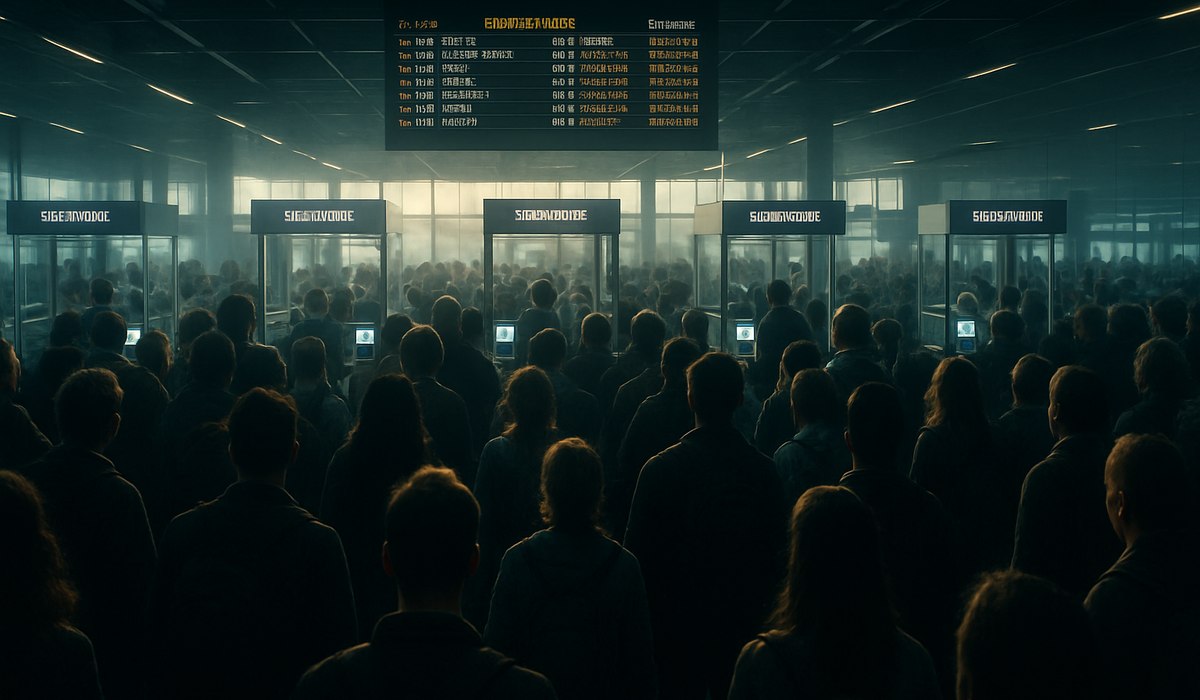
Image generated by AI
Over 120 Passengers Trapped as EU Biometric System Creates Airport Gridlock
More than 120 easyJet travelers became stranded at Milan Linate Airport on April 12, 2026, when the European Union's newly implemented Entry Exit System (EES) caused three-hour border control queues. The nearly empty flight to Manchester ultimately departed with fewer than 40 passengers aboard, while the majority of ticketed travelers remained trapped in biometric processing lines. This incident represents one of the most visible early disruptions since Europe's rollout of fingerprint and facial recognition technology at its external borders.
How EU's New Biometric System Created Hours-Long Border Queues
The biometric border chaos at Milan Linate exemplifies infrastructure gaps emerging across European airports during the Entry Exit System transition. The EES, designed to replace traditional passport stamping for non-EU nationals, captures fingerprints and facial images for all visitors entering or exiting the Schengen area. While intended to strengthen security and automate record-keeping, the technology requires additional processing time at passport control.
On the afternoon of April 12, passengers bound for Manchester checked in several hours before departure, following standard aviation protocols. However, they discovered only a limited number of staffed biometric capture stations operational during peak evening departure windows. The departures hall quickly became congested, with queues stretching across the terminal and advancing at what witnesses described as glacial speed. Three hours elapsed before some travelers cleared the system—far exceeding typical border processing times of 10 to 15 minutes.
Aviation authorities and industry groups had previously warned that biometric border chaos could emerge during high-traffic periods. The Milan disruption validated those concerns, occurring during peak spring travel season when passenger volumes typically surge. Compact city airports like Milan Linate, designed for shorter routes and regional traffic, faced particular strain integrating new biometric infrastructure into existing facilities.
120+ Passengers Trapped as Nearly Empty Flight Departs
When gate closure approached, easyJet held the Manchester service temporarily while over 120 ticketed passengers remained airside in border control queues. Crew duty limits and slot constraints ultimately prevented indefinite delays. The aircraft departed with approximately 30 to 40 passengers—representing roughly 70 percent empty capacity—while the majority of booked travelers watched helplessly from security areas a few hundred meters away.
The immediate aftermath created cascading disruptions. Stranded passengers faced the urgent task of securing alternative flights home, arranging accommodation in one of Italy's most expensive cities, and managing unexpected expenses. Some travelers reported waiting four days to secure replacement easyJet seats due to high spring demand, forcing them to book competing airlines at premium last-minute fares. Accommodation costs, meal vouchers, and rebooking fees quickly accumulated into expenses exceeding several hundred pounds per passenger.
Social media and aviation advocacy forums amplified passenger frustration, with travelers questioning why aircraft were permitted to depart with such substantial empty capacity while passengers remained detained in government-controlled border queues. The incident sparked wider debate about balancing security requirements with operational efficiency during the biometric border chaos period.
Infrastructure Gaps Exposed in EES Rollout Across Europe
The biometric border chaos unfolding at Milan Linate reflects broader implementation challenges across the European Union. While the Entry Exit System technology itself is proven—similar biometric systems operate successfully in North America and parts of Asia—European airports have shown dramatically varied preparation levels.
Major aviation hubs invested substantially in automated kiosks, additional staffing, and facility upgrades before EES implementation. Smaller regional airports and city gateways like Milan Linate received less infrastructure investment, relying on existing passport control layouts designed for manual processing. European aviation bodies issued joint statements highlighting waiting times of two to three hours at multiple airports, missed flight connections, and cascading schedule disruptions.
Equipment shortages, staffing limitations, and facility space constraints converge to create bottlenecks during peak periods. Border officers must now capture biometric data for every non-EU national entering or exiting the Schengen zone, fundamentally altering processing workflows. The biometric border chaos observed in Milan represents a predictable outcome when infrastructure preparation fails to match increased processing demands.
Industry analysts emphasize that technology implementation timelines rarely align with operational reality. EES was introduced across Europe with compressed training periods and variable facility readiness, leaving some airports scrambling to manage passenger flows during initial rollout months.
What Travelers Need to Know About New Border Delays
The Milan incident demonstrates that travel disruptions from biometric border chaos remain possible throughout 2026 and beyond. Passengers planning European travel should factor additional buffer time into airport arrival schedules.
Key recommendations for navigating EES processing:
-
Arrive earlier than standard guidelines suggest. Traditional advice recommends arriving 2-3 hours before international departures. Consider adding 30-60 minutes extra for biometric processing, particularly during peak travel windows (weekends, holidays, early summer).
-
Check your passport validity and visa status. EES applies primarily to non-EU nationals. Verify residency status and visa requirements before travel to avoid unexpected border complications.
-
Enroll in trusted traveler programs where available. Some European airports offer priority lanes or expedited processing for registered frequent travelers, potentially bypassing standard biometric queues.
-
Monitor airport-specific advisories. Consult your departure airport's official website for real-time border processing updates, equipment status, and anticipated wait times.
-
Book flights with adequate connection time. If connecting through European airports, ensure minimum connection times account for biometric processing delays—at least two hours for Schengen transfers.
-
Document all travel changes and expenses. Airlines may offer compensation or reimbursement for disruptions caused by border infrastructure failures. Keep receipts for accommodation, meals, and rebooking fees.
-
Contact your airline immediately if missing flights. easyJet and other carriers maintain rebooking policies for operationally-caused delays. Don't accept first refusal without escalation requests.
Key Data: Milan Airport Biometric Chaos by the Numbers
| Metric | Figure | Source |
|---|---|---|
| Stranded Passengers | 122+ | Aviation rights platforms |
| Border Processing Queue Duration | 3 hours | Passenger testimonies, news reports |
| Passengers on Departed Flight | 30-40 | Flight manifest reports |
| Aircraft Capacity | ~180 seats | Typical easyJet narrowbody |
| Empty Seats Departing Milan | ~140-150 | Calculated from passenger data |
| Incident Date | April 12, 2026 | Official airport records |
| Rebooking Wait Period (Longest Case) | 4 days | Passenger accounts, media coverage |
| Affected Destination | Manchester, UK | Flight routing data |
| Biometric Processing Stations Operational | Limited/understaffed | Media reports, passenger observations |
| Average Spring Seat Availability | Reduced | Airline booking data |
FAQ: Biometric Border Chaos and Travel Disruptions
Q: Will biometric border chaos continue affecting European airports in 2026?
A: EES processing delays may persist through spring and summer 2026 as airports optimize staffing and equipment. Major hubs have implemented improvements, but smaller airports like Milan Linate continue experiencing bottlenecks during peak travel periods. Airlines recommend additional airport arrival buffer time across the continent.
Q: What rights do passengers have when missing flights due to border delays?
A: EU regulations require airlines to rebook passengers on next available flights and provide meals, accommodation, and communication assistance for operationally-caused delays. Compensation eligibility depends on circumstances—contact your airline's customer service team with documentation of the border delay.
**Q: How can I avoid
Disclaimer
This article is for informational and educational purposes only. It does not constitute legal, financial, or professional advice. While we strive to provide accurate and up-to-date information, travel policies, regulations, and conditions change rapidly. Always verify information with official sources before making travel decisions. Nomad Lawyer makes no representations about the accuracy, reliability, completeness, or suitability of the information provided. Readers should consult qualified professionals for advice specific to their circumstances. The views expressed in this article are those of the author and do not necessarily reflect the views of Nomad Lawyer.
Kunal K Choudhary
Co-Founder & Contributor
A passionate traveller and tech enthusiast. Kunal contributes to the vision and growth of Nomad Lawyer, bringing fresh perspectives and driving the community forward.
Learn more about our team →